Note: Medals and tokens on this page are not shown to scale.
The actual size is given in the text where known.
If you have a cable medal or token not shown on this page, please contact me.
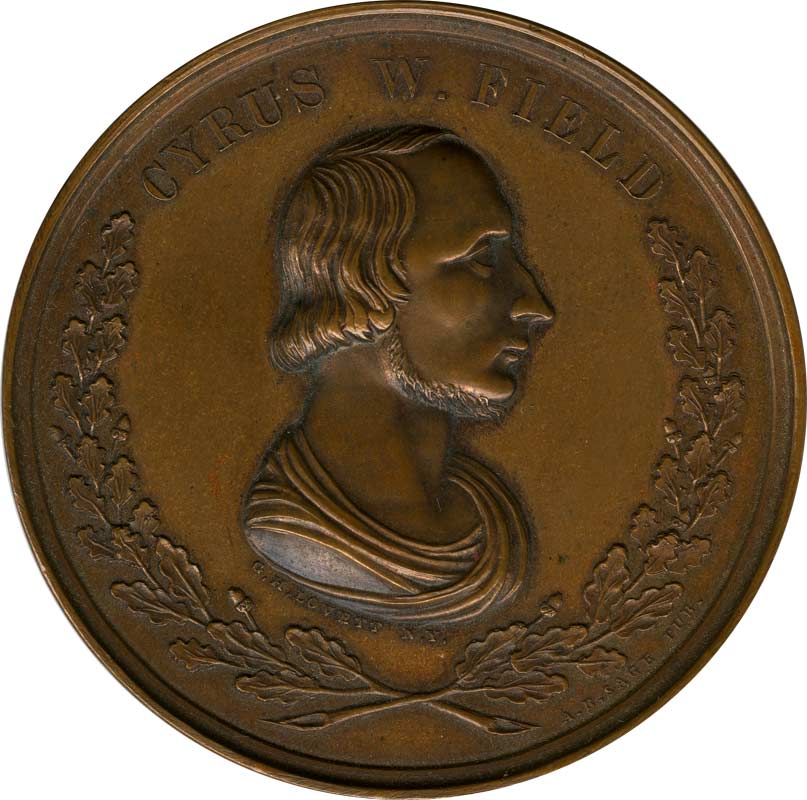
| 1858 Cyrus W Field Lovett Medals |
| |
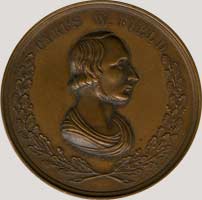
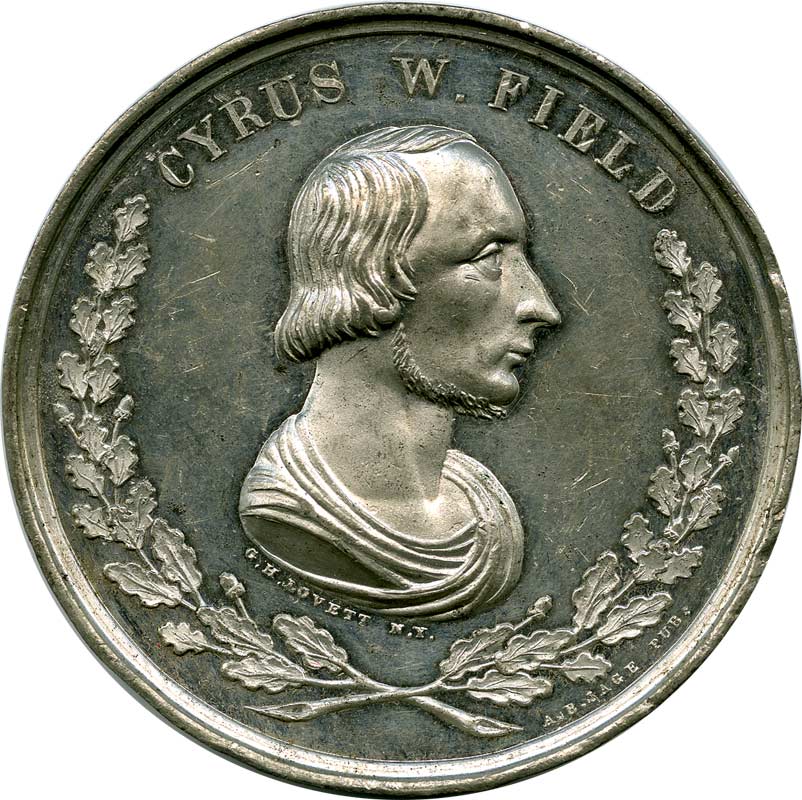
Cyrus W. Field
Laurel leaves surround
the portrait bust
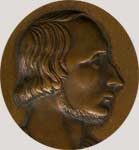
Detail of portrait

|
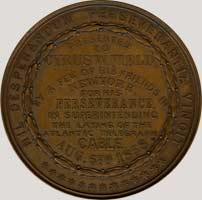
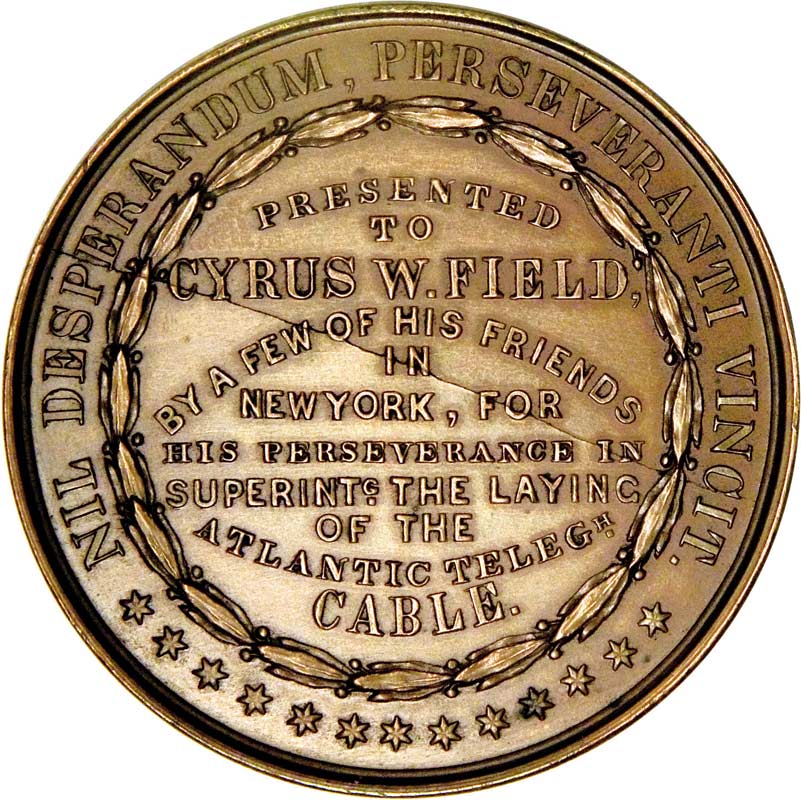
Medal diameter 50mm
Bronze, white metal
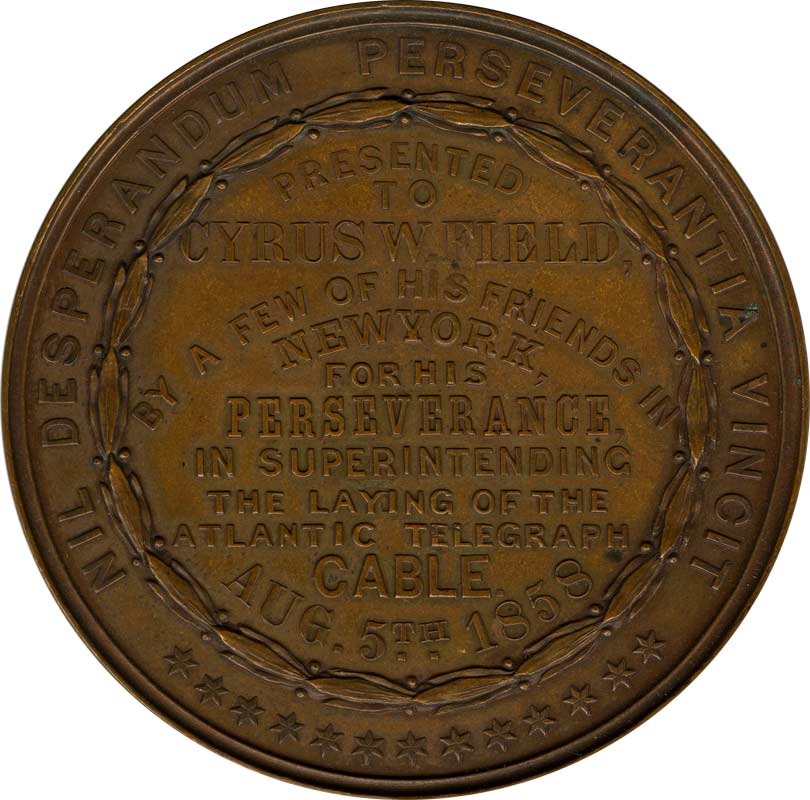
NIL DESPERANDUM
PERSEVERANTIA VINCIT
Presented
to
Cyrus W. Field,
by a Few of His Friends
in
New York,
for
His
Perseverance
in
Superintending
the Laying
of the
Atlantic Telegraph
Cable
Aug. 5th 1858
The medals are marked
on the obverse:
G.H. Lovett, N.Y.
A.B. Sage Pub.
(August B. Sage) |
These Cyrus Field medals were struck by George Hampden Lovett of New York in gold, silver, copper/bronze, and white metal. For further information on Lovett, one of a family of 19th century medal and token makers, see the Lovett Tokens & Medals website, where there are also more examples of Lovett’s cable-related medals and tokens.
The medals shown here are strikes in other metals of the gold medal presented to Cyrus Field by the merchants of New York, which was still in his possession at the time of his death. The gold medal was left in his will as part of a group of items to be divided among his children.
The Latin motto around the reverse translates as, “Never Despair. Perseverance Conquers,” referring to the three attempts to lay the cable before the success of 1858.
There are two versions of the reverse of these medals–with and without the Aug. 5th 1858 date–as well as minor variations in the text. Without the date is known as the first reverse; with the date is the second reverse.
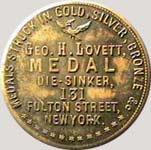
Lovett’s advertising on the trade token shown to the right reads:
Medals struck in gold, silver, bronze &c.
Geo. H. Lovett, Medal Die-Sinker,
131 Fulton Street, New York
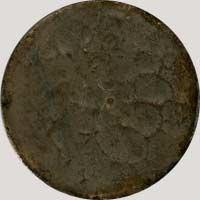
The flaw on the reverse of the undated (first reverse) medal below is in the die; it appears on both the bronze and white metal versions. |
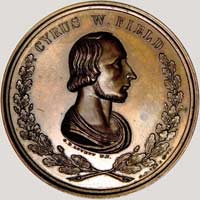
Cyrus W. Field
Laurel leaves surround
the portrait bust
Medal diameter 50mm
Bronze |
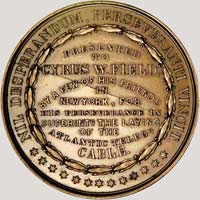
NIL DESPERANDUM,
PERSEVERANTI VINCIT
Presented
to
Cyrus W. Field
by a Few of His Friends
in
New York, for
His Perseverance in
Superintg. the Laying
of the
Atlantic Telegh.
Cable
|
|
|
| 1858 New York Chamber of Commerce Medals |
| |

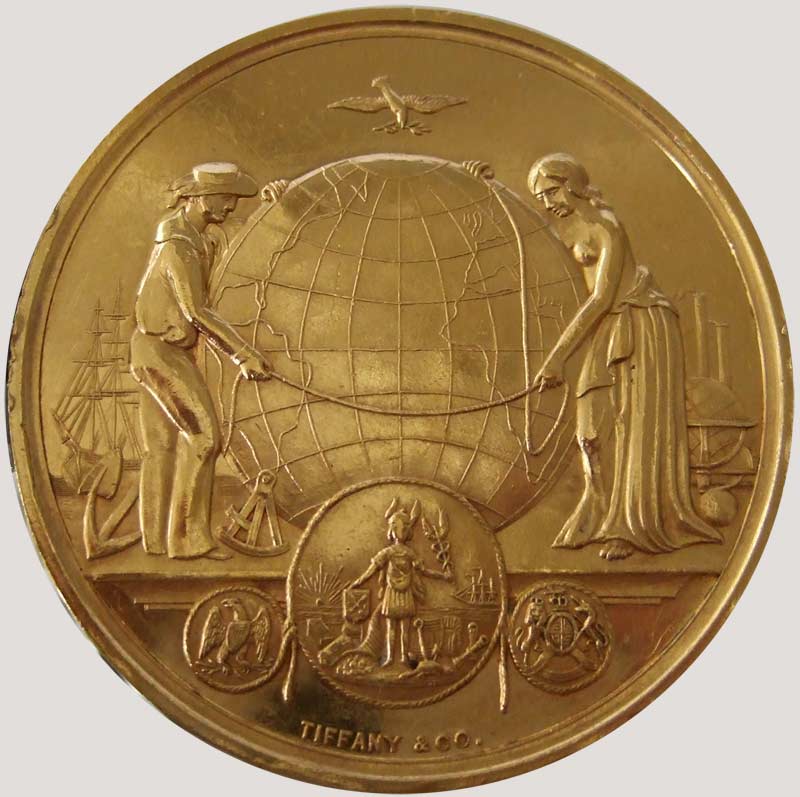
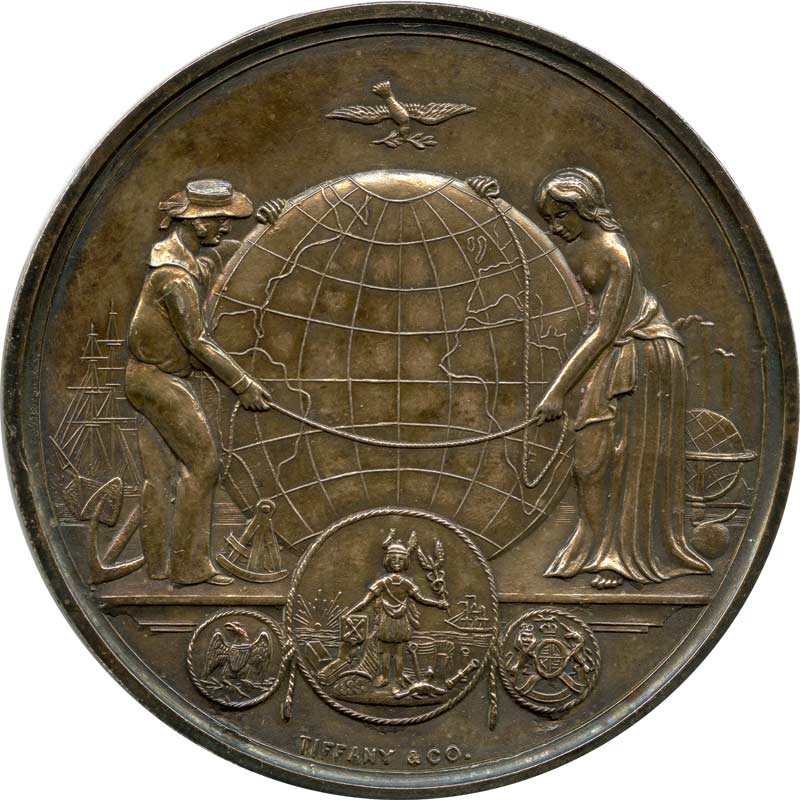
Medal diameter 58mm
Gold
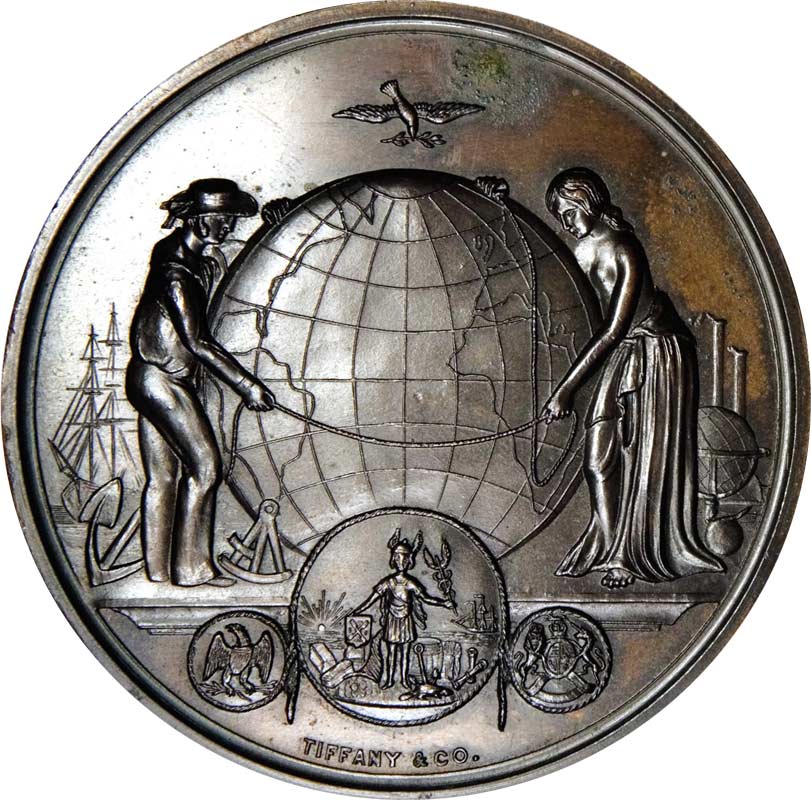
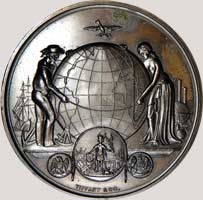
The obverse side bears a globe supported by figures of Science and Navigation. A dove hovers over the globe, bearing an olive branch in her beak. Navigation is symbolized by a background sculptured with ships, anchors and sextant; and Science has a similarly appropriate surrounding. The seal of the Chamber of Commerce, between the arms of the two countries, is to be seen below. |

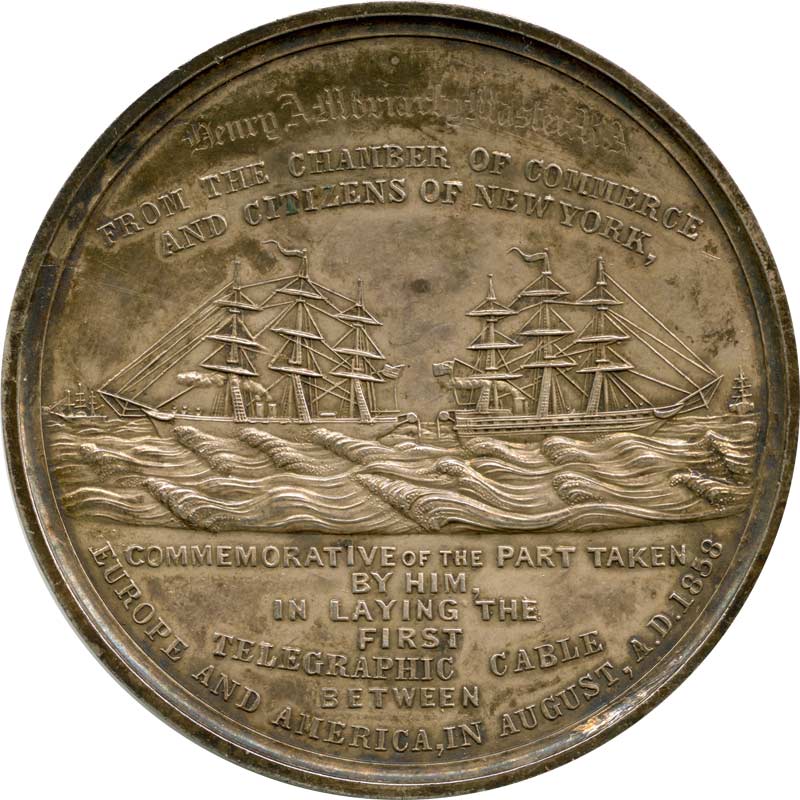
Richard Williamson, Asst. Engineer. R.N.
From the Chamber of Commerce
and Citizens
of New York,
Commemorative of the Part Taken
by Him
in Laying the
First
Telegraphic Cable
Between
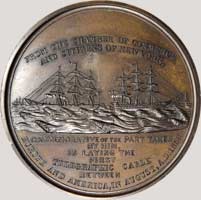
Europe and America, in August, AD 1858. |
After the successful completion of the Atlantic cable in August 1858, by order of the Chamber of Commerce of New York, Tiffany & Company made commemorative medals in gold, each engraved with the name of one of the members of the cable expedition who had sailed on the ships of the cable fleet: Niagara, Agamemnon, Gorgon and Valorous.
Two sizes and weights of medal were made, both in the purest gold; nine of 2¾" (70mm) diameter, each weighing five ounces, were presented to the expedition’s principals, and approximately fifty medals of about 2¼" (58mm) diameter, each weighing three ounces, were presented to the other crew and staff of the cable fleet.
The page on Richard Williamson, who was awarded the gold medal shown above for his part in the cable expedition, has further details on these medals, including a list of the recipients and notes on the very few other gold medals still known today. |
 |
 |
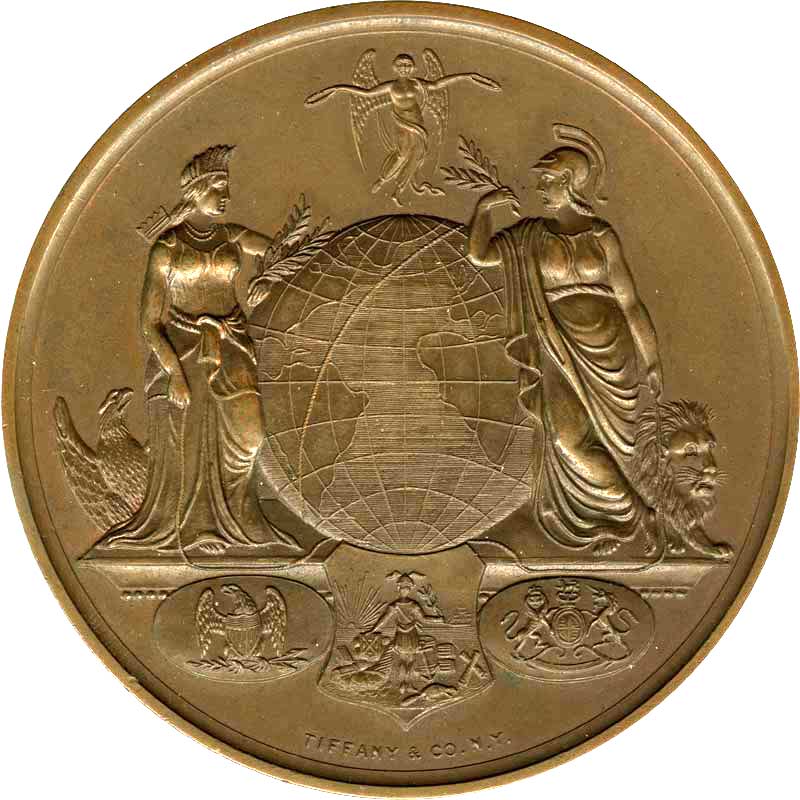
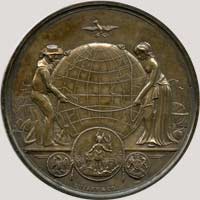
Copies of the medal were also struck by Tiffany in bronze for general circulation. 58mm, 115.4gm. Two different designs of the obverse are known; one (above) is the same as the gold medal; the other (below) has different figures and motifs.
Bronze medal images below courtesy of David & Julia Bart |

|

|
In 1895 a copy of the medal shown above was inserted into the frame of Daniel Huntington's painting, the Atlantic Cable Projectors. |
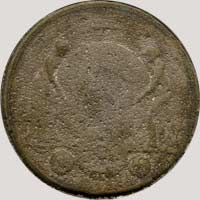
| The location of the medal given to Henry A. Moriarty, Master of H.B.M.S. Agamemnon is not known, but an electrotype of the original survives (below). |
 |
 |
An electrotype of a coin or medal is made by a process first developed in the late 1830s. A mould is made from each side of the original using wax, plaster of paris, or a similar material. To make the mould conductive its inner surface is brushed with powdered graphite, and a wire is then pressed through the back of the mould to connect with the graphite coating. Using a battery, copper is plated onto the mould until a suitable thickness has been achieved. Gold and silver can also be plated into the mould.
The electrotype is removed from the mould, and its surface may then be treated with various chemicals depending on the finish desired. The thin electrotype is usually filled with lead for stability, as can be seen on the right-hand image below of the reverse of the medal. The obverse electrotype, shown in the left-hand image, has been left as it came from the plating bath.
The two electrotypes could either be joined to make a facsimile of the original medal, or mounted side by side for display purposes.
Electrotype images courtesy of David & Julia Bart |
 |
 |
|
|
| 1858 Lovett Tokens |
| |
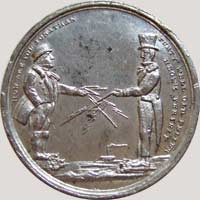
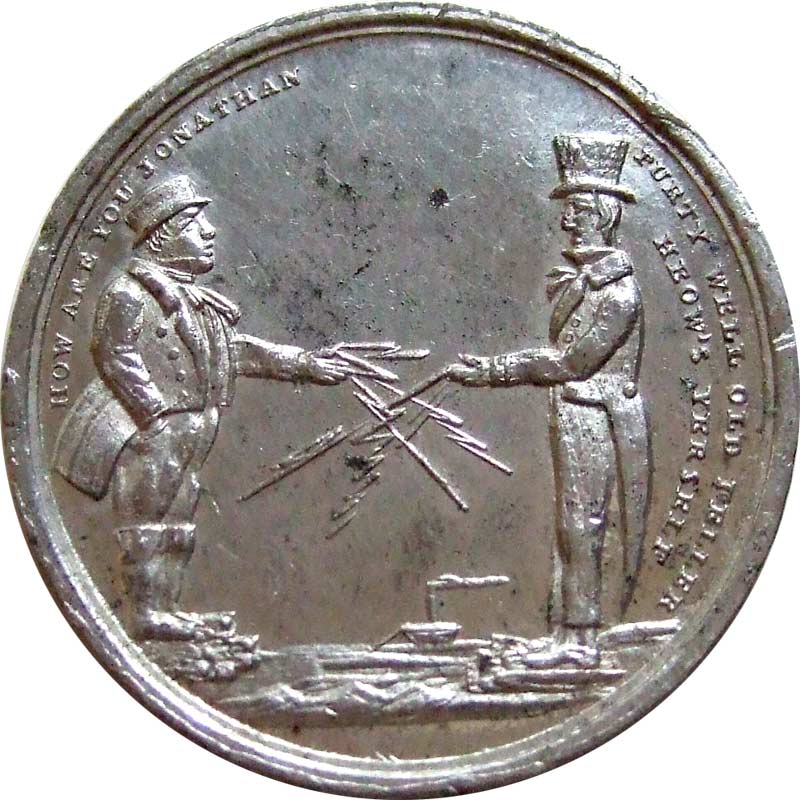
How Are You Jonathan
Purty Well Old Feller
Heow’s Yerself
Token diameter 31mm
White metal |
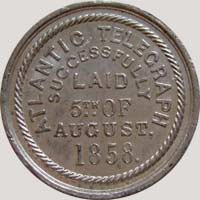
Atlantic Telegraph
Successfully
Laid
5th of
August
1858 |
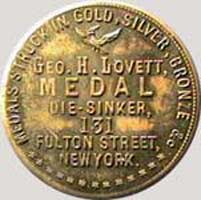
Geo. H. Lovett
Medal
Die-Sinker
Brass |

Boy and Dog
W.H. Bridgens New York
Copper |
George H Lovett made a variety of these tokens in 1858, in silver, copper, brass, and white metal. The obverse shows John Bull and Brother Jonathan exchanging lightning bolts across the ocean, with a ship laying cable between them; the most commonly seen reverse has the date of the landing of the cable..
Some examples have Lovett’s “Medal Die-Sinker” advertisement on the reverse. Others have “Boy and Dog/W.H. Bridgens New York”* on the reverse, with an image of a boy riding a dog.
*Another, unrelated, William H. Bridgens token lists him as “Bridgens/Metal Tokens/&/Store Cards/189/William St”. The catalogue entries of the American Numismatic Society for two Boy and Dog tokens with a different obverse record the name as W.S. Bridgens, but on close inspection the example above clearly shows the second initial as H. |
|
|
| 1858 Stokes Token, Philadelphia |
| |

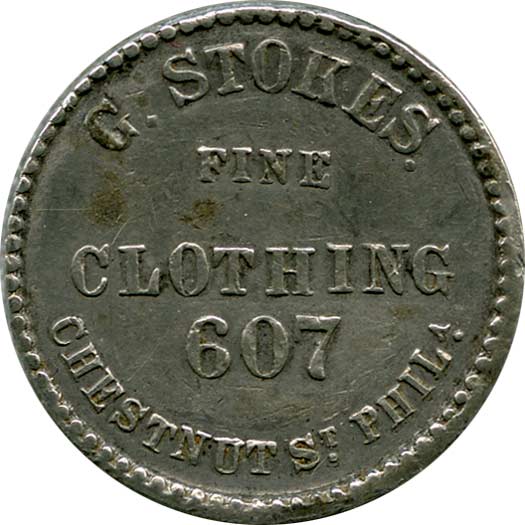
G. Stokes
Fine
Clothing
607
Chestnut St. Phila. |

Token diameter 22mm
White metal |
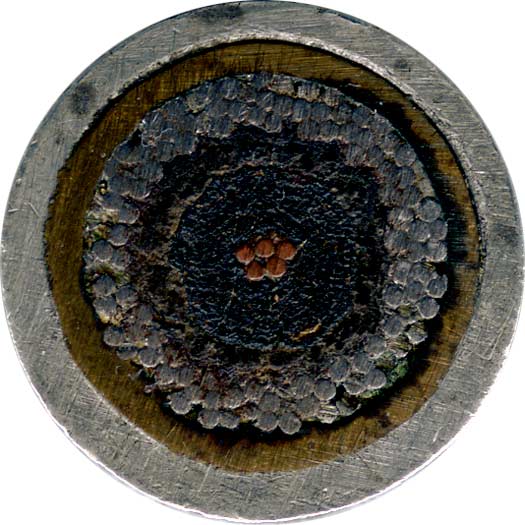
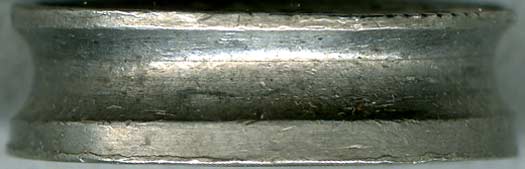
This token, issued by Granville Stokes to promote his clothing business in Philadelphia, incorporates a section of the 1858 cable, and at 6mm (¼") is much thicker than a normal token. See side view below.
It is not recorded when Stokes first distributed this token, but he was still giving them away in November 1858, as this editoral puff piece in the Philadelphia Inquirer of November 8th advises:
What grows less tired the more it works?
A carriage wheel.
Pretty good. But better yet to the hundred thousand readers of the Inquirer the important fact that the Palatial Clothing Establishment of Granville Stokes, No. 607 Chestnut street, has an elegant suit, a splendid over-coat, a fashionable frock or dress coat, an unapproachable vest, or a fascinating pair of pants, for each one of them, with the largest and best selection of elegant fabric from which gentlemen may make selections, to be found on this Continent. Call and try him.
Stokes’s Atlantic Cable Charms given away. |
Stokes did business in Philadelphia from 1843 to 1865, and issued one other token, in 1862: “Merchant Tailor”, “Fine Fashionable Clothing”. |
|
|
| 1866 Atlantic Cable English Medal |
| |
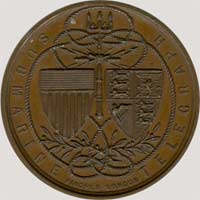
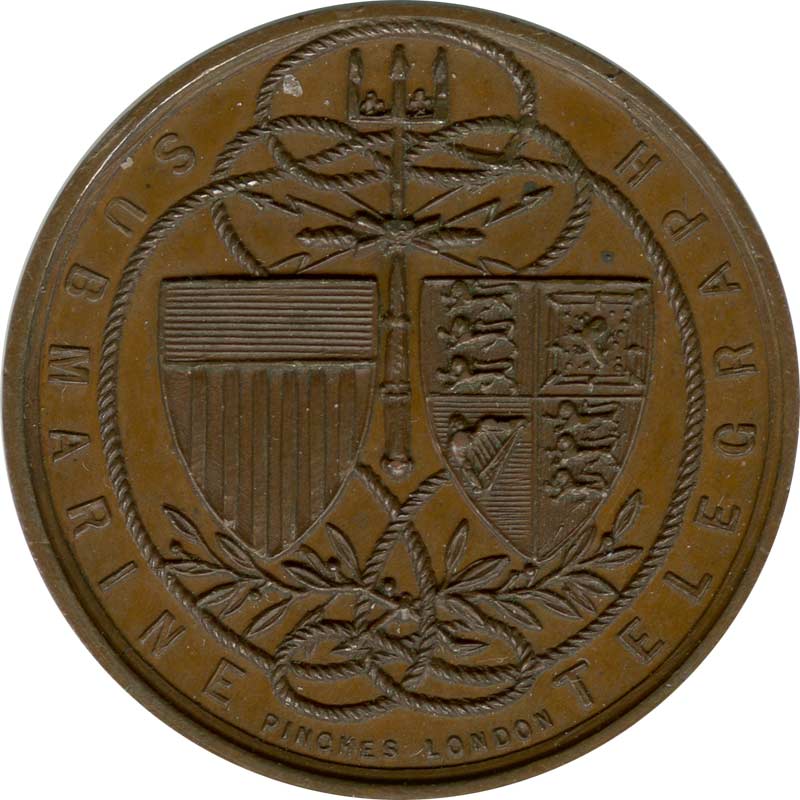
Submarine Telegraph
Pinches London
Medal diameter 26mm
Bronze |
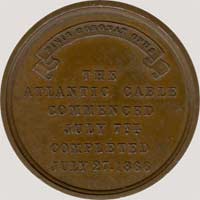
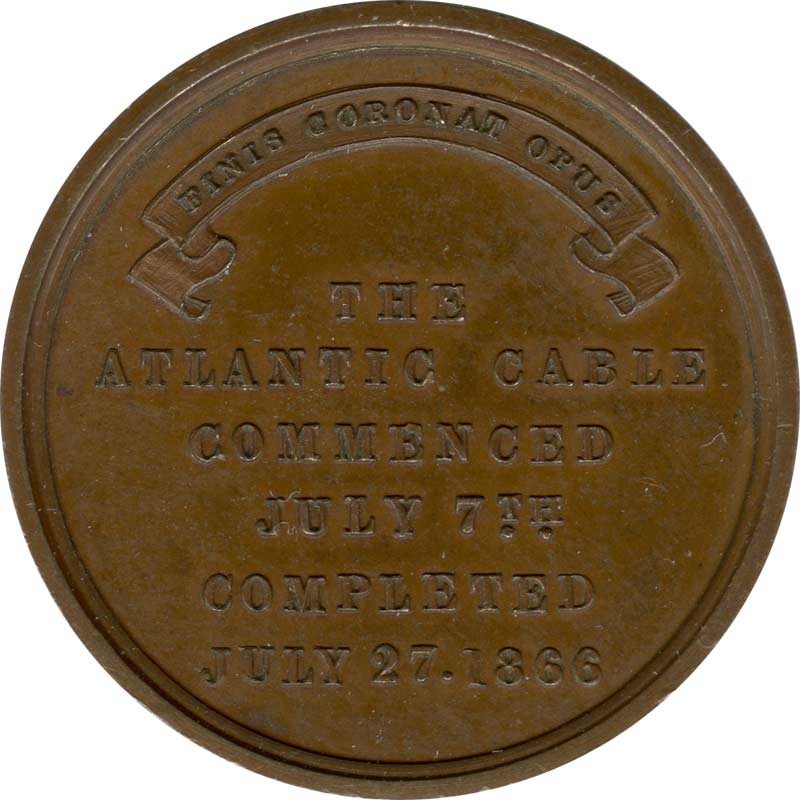
Finis Coronat Opus
The
Atlantic Cable
Commenced
July 7th
Completed
July 27. 1866 |
The obverse shows the shields of the United States and Great Britain with a trident and lightning bolts between and laurel branches below, the various elements linked by an intertwined cable.
The Latin motto on the reverse, “Finis Coronat Opus,” generally translated as “The End Crowns the Work,” refers to the several attempts to lay the cable (in 1857, 1858, and 1865), before success was finally achieved in 1866.
The medal maker, Pinches, London, was founded by John Pinches (1825-1905) in 1840, and continues in business today as part of the Franklin Mint. |
|
|
| 1867 Cyrus W Field State of Wisconsin Medal |
| |
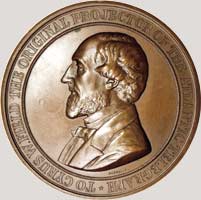
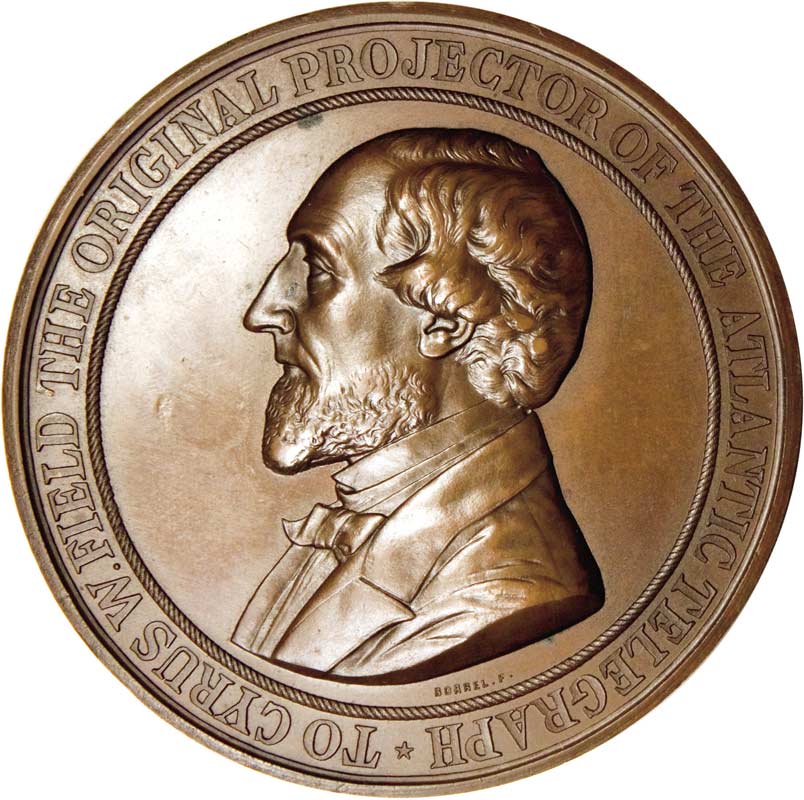
To Cyrus W. Field The Original Projector of The Atlantic Telegraph
Medal diameter 65.5mm
Bronze |
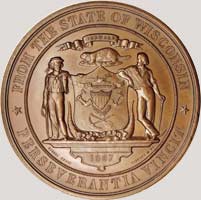
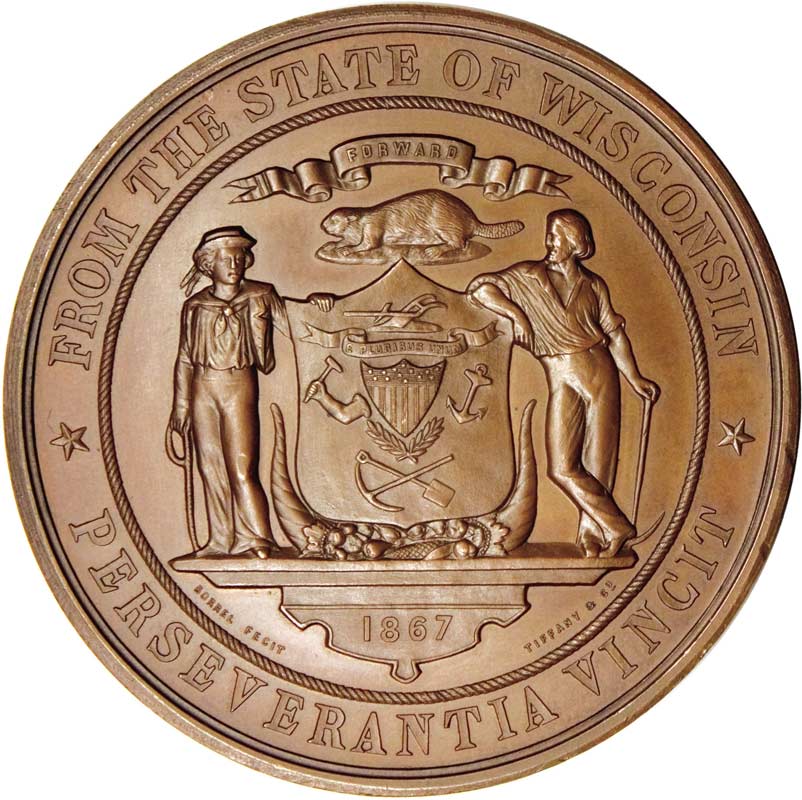
From The State of Wisconsin.
Perseverantia Vincit |
1867 From the State of Wisconsin to Cyrus Field. Bronze, 65.5mm, 132.8gm. Marked “Borrel Fecit” on both obverse and reverse, and struck by Tiffany & Co. The engraver was Valentin
Maurice Borrel (1804-1882).
This is a copy in bronze of the gold medal presented to Cyrus Field by the State of Wisconsin, which was still in his possession at the time of his death. The gold medal was left in his will as part of a group of items to be divided among his children. Six bronze copies were also made and distributed,
including one to Governor Lucius Fairchild, whose
heirs donated it to the State Historical Society
of Wisconsin.
The obverse depicts Field facing left and has the wording: “To Cyrus W. Field The Original Projector of The Atlantic Telegraph”.
The reverse depicts the coat of arms of Wisconsin and has the wording: “From The State of Wisconsin. Perseverantia Vincit” (compare with the 1858 Lovett medal above).
In 1867 the Legislature of the State of Wisconsin passed a joint resolution authorizing Governor Fairchild to prepare a suitable medal for Cyrus Field. [An Illustrated History of the State of Wisconsin by Charles Richard Tuttle, page 605].
From Public Documents of the State of Wisconsin, 1869, “The Governor’s Message” page 19:
CYRUS W. FIELD.
In obedience to joint resolution number ten, 1867, I have caused to be prepared and transmitted to Cyrus W. Field a suitable gold medal, in recognition of his distinguished services in connection with the successful completion of the Atlantic cable.
LUCIUS FAIRCHILD
Executive Chamber, January 14, 1869.
|
|
|
| 1867 American Chamber of Commerce (Liverpool) Medal |
| |

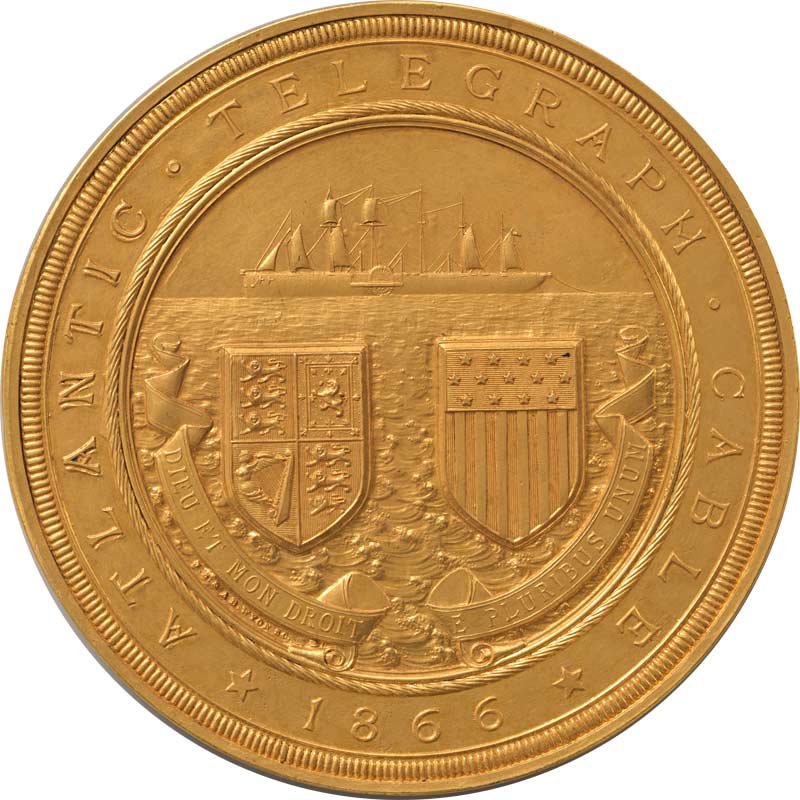
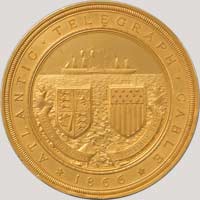
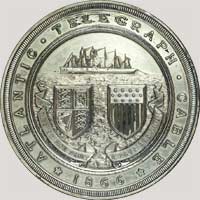
Obverse: The shields of Great Britain and of the United States, superimposed upon the ocean, with mottoes below. Above is the Great Eastern steamship. The motto on ribbon beneath the shield of the United Kingdom; “DIEU ET MON DROIT.” The motto on ribbon beneath the United States shield: “E PLURIBUS UNUM.” The central design is appropriately surrounded by an unbroken length of cable. The peripheral legend, “ATLANTIC • TELEGRAPH • CABLE * 1866 *” The medallists’ mark, “J.S. & A.B. WYON SC.” located beneath the UK motto. SC is an abbreviation for the Latin sculpsit “he (they) engraved it.”
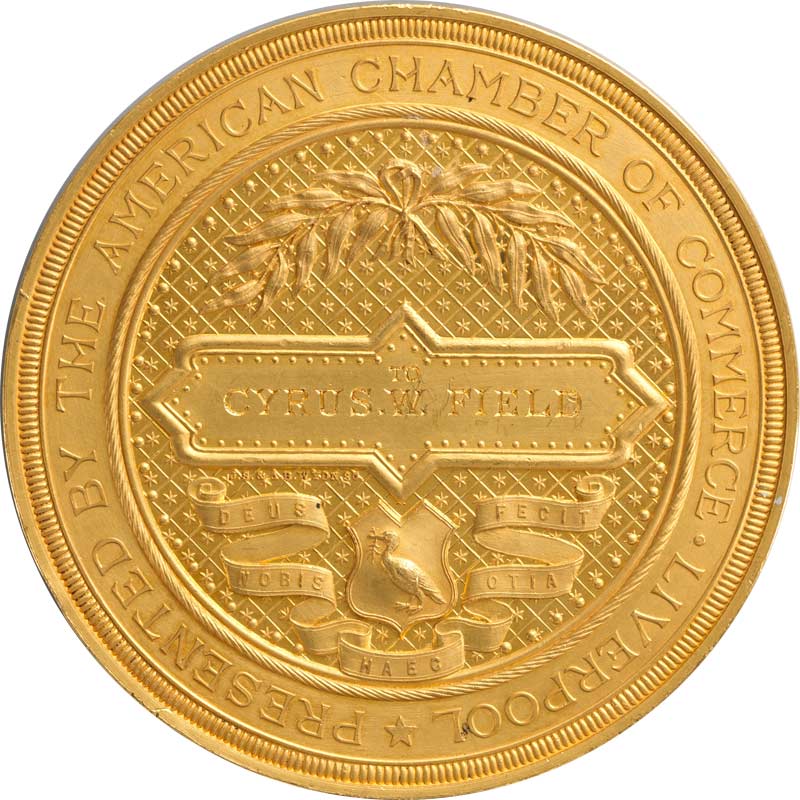
Medal diameter 76mm
Bronze with heavy gold plating |
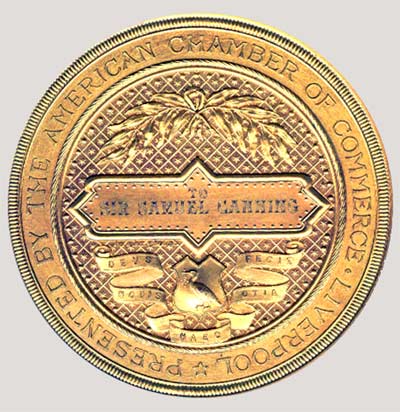
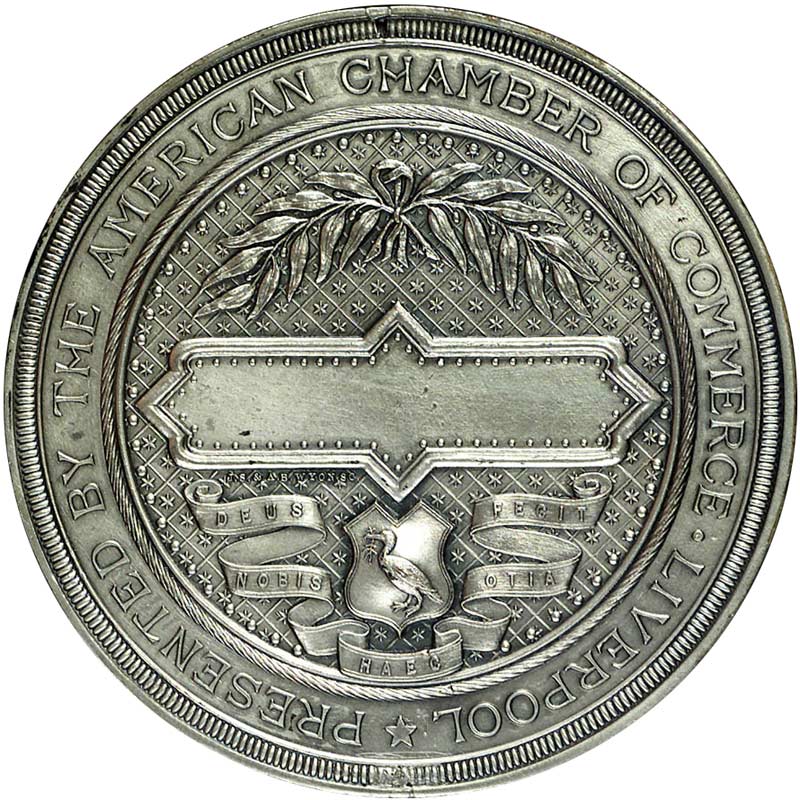
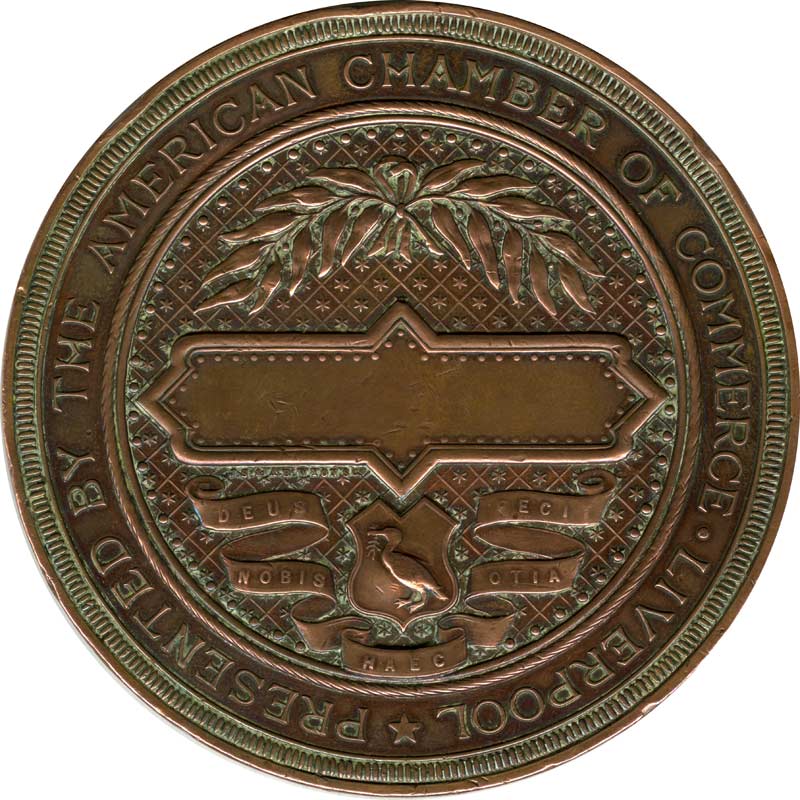
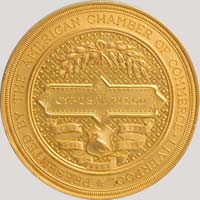
Reverse: The central design on a field of stars has two laurel branches above, the recipients name inscribed in a frame in the center and at the bottom, the symbol with motto for the city of Liverpool. The motto inscribed on ribbon: “DEUS NOBIS HAEC OTIA FECIT.” The central region is surrounded by an unbroken length of cable. The peripheral legend: “PRESENTED BY THE AMERICAN CHAMBER OF COMMERCE • LIVERPOOL*” The medallists’ mark, “J.S. & A.B. WYON SC.” located beneath the frame. The inscription on the illustrated medal is “TO SIR SAMUEL CANNING.” |
This medal is bronze with a heavy gold plating, 76mm in diameter, 206.8 grams.
All the documentation for these medals when they were in the planning stages refer to an order for four medals in gold, but this one is gilt bronze, as is one of the two Cyrus Field copies at the Metropolitan Museum of Art in New York.
From the Illustrated London News, Saturday March 30th, 1867:
The American Chamber of Commerce at Liverpool resolved some months ago that a gold medal should be made and presented by the Chamber to Sir Samuel Canning, chief engineer; Mr. Cyrus W. Field, of New York, the original projector of the Atlantic Telegraph; Sir James Anderson, the Commander of the Great Eastern steamship; and Mr. Willoughby Smith, the electrician, in commemoration of the successful laying of the Atlantic Telegraph cable.
The medal above was presented to Sir Samuel Canning.
The full story of this medal, which belongs to Herman Blanton and is shown here by his kind permission, may be seen on this page.
Cyrus Field donated two copies of this medal to the Metropolitan Museum of Art in 1892. The first one is in gold, and the second is copper gilt: |
 |
 |
 |
 |
| The National Maritime Museum, Greenwich, London, has this uninscribed medal in a silver-frosted finish, perhaps silvered bronze: |
 |
 |
| At least one uninscribed copy was struck in bronze: |
 |
 |
|
|
| 1867 French Medal |
| |
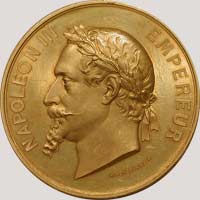
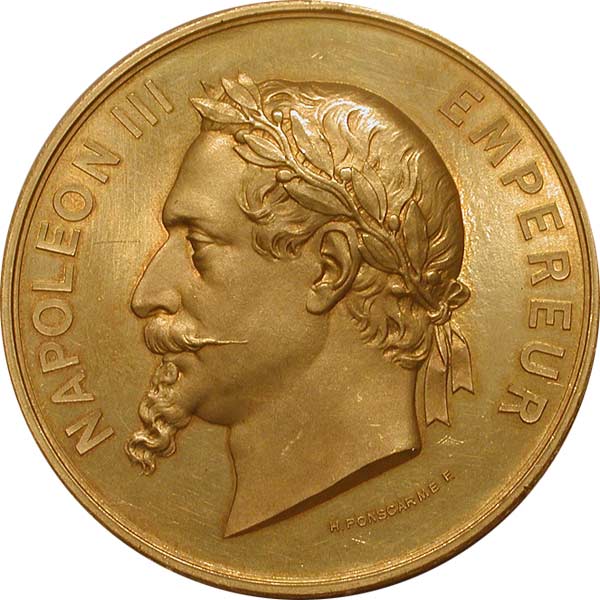
NAPOLEON III
EMPEREUR
The laurel-wreathed head of Emperor Napoleon III, facing left, and the signature H. PONSCARME F.
Medal diameter 67mm
Gold |
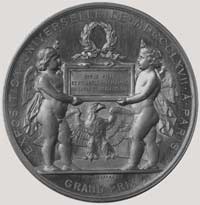
EXPOSITION UNIVERSELLE
DE MDCCCLXVII A PARIS
GRAND PRIX
Cyrus Field
et
Cies. Anglo Americaines
du Cable Transatlantique
Two putti support an inscribed panel with a laurel wreath above and an eagle as an emblem for France below. |
This GRAND PRIX medal was awarded at the Paris Universal Exposition in 1867 to Cyrus W. Field and the Anglo-American Telegraph Company for laying the transatlantic cable from Ireland to Newfoundland in 1866.
François Hubert Ponscarme, 1827-1903, was a French medallist and sculptor. The Grove Dictionary of Art notes that “the prize medal he executed for the Exposition Universelle in Paris of 1867 was very well received...”.
The design was used for all the medals at the 1867 Exposition, the panel being inscribed according to the award. The medal was also struck in bronze at the same size, with the recipient’s name in the tablet and “POUR SERVICES RENDUS” replacing “GRAND PRIX” at the bottom of the medal, and in gold of diameter 51mm with the legend “RECOMPENSES”. There was also a 37mm version in bronze with a different reverse design.
Cyrus Field’s 1867 gold medal was donated by him in 1892 to the Metropolitan Museum of Art in New York, together with a copper-gilt version of this medal and many other artifacts and artworks from his personal collection.
Some information in this section is from The Metropolitan Museum of Art Bulletin,
New Series, Vol. 56, No. 3, Winter, 1998-1999. Charlotte Gere: “European Decorative Arts at the World’s Fairs: 1850-1900”. |
|
|
| 1868 Cyrus W Field Congressional Medal |
| |
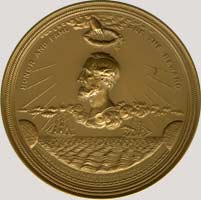
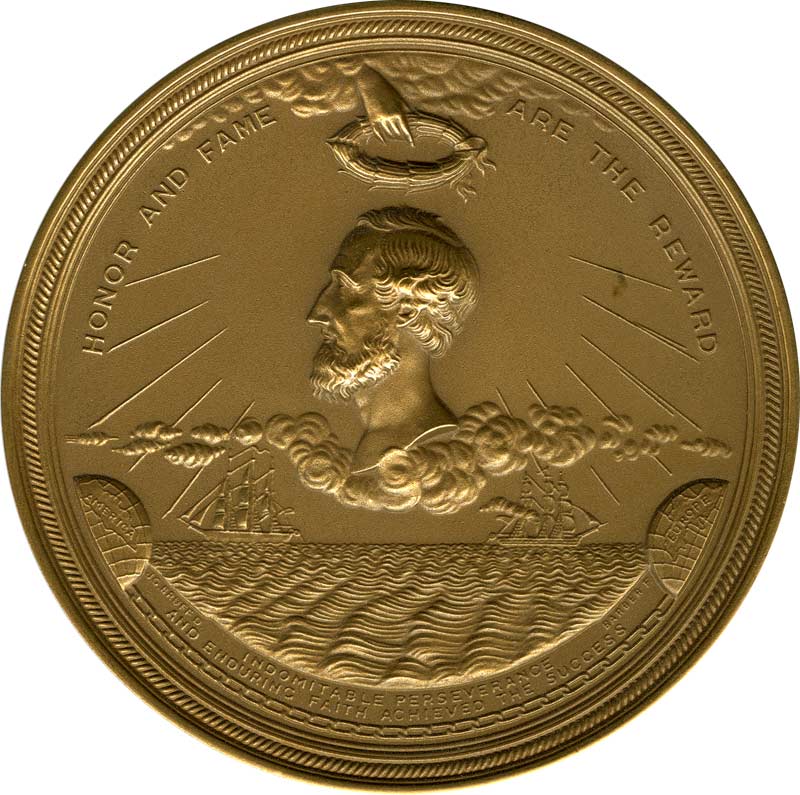
Honor and fame are the
reward.
Indomitable perserverance and enduring faith achieved
the success.
Medal diameter 76mm
Bronze |
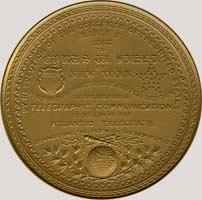
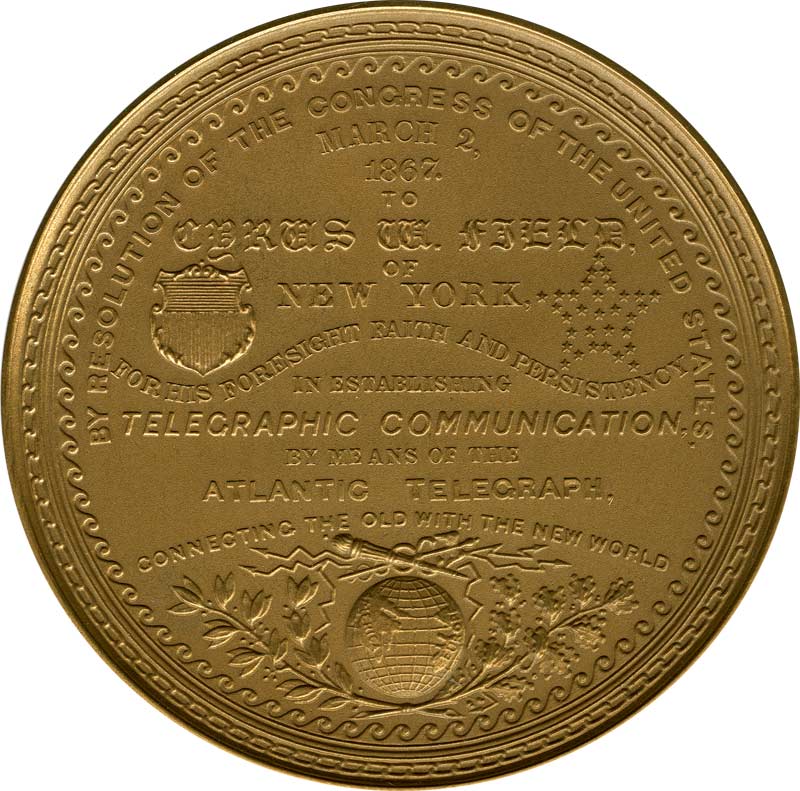
By resolution of the
Congress of the United States, March 2 1867, to Cyrus W. Field of
New York for his foresight, faith and persistency in establishing
telegraphic communication by means of the Atlantic Telegraph connecting
the old with the new world. |
The original of this medal, measuring 103mm and weighing almost 27 ounces, was struck in gold
and awarded to Cyrus Field in 1868. He also had a duplicate of this medal; see the full story linked below.
Both copies were still in Field’s possession at the time of his death and were left in his will as part of a group of items to be divided among his children. However, the Metropolitan Museum of Art in New York has one of these medals in its collection, listed as “Gift of Cyrus W. Field, 1892” and the other was in the Allan Weinberg collection as of January 2020.
The Met also has two copies of this medal in copper and gold leaf from the same donation by Field.
In 1868 the Mint also struck 103mm versions (matching the size of the gold medal) in aluminum (then a precious metal) and bronze. All the variations of this medal struck in 1868 are referenced as Julian PE-10.
The 103mm medal was re-struck by the Philadelphia mint in yellow bronze in the 1950s.
The images here are of
the 76mm (3") yellow bronze replica issued by the United States Mint for general circulation in the 1960s as US Mint medal number 625.
Click
here for further historical information on this medal, courtesy of the late Rich Hartzog of
World Exonumia |
|
|
| 1874 River Plate-Brazil-Uruguay Cable Medal |
| |
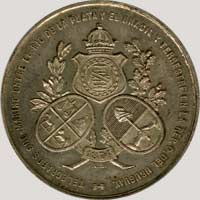
Telegrafos sub-marino entre el Rio de la Plata y el Brasil y terrestre en el Rep.[ublica] O.[riental] del Uruguay
1874
(Submarine telegraph between the River Plate and Brazil and terrestrial in the [Eastern] Rep[ublic] of Uruguay)
Medal diameter 36mm
Silver |
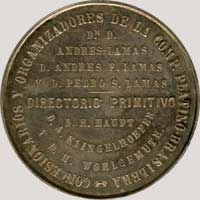
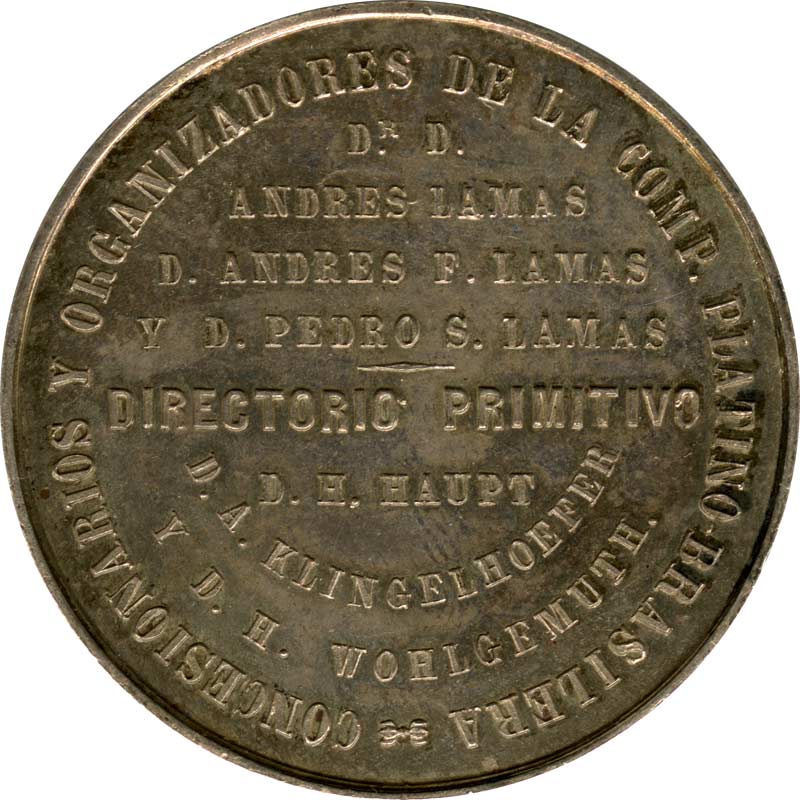
Concesionarios y Organizadores de la Comp. Platino Brasilera
(Concessionaries and Organizers of the Platino-Brazilian Company)
Dr. D. Andres Lamas
D. Andres F. Lamas
y D. Pedro S. Lamas
Directorio Primitivo
D. H. Haupt
D. A. Klingelhoffer
y D. H. Wohlgemuth |
Inaugural medal for the River Plate cable of the Companhia Telegrafica Platino-Brasilera, made and laid in 1874 by Siemens Brothers, London.
The medal is marked A.M under the date on the obverse.
Gustavo Coll notes that the medal shows the emblems of Brazil, Argentina and Uruguay on the obverse (clockwise from top), while the reverse shows the name of the founders and those of the first Board of Directors.
Andres Lamas was a prominent Uruguayan politician and diplomat. |
|
|
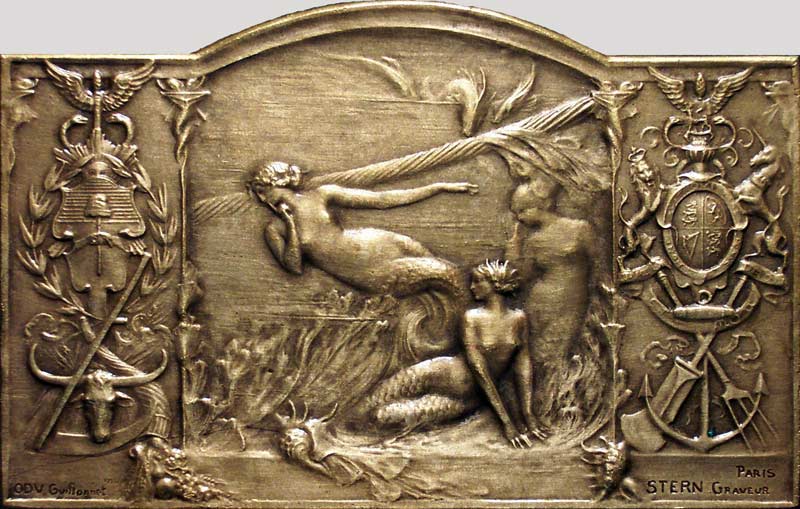
| 1910 Argentina-Europe Cable Medal |
| |
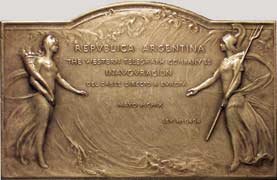
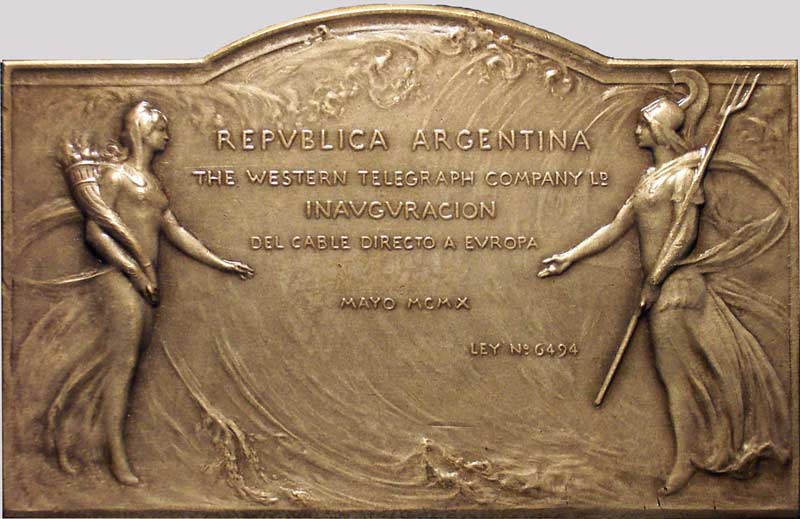
REPUBLICA ARGENTINA
THE WESTERN TELEGRAPH COMPANY LD.
INAUGURACION
DEL CABLE DIRECTO A EUROPA
MAYO MCMX
LEY NO 6494.
Medal 84 x 55 mm
Bronze |
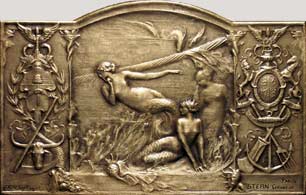
O.D.V. Guillonet
Paris
STERN Graveur
Edge stamped ‘BRONZE’ |
The images of this medal are courtesy of Gustavo Coll
The National Maritime Museum in Greenwich, UK, also has a bronze copy |
| Medal commemorating the opening in May 1910 of the first direct telegraph cable between Argentina and Europe, operated by the Western Telegraph Company Ltd. Gustavo Coll notes that it was "the second longest telegraph cable in the world (3,145 n.m.)" at that time.
The 1910 cable ran from St Vincent - Ascension - Buenos Aires, connnecting at St Vincent with the cable to Madeira laid in 1901, and also to the 1906 cable to Fayal, Azores, which connected to Carcavelos and Porthcurno.
The designer of the medal was the French artist Octave Denis Victor Guillonnet and it was engraved by Stern of Paris.
Obverse: On a background of waves two females in classical dress. On the left Argentina (right), left hand slightly forward, in her right hand a cornucopia; on the right, helmeted Europa (left), right hand forward, in her left hand a trident.
Reverse: Divided into three panels (from left to right): In the left panel are objects symbolic of Argentina—caduceus, coat of arms within encircling branches, scythe, cow’s head, cornucopia. In the centre panel are mermaids, the cable behind. The right panel shows objects symbolic of Europe—caduceus, the British Royal arms, an anchor behind a crossed steering oar and trident.
The medal was also issued in silver, identical to the bronze medal shown above but stamped "ARGENT" on the bottom edge. Weight in silver is 5.5 oz, 155 g. |
|
|
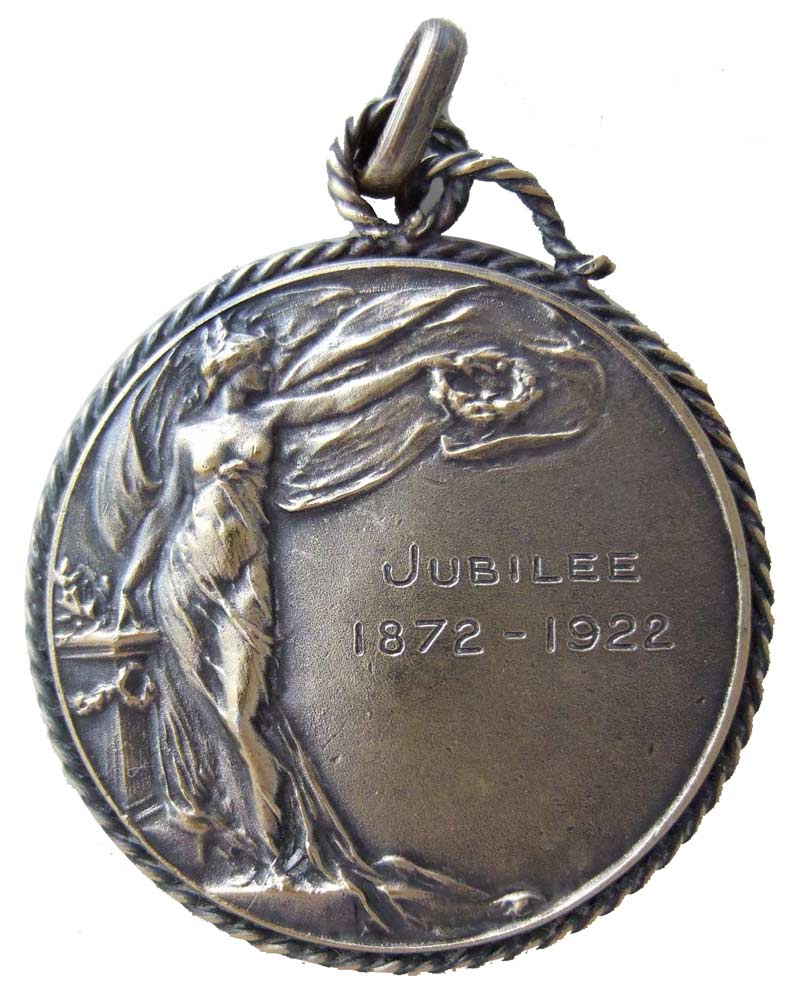
| 1922 Eastern Associated Telegraph Companies Jubilee Medal |
| |
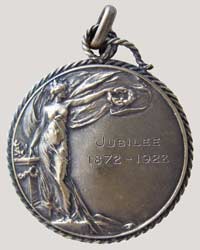
JUBILEE
1872 - 1922
Medal diameter 30mm
Silver |

To Commemorate
the
50th Anniversary
of the
Establishment
of the
Eastern Associated
Telegraph Companies |
In 1872 the Eastern Telegraph Company
and the Eastern Extension, Australasia & China Telegraph Company merged
to form the Eastern & Associated Telegraph Companies, and many smaller
companies under John Pender’s control were also incorporated into the merged entity.
In 1922, on the 50th anniversary of the formation of the group, a jubilee celebration was held in London and a commemorative book was published by the company: Fifty Years of "Via Eastern".
There is no mention of a Jubilee medal in the book or elsewhere, and the history of the medal shown here is unknown. As can be seen from the photo of the reverse, the medal has been mounted as a pin or brooch at some point. |
|
|
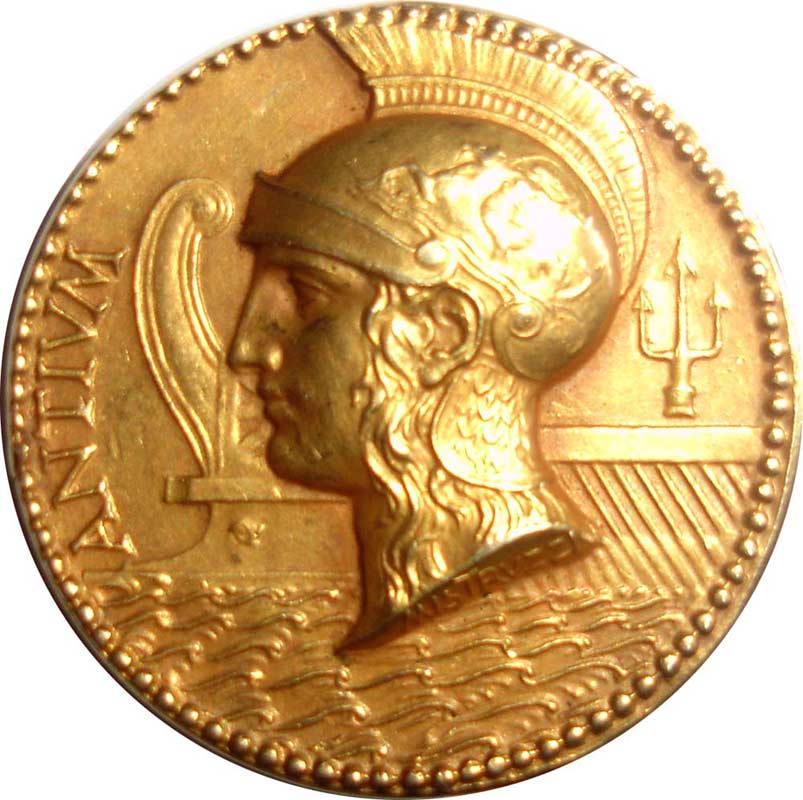
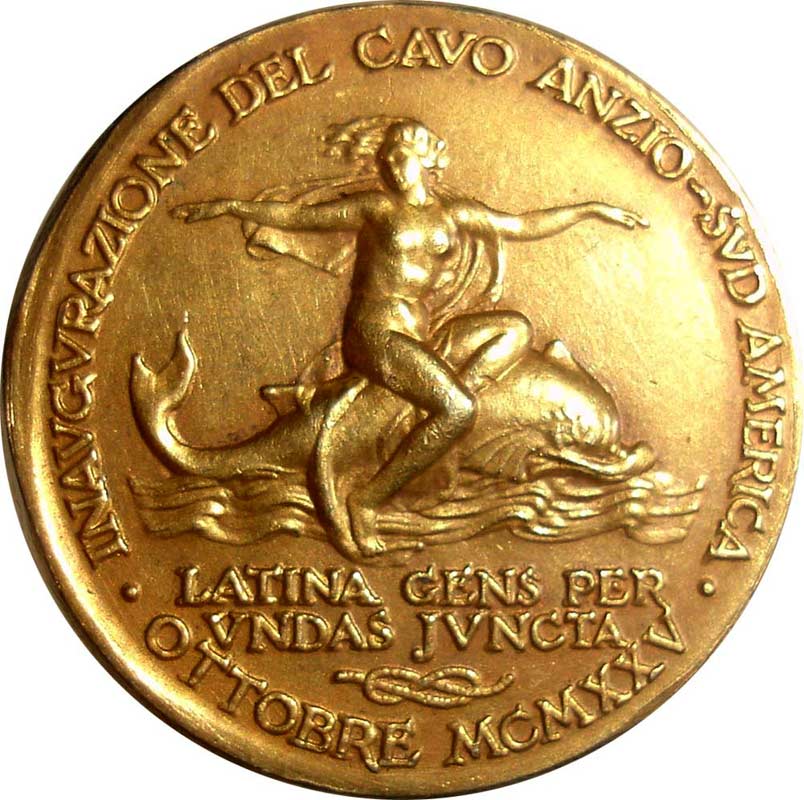
| 1925 Italcable Anzio-South America Cable Medal |
| |
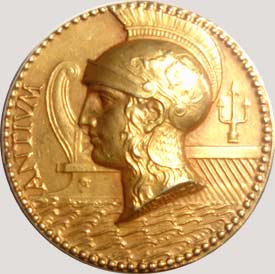
ANTIVM
(Antium)
Medal diameter 22mm
Gold |

INAVGVRAZIONE DEL CAVO
ANZIO-SVD AMERICA
LATINA GENS PER
VNDAS JVNCTA
OTTOBRE MCMXXV |
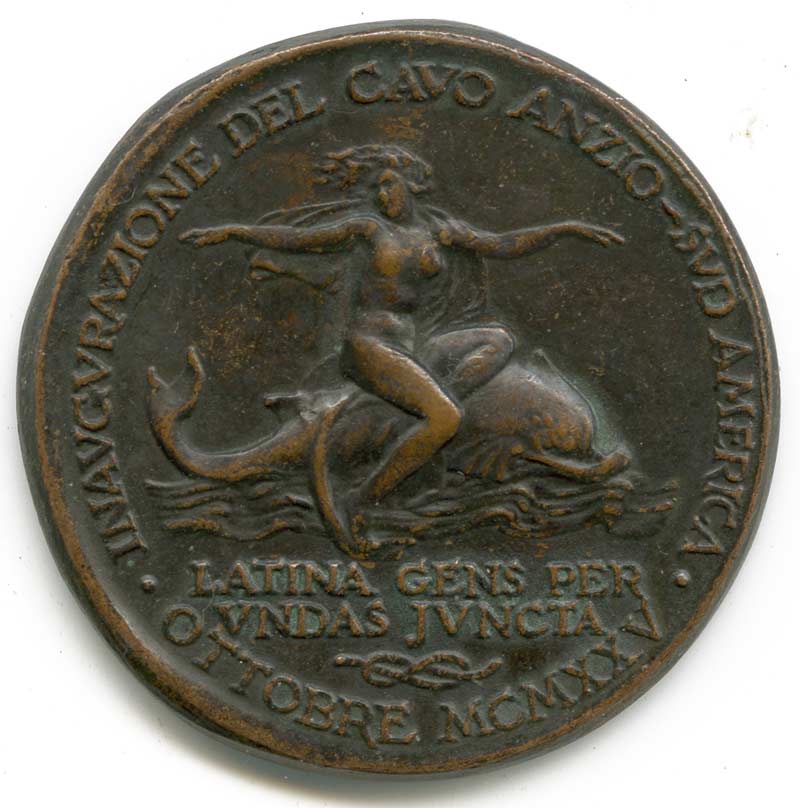
Inaugural medal for the Italcable cable system from Anzio, Italy, to South America. The project was started in 1924 and completed in 1925.
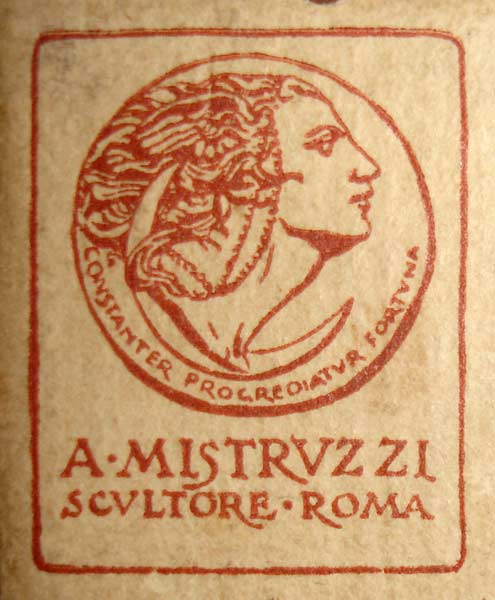
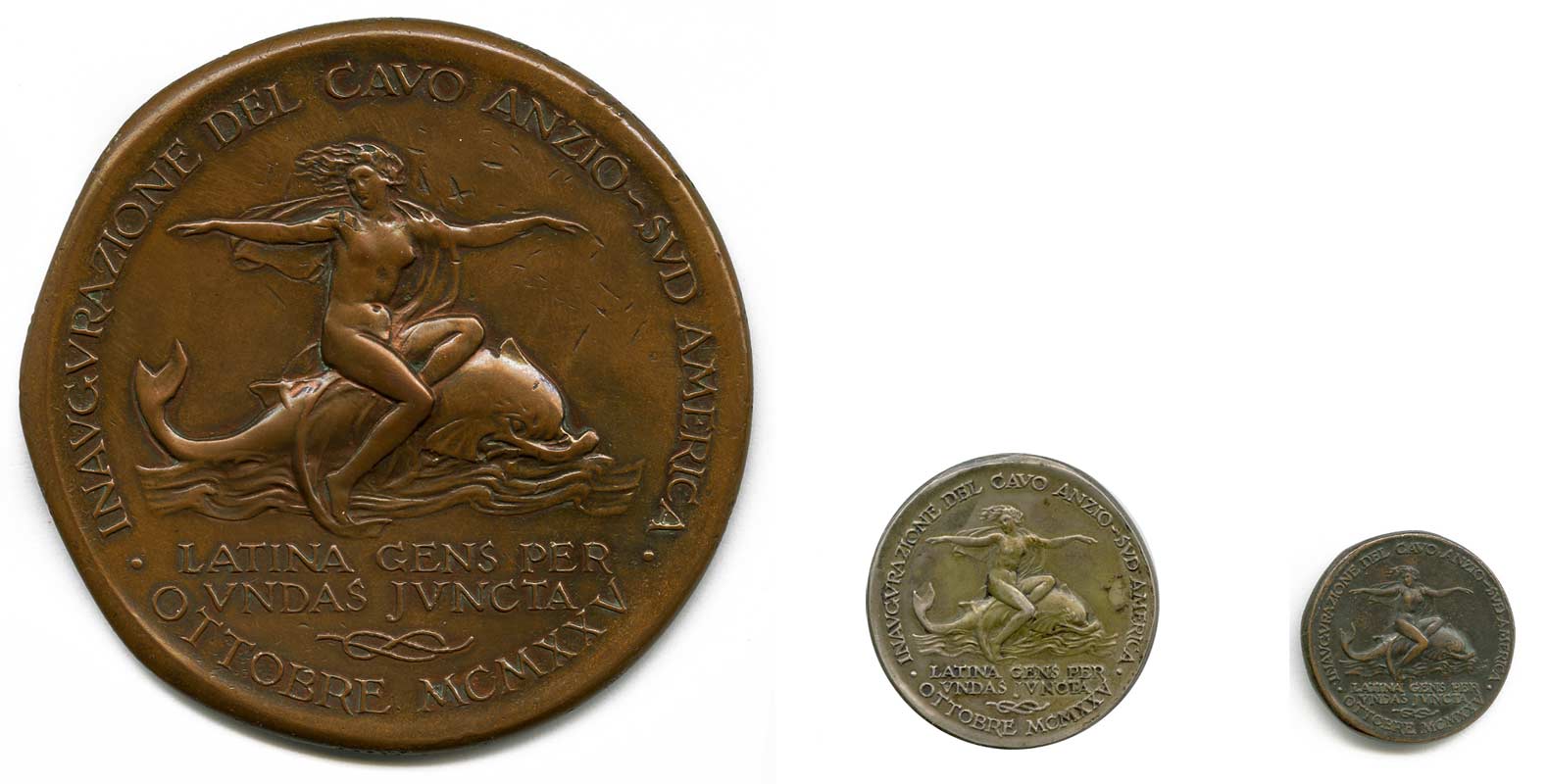
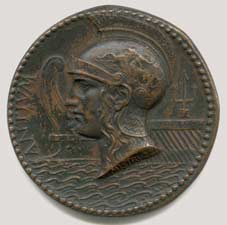
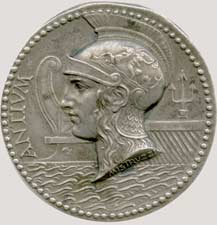
The medal was sculpted by A[ngelo] Mistruzzi of Rome; his name is engraved at the base of the bust on the obverse. The 22mm medal was struck in gold, silver, and bronze; the American Numismatic Society catalogue records 36mm and 85mm bronze versions, and the 36mm size was also made in silver. An 85mm medal appears to have been struck only in bronze.

Box label |
The inscription on the reverse of the medal reads:
Inaugurazione Del Cavo
Anzio-Sud America
Latina Gens Per
Undas Juncta
Ottobre MCMXXV
Inauguration of the Cable
Anzio-South America
Latin Peoples
Joined through the Waves
October 1925
The images of the gold medal are courtesy of Miguel Santos.
Other than the material, the 22mm medal in bronze is identical to the gold medal shown above: |
 |
 |
| The 36mm silver medal is also to the same design: |
 |
 |
As noted in the introduction, medals and tokens on this page are not shown to scale, but are instead displayed at a standard size.
However, this medal has such a range of sizes that I thought it worth a comparison. The image below shows the 85mm bronze, 36mm silver, and 22mm bronze medals to the same scale. |
 |
|
|
| 1928 All America Cables 50th Anniversary Cable Medal |
| |
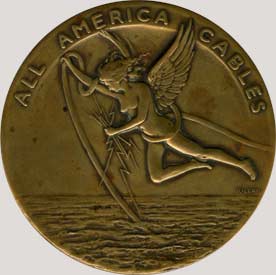
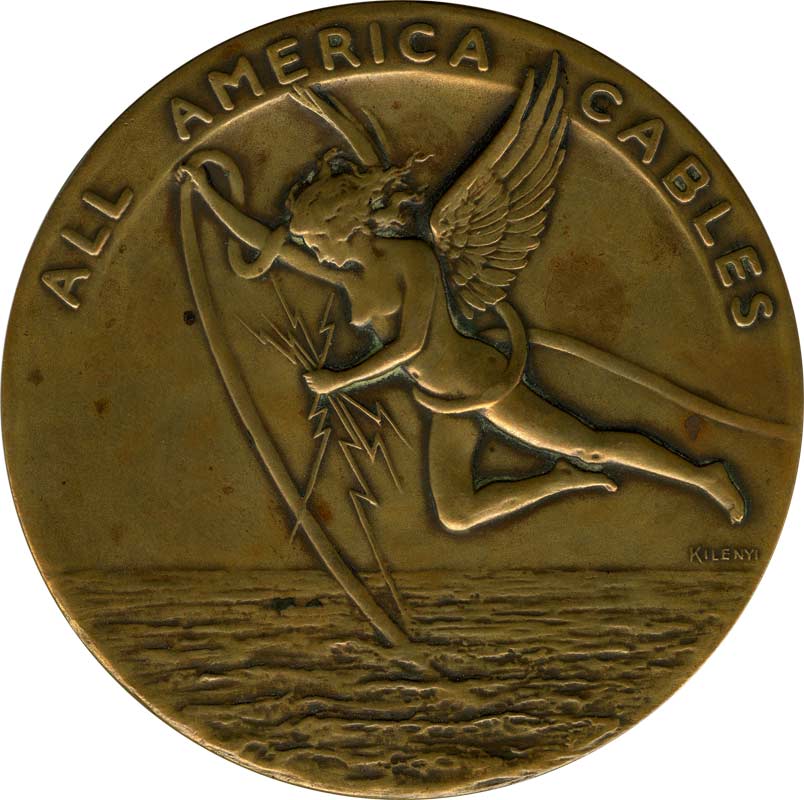
All America Cables
Medal diameter 80mm
Bronze |
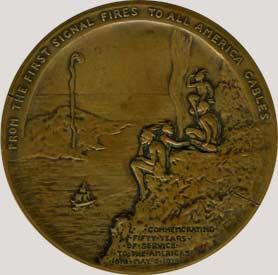
From the First Signal Fires
to All America Cables
Commemorating Fifty Years
of Service to the Americas
1878 May 28 1928 |
All America Cables, Inc. 50th anniversary medallion,
designed by Julio Kilenyi
and produced by
Whitehead
and Hoag.
83mm diameter, 212gm.
On Tuesday, May 8 [1928], President Merrill called to his office all members of the New York staff and presented each individual with a medallion, commemorating the Fiftieth Anniversary of the founding of All America Cables, Inc. He shook hands with each person and thanked every man and woman for the faithful service he or she had performed for All America Cables.
The medallion is a singularly beautiful thing and everybody was impressed by its attractiveness. The design was executed by Mr. Julio Kilenyi, an artist and sculptor of international fame.
[Source: All America Review, June, 1928] |
|
|
| 1866-1966 Transatlantic Telegraph Medal |
| |
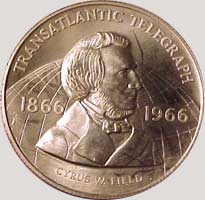
Transatlantic Telegraph
1866 - 1966
Cyrus W. Field
Medal diameter 30.7mm, silver, 16gms. Reeded edge. |
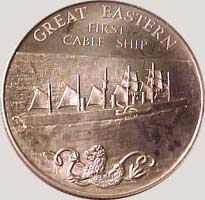
Great Eastern
First
Cable Ship |
This silver medal struck by Heraldic Art in 1966 commemorates
the
centenary of the first permanently successful Atlantic cable, which was laid by Great Eastern in July 1866.
The obverse has a portrait bust of Cyrus Field with a stylized globe in the background. The reverse shows Great Eastern with a sea serpent grasping the cable below. |
|
|
| 1866 Atlantic Cable Completed Medal |
| |
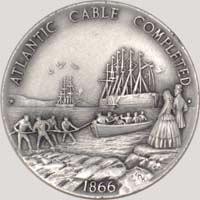
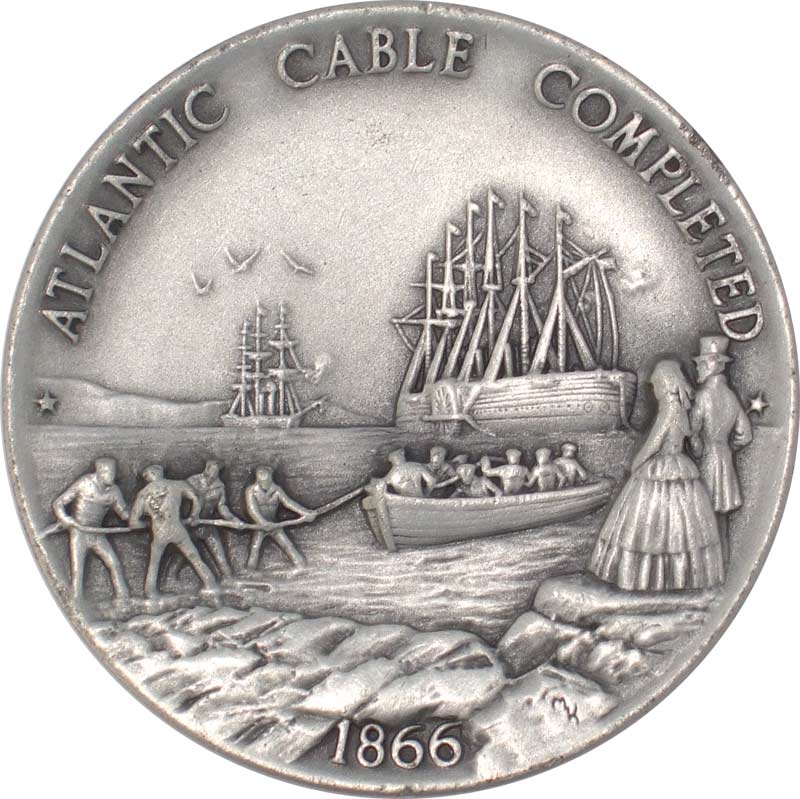
Atlantic Cable Completed
1866
Medal diameter 39mm
Pewter |
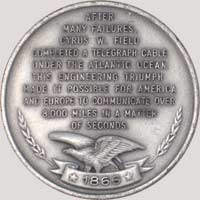
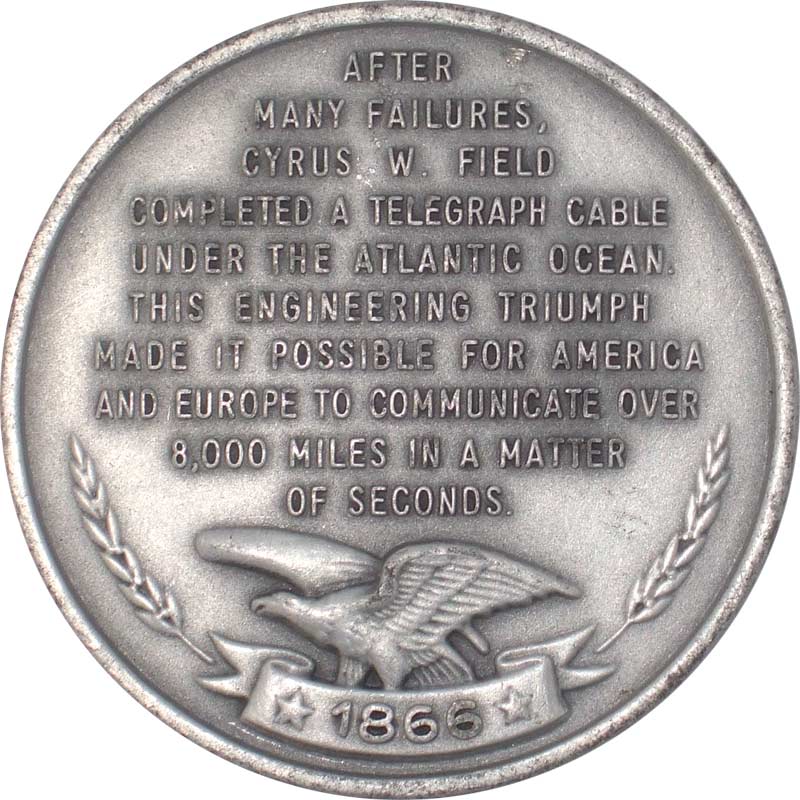
After
Many Failures
Cyrus W. Field
Completed a Telegraph Cable
Under the Atlantic Ocean.
This Engineering Triumph
Made it Possible for America
and Europe to Communicate OVer
8,000 Miles in a Matter
of Seconds.
1866 |
This late 20th century Danbury Mint pewter medal commemorates
the
completion of the 1866 cable. The exact issue date is presently unknown.
The obverse shows the shore end of the cable being landed at Heart’s Content, Newfoundland. The reverse has the inscription and an eagle above a banner with two stars and the 1866 date, flanked by laurel branches.
In the inscription, “a matter of seconds” would more accurately be “a matter of minutes”. |
|
|
| 1969 Portugal to England Cable Medal |
| |
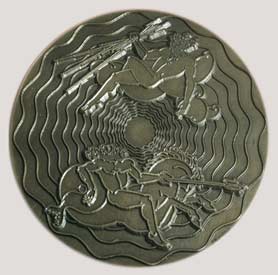
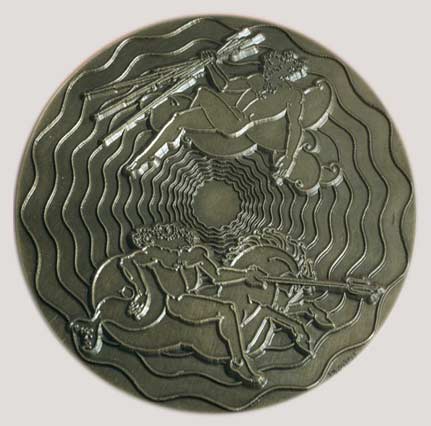
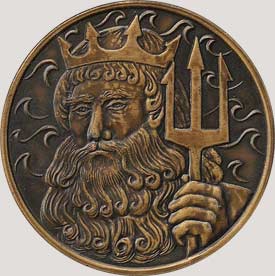
The obverse shows Zeus
and Poseidon
Medal diameter 68.7mm |
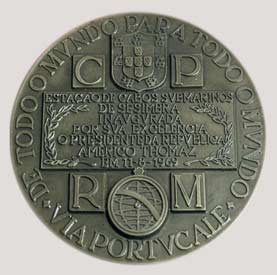
The wording around the edge of the reverse translates as: “From the whole world to the whole world via Portugal,” and the centre wording as: “Submarine cable station Sesimbra inaugurated by his excellency the President of the Republic Americo Thomaz 11-8-1969”. |
This cable from Sesimbra, Portugal to Goonhilly, England, was manufactured by Standard Telephones & Cables Ltd. and was owned and operated by the British GPO and the Portuguese CPRM (Companhia Portuguesa Rádio Marconi).
The Portuguese medal shown above below commemorates the 1969 inauguration of the Sesimbra cable station. In 1973 a radio link connected Sesimbra to the TAT-5 cable station at Conil, Spain. |
|
|
| 1970 TAT-5 Cable Medal |
| |

Systema de Telecomunicacoes TAT-5/MAT-1
Abril 1970
Medal diameter 80mm
Bronze |

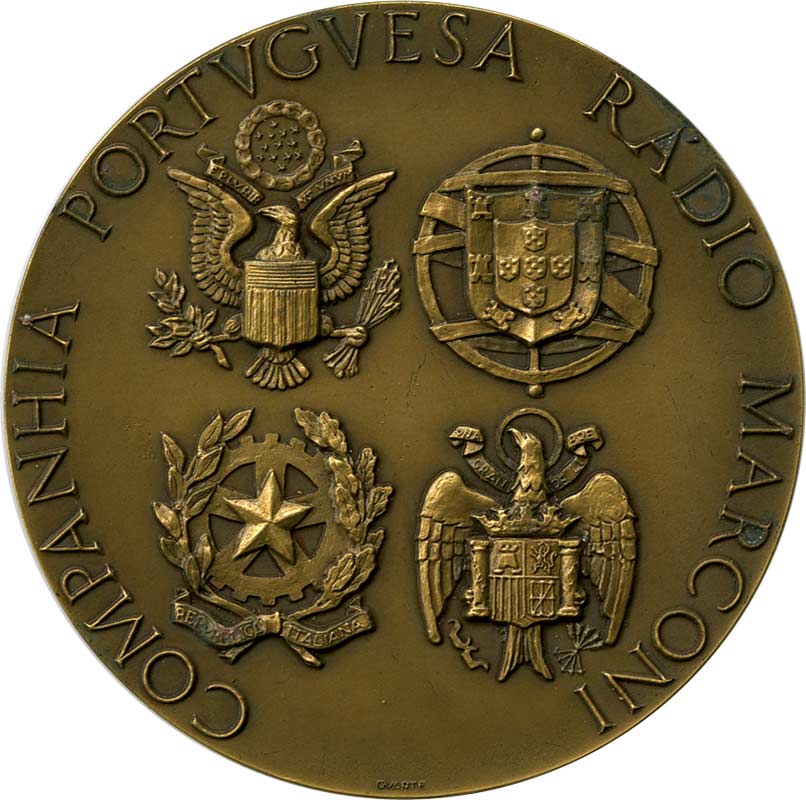
Companha Portuguesa
Radio Marconi |
The fifth in a series of transatlantic telephone cables which began with TAT-1 in 1956, TAT-5 was laid in 1970 between Green Hill, Rhode Island, USA and Conil, Spain, with an extension from Estepona, Spain, to Palo, Italy, designated as MAT-1. TAT-5 had a capacity of 845 telephone circuits and MAT-1 640 circuits.
This medal, diameter 80mm, was created by Portuguese sculptor Joao Duarte for Companha Portuguesa Radio Marconi, the Portuguese telecommunications company. The obverse shows the cable route from the USA to Spain, with the ongoing connection to Italy The reverse has the insignia of the country of each of the main partners in the cable. Other partners were ITT World Communications, RCA Global Communications, and Western Union International. |
|
|
| 1972 Overseas Telecommunications Commission (Australia) Medal |
| |
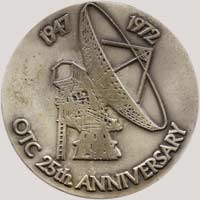
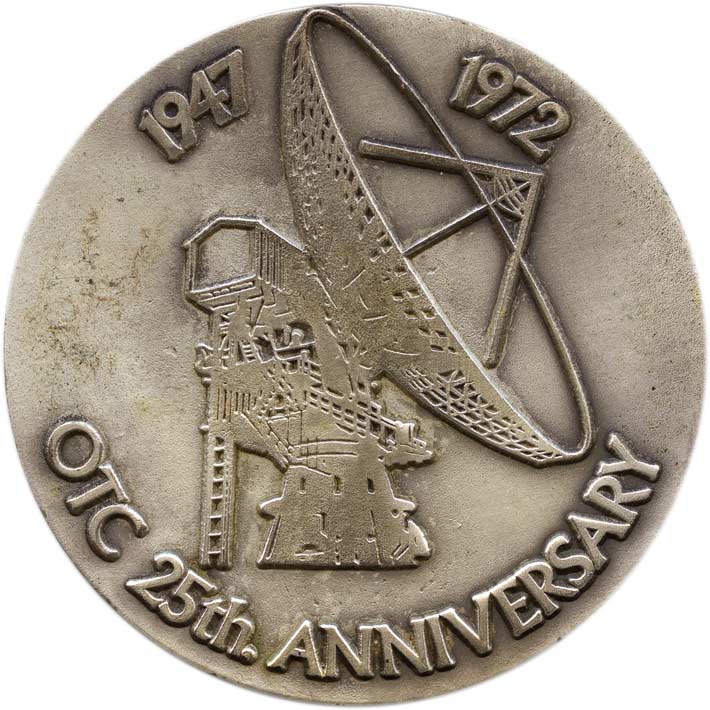
1947-1972
OTC 25th Anniversary
Medal diameter 74mm
Silvered |
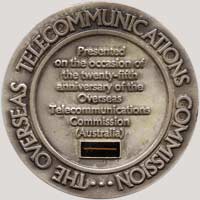
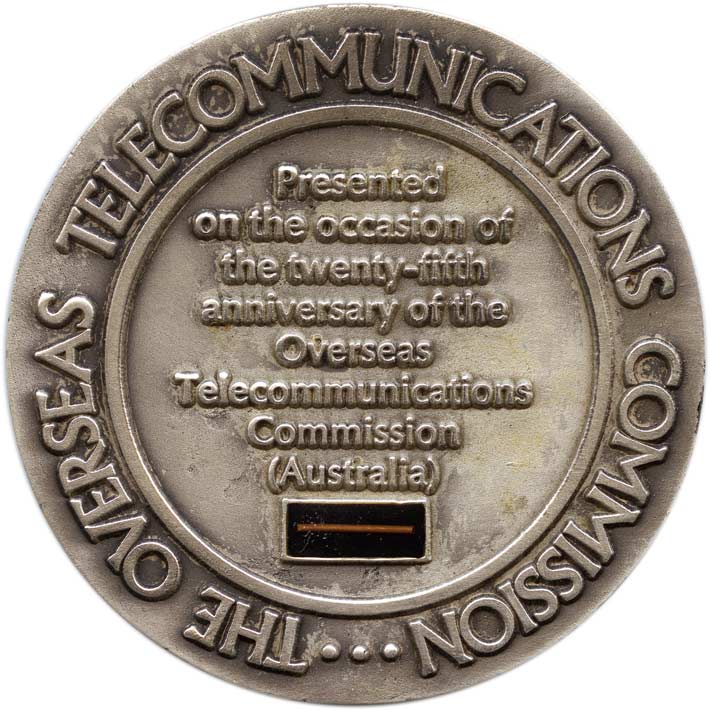
The Overseas Telecommunications Commission
Presented
on the occasion of
the twenty-fifth
anniversary of the
Overseas
Telecommunications
Commission
(Australia) |
Although this medal’s main subject is a satellite dish, the reverse has an encapsulated piece of copper wire which is described on the inside of the lid of the medal’s case:
The copper wire embedded
in this medallion was recovered
off Darwin on November 21, 1971,
from the undersea cable
which provided Australia’s
first overseas telegraph link
on November 20, 1871.
In 1871 the link from Java to Port Darwin completed the first direct undersea cable connection between Australia and Britain, and the medal thus commemorates both old and new telecommunications technology in Australia. |
|
|
| 1975 TELPAL (Tel-Aviv, Israel - Palo, Italy) Cable Medal |
| |

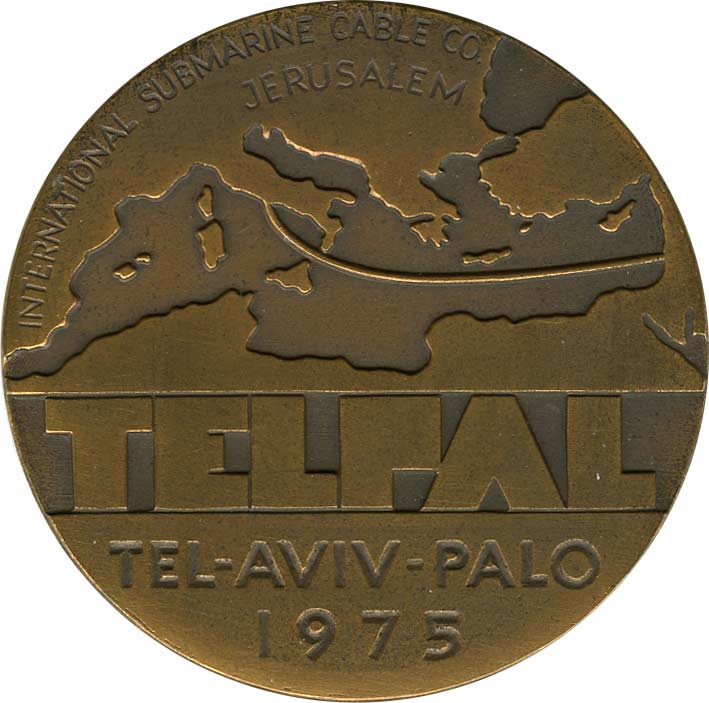
International Submarine Cable Co.
Jerusalem
TELPAL
Tel-Aviv - Palo
1975
Medal diameter 59mm
Bronze |

Their Line
Guides
All Over
The Globe
Psalms 19,5 |
Manufactured by Standard Telephones & Cables Ltd., this 1470-mile coaxial telephone cable was laid by CS Alert ((4) and CS John W. Mackay in 1975 for the International Submarine Cable Company Limited. STC also made the 231 bidirectional repeaters, which were spaced at 6.3 nm and provided a bandwidth of 5704 kHz, 1380 voice channels. The system cost was $36.6 million.
Medal courtesy of David Watson. |
|
|
| 1982 Atlantis (Brazil - Portugal) Cable Medal |
| |

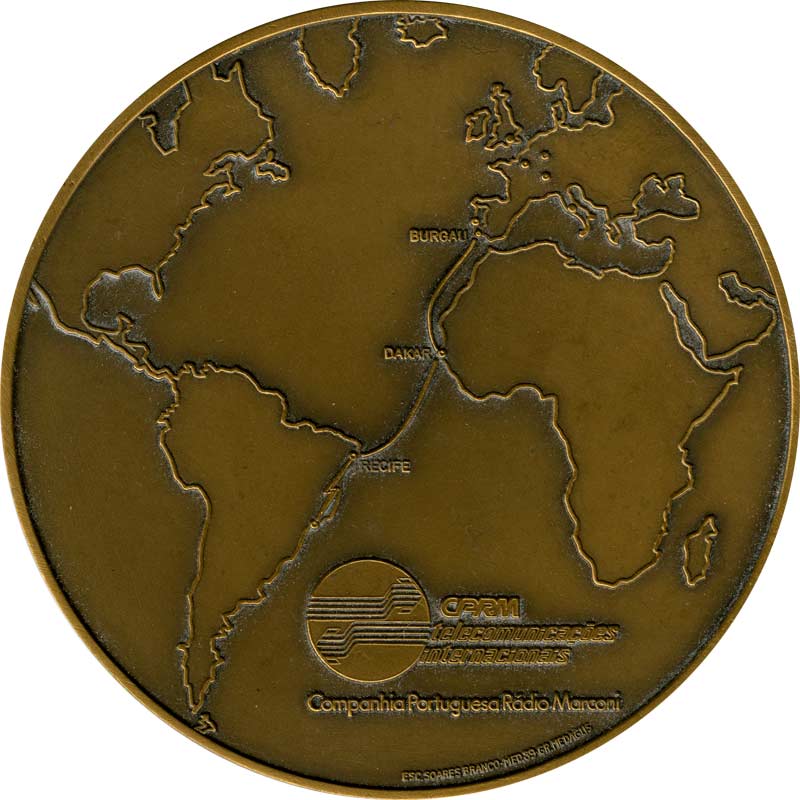
Cabo Submarino Atlantis 1982
Medal diameter 80mm
Bronze
|

CPRM telecomuniçacöes internaciones
CompanhiaPortuguesaRádioMarconi
Esc[ultura] Soares Branco
Med89.GR.Medaglis |
Companhia Portuguesa Rádio Marconi (CPRM) commemorative medallion for Atlantis, laid in 1982 from Brazil to Portugal via Senegal (Recife - Dakar - Burgau). The medal commemorates the completion of section 2 of the cable, between Senegal and Portugal.
Section 1: Recife, Brazil - Dakar, Senegal, 1380 x 4kHz channels. Cable manufactured by Standard Telephones & Cables Ltd. and laid by CS Cable Venture. for Telesenegal/Embratel. System 1855 nm.
Section 2: Dakar, Senegal - Burgau, Portugal, 2580 x 4 kHz channels. Cable made by Câbles de Lyon; Alcatel manufactured the repeaters. Laid by CS Vercors for CPRM/Embratel. System 1570 nm. This section of the cable is commemorated by the medal above.
Both sections of Atlantis were withdrawn from service in 2000.
See this page for further information on Atlantis and Atlas. |
|
|
| 1983 Atlas (Portugal - Morocco) Cable Medal |
| |
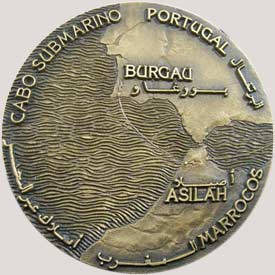
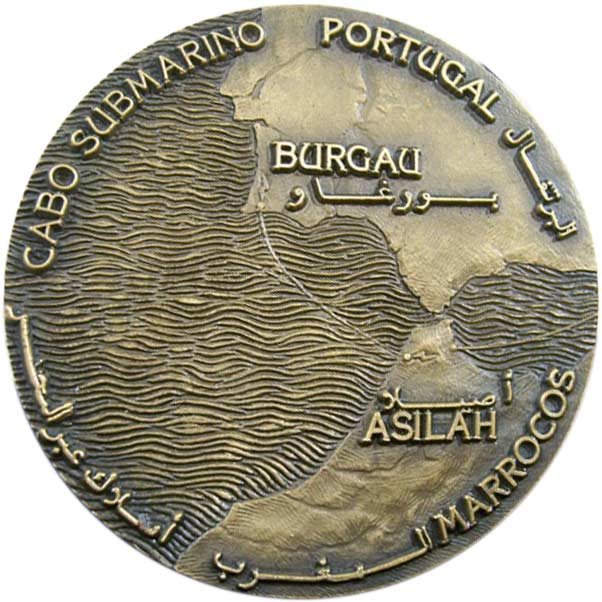
Cabo Submarino Portugal Marrocos
Burgau - Asilah
Medal diameter 80mm
Bronze
|
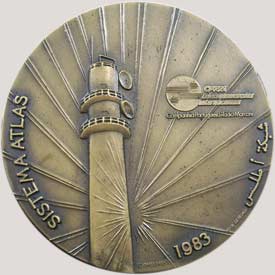
Sistema Atlas 1983
CPRM telecomuniçacöes internaciones
CompanhiaPortuguesaRádioMarconi |
| Atlas medal images courtesy of eBay seller Bargainblasters |
Companhia Portuguesa Rádio Marconi (CPRM) commemorative medallion for Atlas, laid in 1983 from Burgau, Portugal to Arzila, Morocco, by CS Vercors, continuing the route of Atlantis (see above).
The cable was made by Câbles de Lyon for CPRM - MATELCA; system length was 193 nm. and the cable provided 1260 x 4kHz channels.
Atlas was withdrawn from service in 1999.
See this page for further information on Atlantis and Atlas. |
|
|
| 1984 ANZCAN Cable Medal |
| |
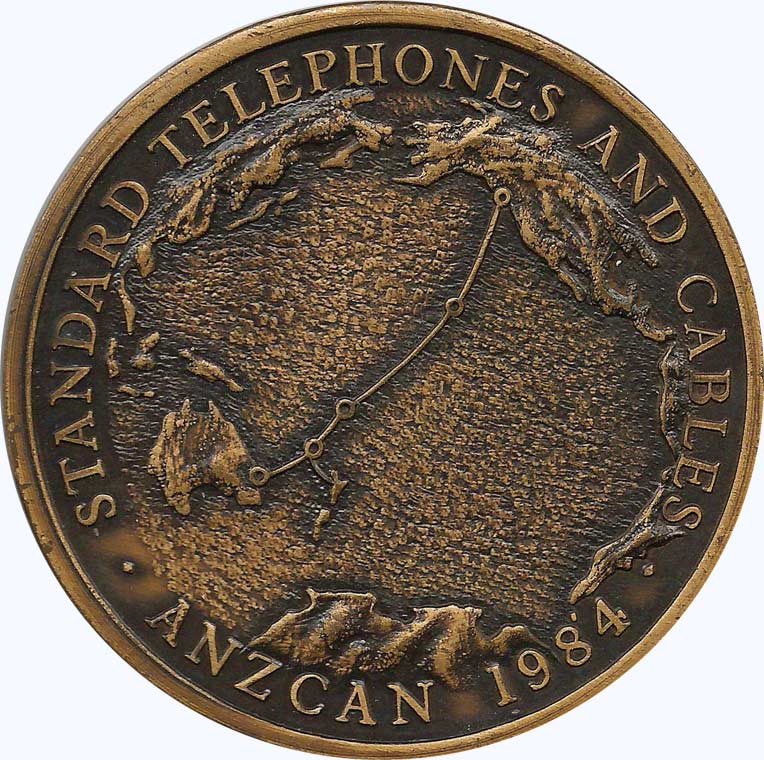
Medal diameter 63mm
Bronze
|

Standard Telephones and Cables
ANZCAN 1984 |
STC Commemorative Medallion for ANZCAN.
In 1984 Standard Telephone and Cables Ltd (STC) celebrated its part in manufacturing ANZCAN with a commemorative medallion, which was given to all employees. Jim Jones, who was working at STC in Greenwich at the time, supplied the scans of his medallion shown above.
Laid in 1984 as a replacement for COMPAC, ANZCAN followed the same route from Australia and New Zealand to Canada, with the addition of a landing at Norfolk Island. The cable was 8,250 nm long, with 1,213 repeaters and a capacity of 1,380 telephone circuits. |
|
|
| Great Eastern Tokens and Medals |
| |
| Great Eastern British Token |

Queen Victoria & Pr. Albert
Token diameter 46mm
White metal |
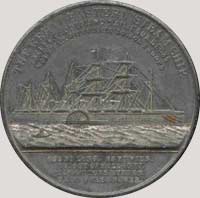
The Great Eastern Steamship
Screw, Paddle and Sail. Four Decks.
Would Accommodate 10,000 Troops
|
Undated British token, maker unknown.
Images courtesy of Lakeland Coin Auctions |
|
| 1860 Great Eastern New York Tokens |
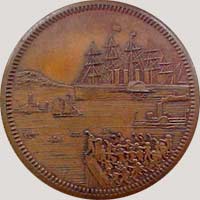
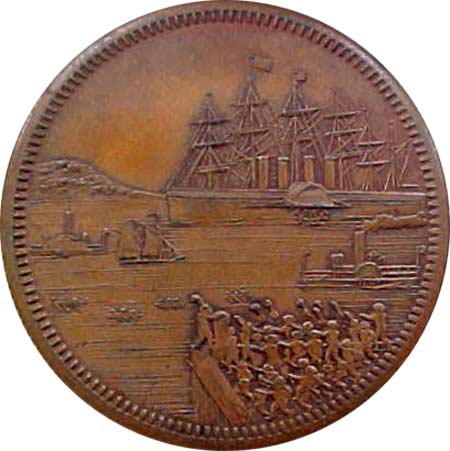
“Great Eastern entering New York harbor as crowd on pier waves and smaller ships scurry about” (Rulau)
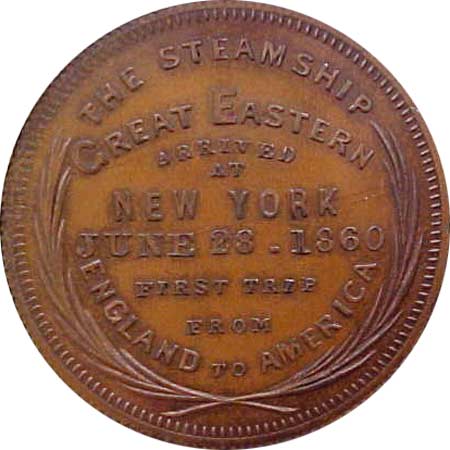
Token diameter 31mm
Copper |

The Steamship
Great Eastern
Arrived
at
New York
June 28 1860
from
England to America |
Issued in 1860 as a souvenir of the Great Eastern’s first voyage to New York. Several designs of token were produced that year in copper, brass, and white metal, most of them by George H. Lovett. Further information on these Great Eastern pieces may be found at the Lovett Tokens & Medals website. |
Same obverse as above
Reverse (shown at right):
Purchased on Board
the Great Eastern
1860
Tonage
24.000
Horse Power
2.600
Length 692 Ft.
Breadth
83 Ft.
Depth 60 Ft. |

Copper |
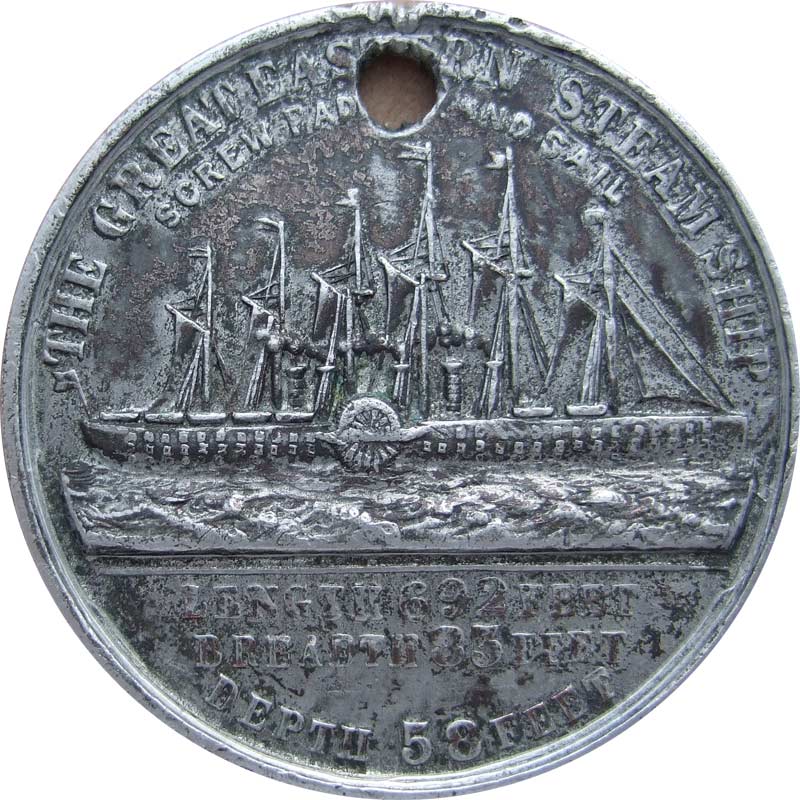
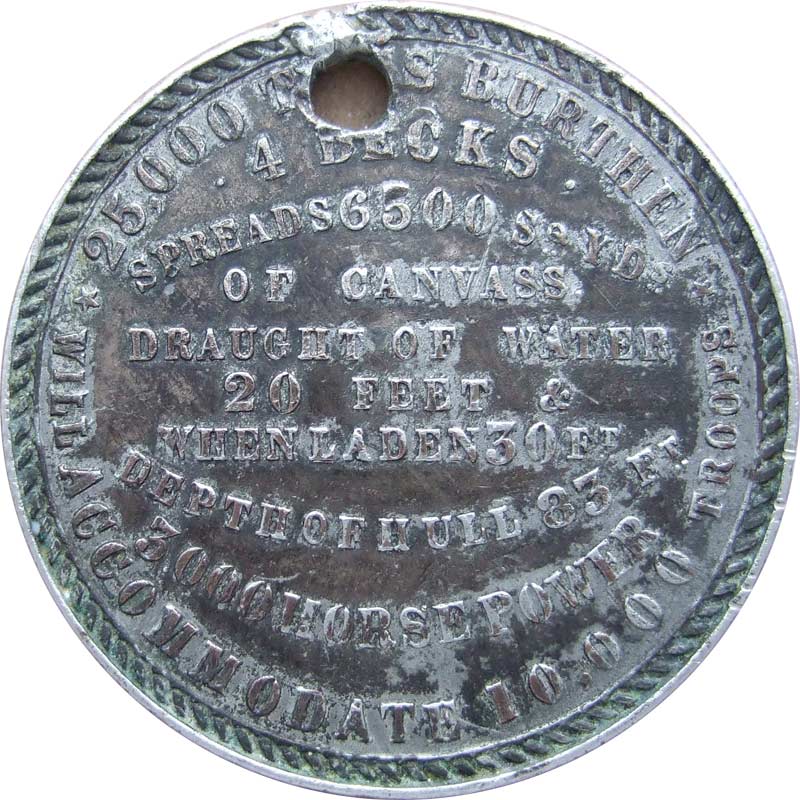
Also issued in 1860 as a souvenir of the Great Eastern’s first voyage to New York, the following token is larger than the others, at 42mm. This is not identified as made by Lovett; note the differences in the image of the ship, the wording, and the statistics. |
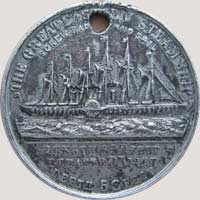
The Great Eastern Steamship
Screw, Paddle and Sail
Length 692 Ft.
Breadth
83 Ft.
Depth 58 Ft.
Token diameter 42mm
White metal |

25.000 Tons Burthen
4 Decks
Spreads 6500 Sq Yds
Of Canvas
Draught of Water
20 Feet &
When Laden 30 Ft.
Depth of Hull 83 Ft.
3000 Horsepower
Will Accommodate 10,000 Troops |
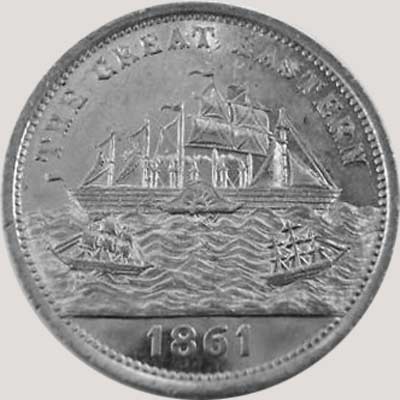
| This 33mm 1861 token is also unidentified; note the differences in the statistics and the image of the ship, and the odd punctuation.. |
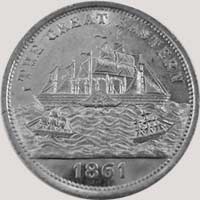
The Great Eastern
1861
Token diameter 33mm
White metal |

Tonnage 24,000
Length 692 Ft Bredth 83ft Depth 60ft
2,600
Horsepower
4, Decks
10, Boilers
112, Furnaces
10, Anchors
Will Carry
10,000
Troops |
|
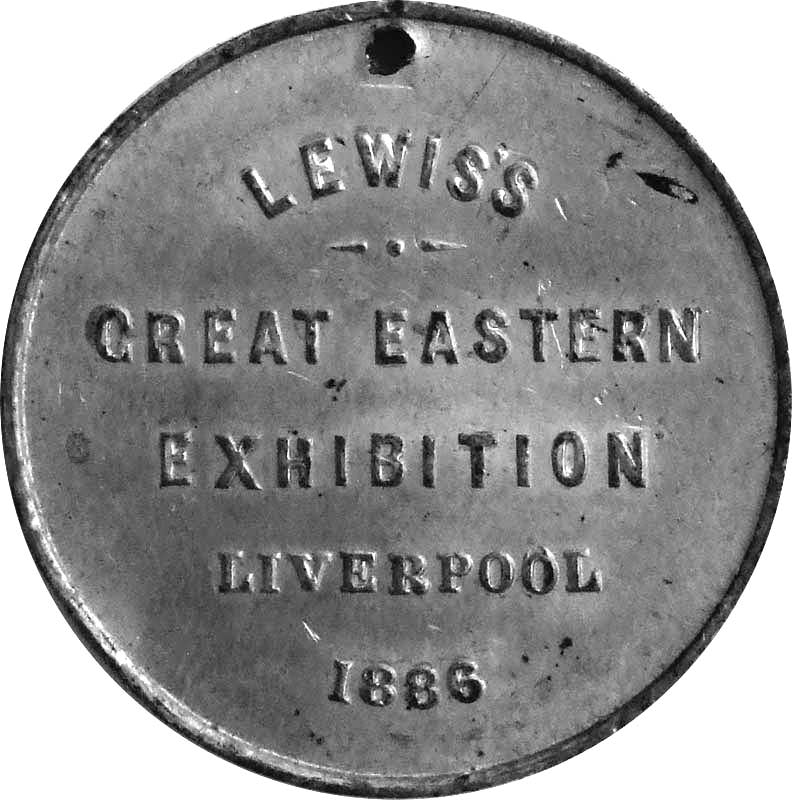
| 1886 Great Eastern Lewis’s Token |

Lewis’s
Great Eastern
Token diameter 33mm
White metal |

Lewis’s
Great Eastern
Exhibition
Liverpool
1886 |
After her final cable voyage in 1874 the Great Eastern fell into dire straits. In 1885 the High Court of Justice ordered the ship to be auctioned and the date was set for 28 October of that year.
Louis S. Cohen, Managing Director of Lewis’s Department Store in Liverpool, made a private offer of £20,000 for the ship, but this was rejected by the mortgagees and the auction took place under the watchful eye of Mr. Justice Chitty. The first offer was £10,000 and it gradually rose to the final bid of £26,200 offered by Edward de Mattos, the representative of London Traders Ltd. This company intended to load the ship with coal, sail it to Gibraltar, and use it as a coal hulk.
Cohen, having failed to purchase the Great Eastern, offered to charter the ship for a year on condition that it was made available for the Liverpool Exhibition of Navigation, Travelling, Commerce and Manufactures to be held in 1886.
The exhibition was duly held, and these tokens were issued as souvenirs of a visit to the Great Eastern. The tokens were also made in brass.
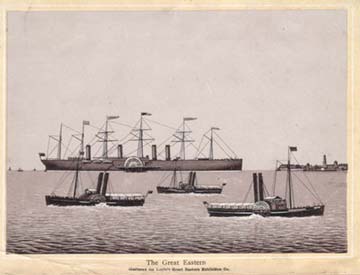
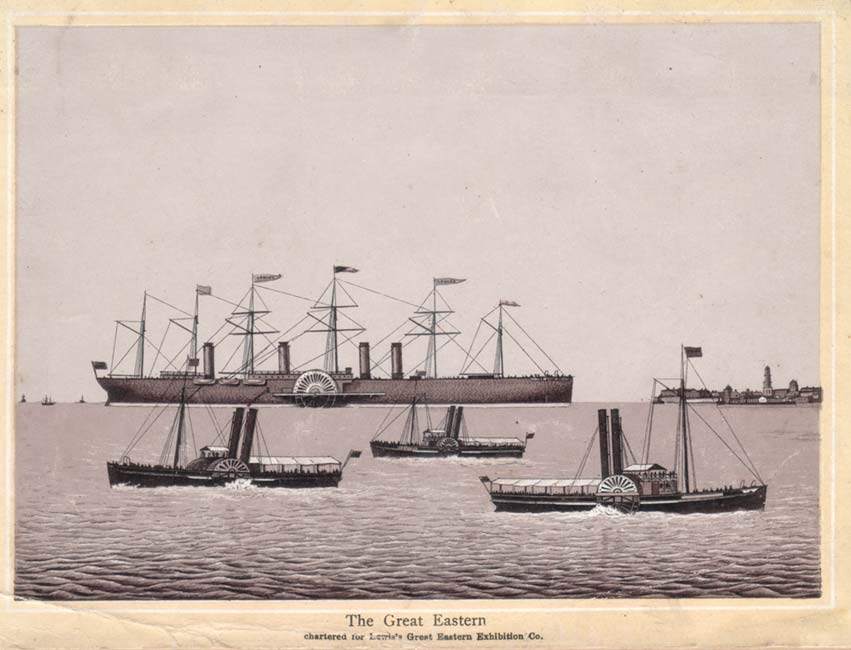
The Great Eastern
chartered for Lewis’s Great Eastern Exhibition Co. |
Bill Glover’s complete story of the Great Eastern may be found on this page, and details of the Exhibition are here. |
|
| Claude Gondard Great Eastern Medal |
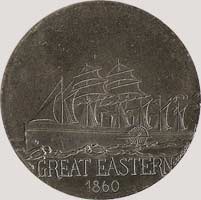
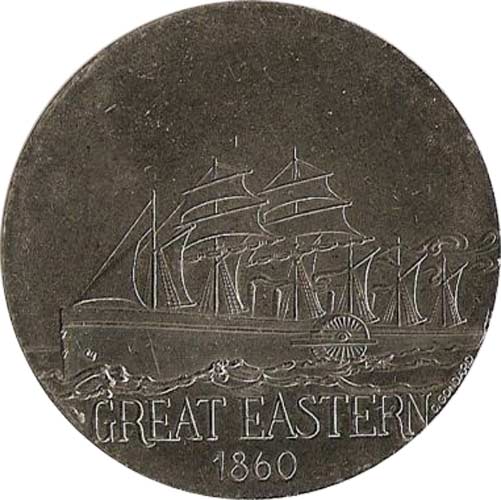
Great Eastern
1860
Medal diameter 41mm
Nickel-silver |
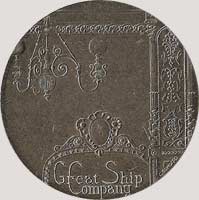
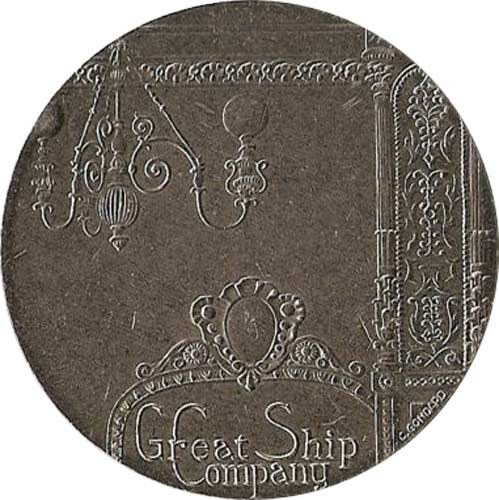
Great Ship
Company |
A modern medal designed and produced in France by the Paris Mint, this is one of a series featuring great ocean liners.
The engraver, Claude Gondard (1944- ), was trained as an engineer and studied at the École Polytechnique and the École Nationale Supérieure du Génie Maritime.
Although the illustration is dated 1860, the ship is shown with only four funnels. The fifth funnel was not removed until 1865, when Great Eastern was converted for cable laying. See the Broadsides page for illustrations of the ship in both configurations. |
|
|
|