The Diary
Cable Work
at
Gallipoli
1915 – 1916
By
A.L. Spalding
P r e f a c e
-on-Levant-II-1916_s.jpg)
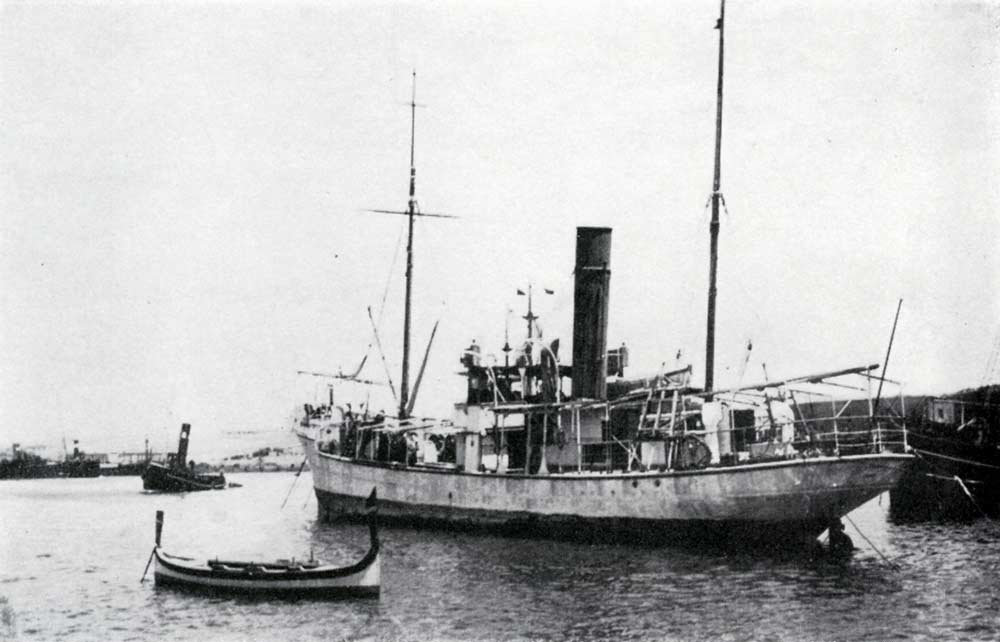
A.L. Spalding (left) on board Levant II. Photograph titled:
“Picking up the Suvla Bay Cable after the evacuation” and dated 1 January 1916
|
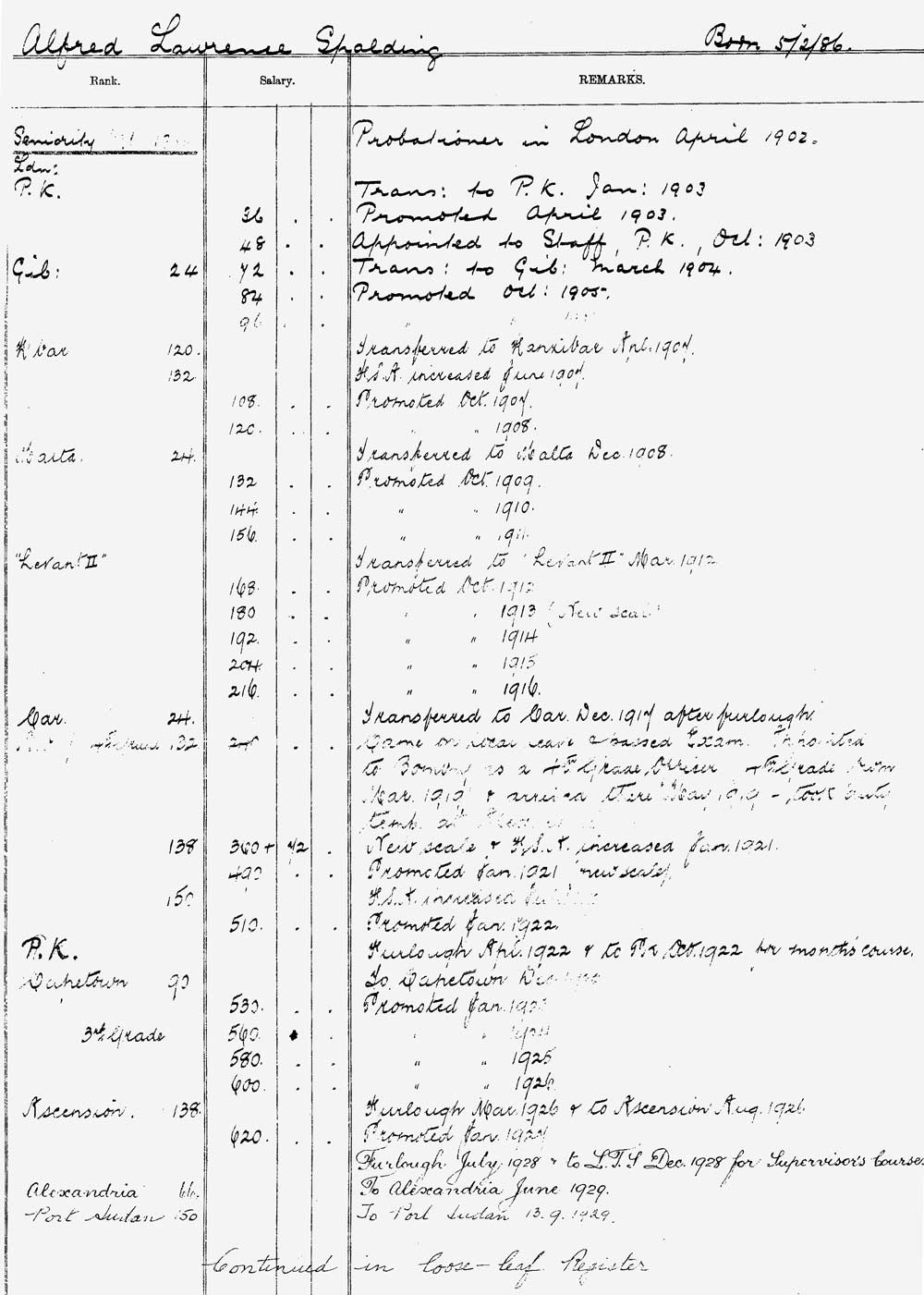
The following pages are simply a record of things seen, heard or experienced while on board Cable Ship LEVANT II, together with the occasional remarks expressing my own feelings and impressions at the time. At the request of Captain Wightman, Messrs Black and Birkbeck, I have made these extracts from my Diary, well knowing that other records kept on board are far more worth reading. As my own Diary however, was the only one on the ship embracing the whole period of the Gallipoli Campaign, I have thought that these unliterary writings may in future be of interest to the few of us who, working together under trying and often dangerous conditions, passed many anxious moments in each others company. Moments which I know are not fully or well described.
When reading through this Diary myself I have enjoyed going over again in my mind, the times we passed together. I have noticed that some events that meant a great deal to us in the way of anxiety are often described with a few short sentences. We, however who took part in these events can mentally fill in the blanks to complete a picture from the rough outline.
I have added after each month’s Diary, some notes correcting or enlarging upon first impressions or information. I should mention that occasionally the diary was not fully written up at night . The reason for this was often pressure of work and sometimes the fear of putting on paper information of importance. For instance, no mention of the Evacuation was written down until the event had taken place.
| (SGD). A.L. SPALDING |
|
| SEPTEMBER, 1917 |
1915
April 25th 1915
At Tenedos. Witnessed general bombardment of the Dardanelles and Asiatic Coast as far south as Besika. Just after dawn many transports passed Tenedos on their way to the Dardanelles. Battleships, Cruisers, Destroyers and armed Merchantmen were also in pre-arranged positions, many of them having come up from Mudros. These all took part in the general bombardment. The noise was terrific. The ships operating against the European side of the Straits were too far off to be seen by us but incessant gun flashes could be seen and reports of big guns heard. The ships bombarding the Asiatic side were the ones that came immediately under our notice. It was a stirring and awesome sight in the half light of dawn, especially to us whose only knowledge of warfare had been culled from books. The firing continued but with less intensity during the day. In the evening, a large Hospital Ship passed us steaming South showing the landing of troops had not been effected without loss.
We afterwards heard more details of the landing. After the first terrific bombardment the troops were towed ashore in Lighters. The Steam Picquets boats and tugs were commanded by young Midshipmen for the most part. These Middies in their teens contrasted greatly with the grown men in their charge. The conduct of these young boys who had never seen Active Service before, was spoken of by Admiral Wemyss as more than exemplary.
One ship, the ‘RIVER CLYDE’ ran purposely ashore in order to expedite the landing of her troops. These troops suffered terribly. The first 100 or so, who stepped on to the Lighters were shot down to a man by the sudden and terrible fire from Machine Guns and Rifles and about 50 men who did get ashore, were unable to either go forward or back to the ship and had to remain under shelter of the cliff for 36 hours before help could reach them, when the landing from the ‘RIVER CLYDE’ was successfully accomplished. Two men, Captain Unwin and a Midshipman here obtained a V.C. for wading up to their chests in water under a hail of Rifle fire, to rescue lighters of men which had broken loose.
Meanwhile troops were landed at other points on the European side of the Straits under cover of shell fire from the Men-of-War but always fiercely resisted by the Turks who held their fire until troops were within a few yards of the beach.
The Australians had the most difficult place to land at but eventually established themselves on shore after heavy losses.
The French Troops made a feint landing at Kum Kale on the Asiatic side and were afterwards re-embarked.
An incident worth recording is that HMS ‘IMPLACABLE’ anchored 500 yards from the shore and fired her 12” Shrapnel from that short range into the Turks.
April 26th 1915
Still at Tenedos. awaiting orders from Admiral to lay cable from here to Cape Helles where troops landed yesterday. Received no news but afterwards learnt that positions taken yesterday by our troops had been consolidated. Could hear intermittent bombardment all day and after dark the flashes can be seen almost incessantly.
April 27th 1915
Admiral sent us orders this morning to carry on with cable laying. Laid out nine miles and dropped anchor off Kum Kale. Waiting for daylight.
April 28th 1915
Finished laying the cable today and are now anchored abut 140 yards from Cape Helles beach where three days ago such fierce and terrible slaughter took place. Have still got cable end on board which two local clerks are busily working in the test room. The fire of Machine Guns can be heard from time to time showing that the firing line is not very far away. The camp on shore is being shelled with Shrapnel from time to time and wounded are continually being brought in from the firing line, some on stretchers others hobbling with along with assistance.
The Straits are a wonderful sight. About 200 vessels of all descriptions are anchored between Helles and Kum Kale. Battleships and Cruisers, Transports from huge Cunarders down to humble Tramps, Patrol vessels, trawlers and tug boats. The Warships are continually firing over our heads towards the Turks.
April 29th 1915
Went on shore to land the cable end. An office was fitted up this morning in a tent on the beach. Walked up the hill to have a look at some of the old Turkish trenches. Could see the present firing line about 2 miles away. From time to time Shrapnel would burst overhead making me wonder if it was not better to return to the ship. Obtained a few curios before returning on board.
A German aeroplane flew over the ship, dropping bombs without damage. Our ships failed to bring him down though they fired until he was out of their range.
We hear that the Turks are mutilating our wounded and prisoners. Some of our wounded have been discovered evidently burnt alive. This they say has fired our troops with desire for revenge. The Munsters say they will take no prisoners after what their men have suffered.
April 30th 1915
Have been doing cable work today between the shore and the ships , one of whom hooked and broke the newly laid cable.
News from shore says our troops are doing fairly well . Turks have made a determined attack against the French who are on the right flank at Seddul Bahr about half a mile up stream. The French at one time were in a very bad way.
German aeroplane again visited us and tried more bomb dropping which did no damage. Our aeroplanes today have also been busy.
-:-:-:-:-:-:-:-:-:-:-:-:-:-:-:-:-:-:-:-:-
NOTES: APRIL
As regards entry under April 29th , concerning the report that the Turks were mutilating our wounded and prisoners, although there have been instances, most of the stories were found to be untrue. For instance, the remark that some of our men were afterwards discovered burnt alive was literally true. But the burning was caused by our own guns which struck the house or shed where these unfortunate prisoners happened to be confined. Any mutilations, I imagine must have been perpetrated by Turkish Conscripts from Asiatic tribes. The Turk generally was said by our soldiers to fight like a gentleman.
A case in point was when the ‘TRIUMPH’ sank,(May 25th), the rescuers were fired on but the next day a message came from the Turkish Commander regretting the incident and stating that the fire was from a German Battery over which they had no control.
-:-:-:-:-:-:-:-:-:-:-:-:-:-:-:-:-:-:-:-:-

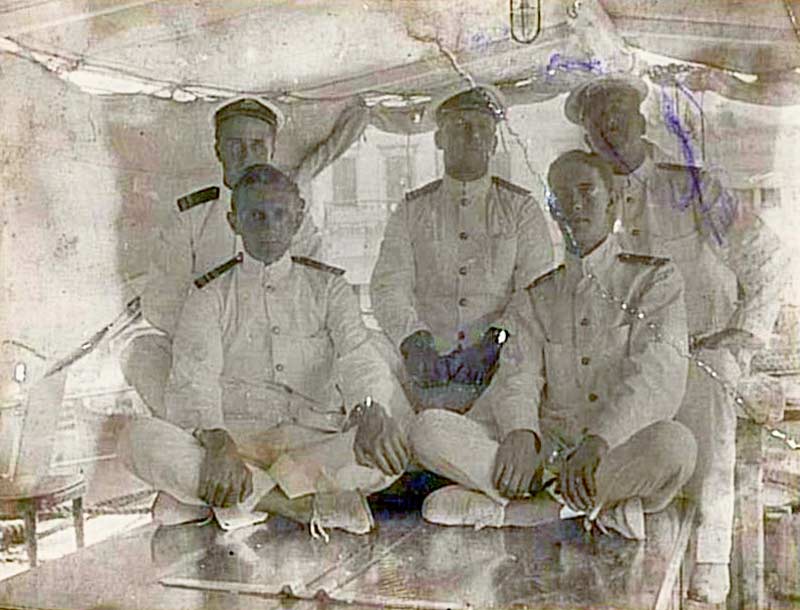
Officers of CS Levant II, 1915
A.L. Spalding front row on the left |
May 1st 1915
Finished repair to the Tenedos cable and returned to our anchorage close to Cape Helles. The fighting, we hear is still vigorous. Our ships continue to bombard the Turkish positions and the Turks shell the beaches from time to time. We saw one shrapnel shell burst quite close to our office on shore.
May 2nd 1915
Laid cable today from Gaba Tepe (where the Australian troops landed) to Cape Helles a distance of about 12 miles. Gaba Tepe beach is almost continually swept by shrapnel. Had a yarn with Lieut. in charge of Signal Office while cable end was being landed. He said they have lost far more men by the shrapnel fire on the beach than in the actual fighting against the Turks. Our Troops apparently only hold the top of the ridge and are unable to advance. Our ship was hit several times by enemy’s shrapnel fire. After landing the cable end we paid out to Cape Helles.
While we were at Gaba Tepe a Destroyer anchored close to us. She had made a raid higher up the coast and captured 18 Turks. The boat load of these prisoners being unable to make shore in a strong wind, tied up alongside of us. The Turks look a wild dishevelled lot. They had been treated like lords compared with the lot of our men captured by the Turks.
May 3rd 1915
Laid three more short cables today from Helles beach to S.S. ‘ARCADIAN’, the first one of which was broken by a trawler’s anchor within an hour of its laying. S.S. ‘ARCADIAN’ is the Head Quarters of the General and Staff and is anchored off the shore among the numerous Transports.
May 4th 1915
Very little news obtainable today. We are still anchored of Helles. Heard that one 15 inch shell from H.M.S ‘QUEEN ELIZABETH’ wiped out a whole battalion of Turks . This seems incredible even for H.M.S ‘QUEEN ELIZABETH’s’ massive guns.
May 5th 1915
Last night about nine o’clock the Gaba Tepe cable was reported broken so I went ashore with Cottrell and took a rough test showing the break was at the far end. Steam down on ‘LEVANT’ so the ‘WHITBY ABBEY’ a patrol vessel was engaged and this morning at day-break Cottrell, Jordan and I with boat load of cable and men were taken to Gaba Tepe or Anzac as it is now called. Arrived there at 7.00am and finished repair by 9.30 am . The men working on the joint and splice in the boat were subjected to rifle fire from the Turks. This may have been stray bullets coming over the cliffs or direct sniping. If the latter, it was not very successful as no one was hurt.
Matters at Anzac seemed much worse than on May 2nd when we were there last, that is as regards fire from the enemy’s guns
Whilst off Anzac, we saw a big shell drop in the water close alongside a collier. This was said to be fired from the German Battleship ‘GOEBEN’ anchored at Chanak. Every now and again she fires one right over the peninsula among the ships anchored there off Anzac.
May 6th 1915
Working on repair to the Helles-Tenedos cable. No news
May 7th 1915
Finished repair to Helles-Tenedos cable. News today that our troops had captured the village of Krithea and are making progress. Krithea is not far distant from Helles but is I believe an important step in the advance towards Achi Baba, the height which commands most of the adjacent country.We also heard today that the German Taube which has become so familiar to us, has been brought down by the Australians at Anzac. But this may only be a rumour.
A shell fired from the Turks today dropped within five yards of our office on Helles beach. The ships are daily bombarding the Asiatic side of the Straits to prevent the Turkish guns being brought up to shell our camps. Whenever a Turkish gun is seen to fire, immediately five or six shells from the French and our Men-of War are at the spot. The distance of the Turkish guns on the Asiatic side is about four miles from our camps.
May 8th 1915
Today we repaired the Anzac cable again at the Helles end. As I write a furious fight is going on shore over the hill. We are making an attack on the slopes of Achi Baba, the next commanding height. This seems to show we have made some progress. The ships are taking part with their twelve inch guns, firing over our heads and making a deafening roar. We hear that Wedgwood, M.P. was yesterday wounded badly while serving his maxim.
While our ship was waiting alongside H.M.S. ‘BURNALUS’ today we could see the fight going on in the distance but the distance was too great to distinguish objects.
Read Wireless news today. One German telegram dated 5th says the Australians attempted a landing at Gaba Tepe but were driven back. Having seen with our own eyes on the 2nd and 5th that the Australians are firmly established there, we are able to judge the accuracy of the German news.
This afternoon we steamed to Gaba Tepe again to buoy the cable (to prevent anchors fouling it.) Went ashore. Shrapnel storm was just beginning as we returned to the ship. Captain Lear, Jordan, Cottrell and self. An Officer informed us that this shelling of the beach was a daily occurrence at this time, (4-5p.m.) for half an hour or so, during which time, the beach is unsafe. Needless to say we were not sorry our work on shore was finished before this performance got into full swing.
When we arrived back on board we saw seven shells in succession with half a minute fired right on our Red Cross Tents; thus seeing with our own eyes that we have many times read of in the papers with more or less incredulity.
The ‘GOEBEN’ this morning firing right over the peninsula got within 30 yards of H.M.S.VENGEANCE’.
On our return to Cape Helles this evening the fight which started this morning was still raging. Just near Cape Helles we passed close to ‘QUEEN ELIZABETH’ with her mammoth guns—a veritable floating fort.
May 9th 1915
At Helles. Camp was shelled this morning from 8.0a.m. to 8-30 a.m., apparently from the Asiatic side. Saw many wounded of yesterday’s fight being brought off from the beach in trawlers.
Our ships renewed the bombardment of the Asiatic coast endeavouring to find the enemy’s guns. Aeroplane hovering above them to report on ships gunfire. Have not heard how successful they were.
Australians today are said to have brought down one of the enemy’s aeroplanes. I have not seen a German aeroplane for a week.
Yesterday’s fight apparently was very sanguinary. We hear that our losses were very heavy and those of the Turks enormous. Krithia and Achi Baba not yet taken though night attacks took place last night.
May 10th 1915
At Helles. Have been working on board SS ‘ARCADIAN’, the G.H.Q. ship today. A Trawler was alongside ‘ARCADIAN’ with many wounded on board. The result of yesterday’s battle. Three of the poor fellows had died in the night. Some hitch here. Apparently all the Hospital Ships were away and there was no accommodation for those men. Perhaps the is some explanation but it makes one indignant to see the luxury and comfort on the ‘ARCADIAN’ in contrast to the suffering on the Trawler made fast alongside. One would think that the poor fellows could be lifted on board the big ship and made more comfortable pending the arrival of a Hospital Ship
And I understand the Trawler had been there all the previous night.
Went to Tenedos this afternoon and returned to Helles this evening.
May 11th 1915
At Helles. Nothing very eventful. Camp shelled during the evening. Otherwise quiet.
‘GOEBEN’ reported to have been hit three times by warships’ guns.
May 12th 1915
Laid another cable today from Tenedos to Cape Helles. During the paying out we received a wire from Tenedos reporting that a submarine had been sighted off Doro channel at 9.00a.m. Finished laying cable at 6.00p.m. A few more shells from the Turks on Asiatic side, one of which exploded 100-150 yards astern of us.
All lights ordered out tonight.
Attack evidently in full swing on shore tonight judging by the noise of rifle and machine gun fire. But glad to say our troops seem to have advanced a little as the firing sounds further off.
May 13th 1915
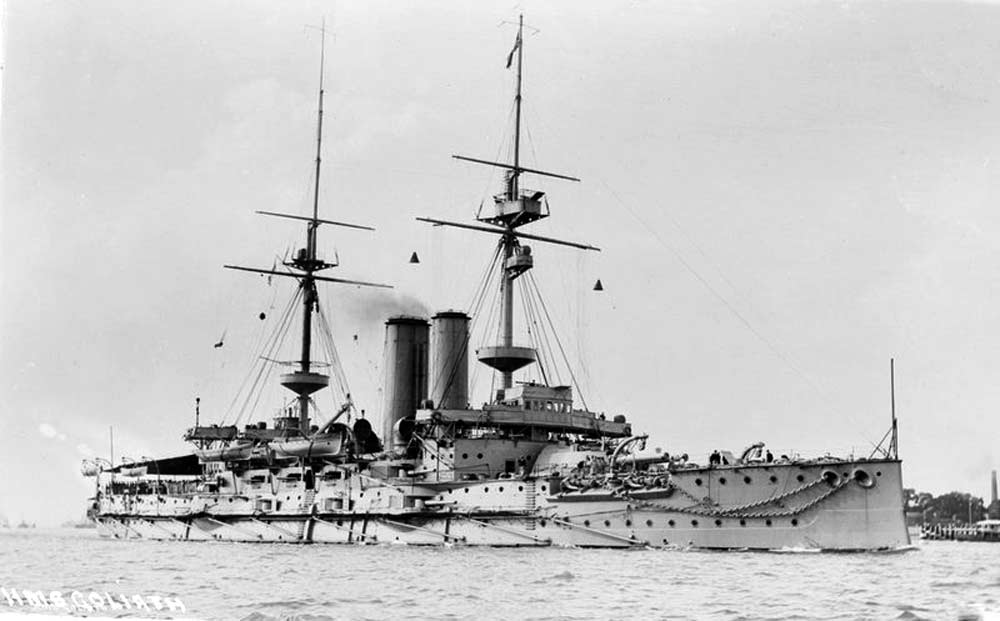
This morning early, H.M.S. ‘GOLIATH’ was sunk by torpedo. Only 150 saved.
We have seen her for the last two or three days at her station near Seddul Bahr about ¾ mile up the Straits from us. Submarine having been reported in the Aegean yesterday, it was at first thought that she had been sunk by her, but it appears that a Turkish Torpedo Boat crept down the Straits unobserved and torpedo the ‘GOLIATH’ and got away again. Being at such an hour of night there was a terrible loss of life. We on board knew nothing of it till this morning. An explosion would attract no notice on account of the continual noise of gunfire.

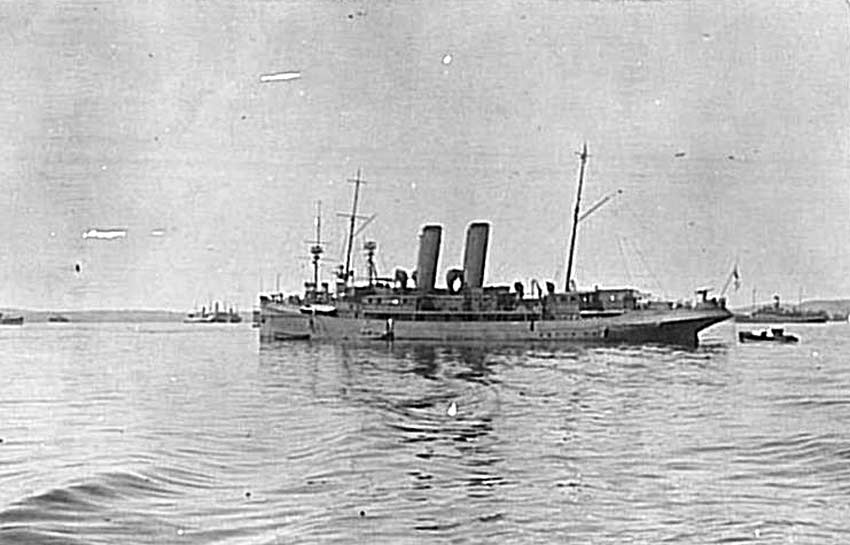
HMS Goliath |
Our troops on shore are said to be advancing slowly. This afternoon the camp on Helles beach was shelled severely from Asiatic Coast. Several horses and some men killed. I saw six or seven large shells burst within half an hour. One burst close to the ship and a hot piece of shell fell on deck.
We proceeded to Tenedos at 4.30p.m.
May 14th 1915
At Tenedos. Could get no news today. We could hear heavy bombardment going on at Helles even from this distance. Trawlers have been patrolling round about here all day, probably looking for the submarine which is known to be in the vicinity.
We remain at Tenedos all day waiting further instructions about the cable we are to lay for S.S. ‘ARCADIAN’
May 15th 1915
G.H.Q. informed us this morning that they did not now require the cable at Tenedos and we proceeded to Helles where we are now anchored with all lights out.
Last night store ship ‘AJAX’ was it by a shell while anchored off Helles and report says that 22 casualties occurred among whom were 18 Turkish prisoners. 70 horses were killed yesterday on the beach by shells from Asiatic side. There is of course no shelter for these animals in the camp and the casualties among them are heavy while men of course can take cover in dug outs when shelling begins.
May 16th 1915
Repaired Imbros-Cape Helles cable today close to Cape Helles. No further news of importance. Submarine scare is still on. Anchored for the night at C. Helles. Camp on shore was shelled again today. Battleships at anchor replying.
May 17th 1915
Cable work off Imbros
May 18th 1915
Spent most of the day on cable work off Imbros, returning later to Cape Helles. While in Kephalo Bay (Imbros) Submarine S.14 returned from an expedition into the Sea of Marmora, having sunk 2 Turkish Men-of War and 10 Transports. Two other of our submarines that went up the straits with E.14 passed into Kephalo Harbour enthusiastically cheered by every sailor in the Harbour.
May 19th 1915
Proceeded to Tenedos and thence to Mudros. On the way found drifting pontoon and towed it to Mudros. Splendid harbour here and useful base for Fleet. Net defences across the harbour at night time.
May 20th 1915
Remained here at Mudros taking coal and water.
May 21st 1915
Laid another cable today between Cape Helles and Imbros. In the evening we procured printed press messages from S.S. ‘ARCADIAN’ also Ashmead Bartletts account of the landing at Cape Helles, C. Tekek and Seddul Bahr. These were the original sheets and we could read under the blue pencilled lines of the Censor. Went ashore at Helles today and things were fairly quiet. Our E.T.C. (Eastern Telegraph Company – Ed.) tent has been removed to a safer place under the shelter of the cliff. The original spot in the middle of the beach was very much exposed and the clerks had had some very narrow escapes.
Heard today that the Australians at Gaba Tepe (or Anzac as it has now come to be called) are doing splendidly, causing so many casualties among the Turks that there is a danger of disease breaking out unless the bodies are soon buried. Turks seem to be weakening.
Remain at Imbros for the night.
May 22nd 1915
Returned from Imbros to Cape Helles this evening. All quiet today. Believe truce arranged for burying the dead. Australians at Anzac said to be doing splendidly and inflicting enormous casualties on the Turks. Here one could hardly think there was any War at all. Everything is so quiet. But submarines are said to be in the neighbourhood and all precautions are being taken. Most of the Transports have been sent off to Mudros and Imbros and the waters are very different to what they were a fortnight ago when 150-200 ships were at anchor off Helles. Destroyers and Trawlers are patrolling incessantly for submarines. No lights allowed to shown by ships.
Italy said to be declaring war on Austria in 3 days time.
May 23rd 1915
Arrived at Mudros this afternoon after calling at Tenedos on route. No news.
May 24th 1915
Left Mudros again this morning, picked up a Clerk and Military Officer at Tenedos and came on to Helles. All is quiet here tonight. Hear that Italy has declared War on Austria.
May 25th 1915
At Imbros. German Submarine at large, succeeded in sinking H.M.S. ‘TRIUMPH’ off Gaba Tepe. We have often seen ‘TRIUMPH’ lying at anchor strafing the Turks on the Anzac’s right wing. Trawler full of naked survivors came into Imbros Harbour today. It was a sight worth seeing – these sailors, some stark naked and others clothed in Signal Flags, cheering for all they were worth and calling out the now famous catechism re downheartedness. One fellow I noticed especially cheerful sitting on the bulwarks without a stitch of clothing acting as Chanty-man. One who does not know the temperament of the British Sailor would have thought a great victory had been scored.
Destroyers and Trawlers seem more busy than ever submarine hunting. I hear today that one of our Submarines has been busy in Marmora and has sent a Turkish Gun-boat to the bottom.
May 26th 1915
We left Imbros yesterday afternoon and anchored off Helles for the night to be ready to repair the cable Anzac-Helles which was broken.
Early this morning we proceeded to Anzac where the cable was broken. We were told that the ‘TRIUMPH’ had gone down on it yesterday and went for the spot but found it broken close to Anzac Beach. During our attempt to repair the shore end the ship was subject to heavy shrapnel fire. We were about 150 yards from the beach with the cable at the bow when the Turks from Gaba Tepe suddenly opened fire on us. Three shells in quick succession burst over the ship. Two men were slightly injured. We cut the cable and cleared out as quickly as possible. We then found the ship was holed above the water line. Two shrapnel bullets entered the testing room, one passed through the inkstand and the other struck the wooden bulkhead. Fortunately for me I was at the Morse Instrument and not at the table.
A Doctor from one of the Mine Sweepers attended to the injured men whose wounds proved to be very slight. We then had lunch at anchor further out and considered how the new end could best be laid. After lunch we secured a Pinnace and coiled the end of the cable in her stern and steamed in close again. Jordan jumped in and the end was landed in two or three minutes. The E.E.’s on shore took the end and the Pinnace returned. We were now spotted again by the enemy who again opened fire just as ship got turned round. However we paid out quickly and got away with no more damage than riddled decks and awnings.
Finished the repair without further mishaps though rifle bullets from time to time struck the water around the ship. Our final splice was made about half a mile off the Turks and it is marvellous that they did not shell us again.
After the repair we anchored off the beach and a general hunt for curios began on board. The binnacle top had been smashed and the saloon sky-light scored. The awnings were pieced in many places and some of the bullets had buried in the deck.
May 27th 1915
Proceeded to Imbros this morning and have been working on board
S.S. ‘ARCADIAN’ G.H.Q ship. Another Battleship was torpedoed this morning. ‘H.M.S. MAJESTIC’ off Cape Helles. Unfortunately the submarine made off without being hit. Orders re lights out at night are more stringent than ever. Very few casualties in the ‘MAJESTIC’. The ship itself turned turtle and her keel is partly visible above the water.
May 28th 1915
No news today. Remained at Imbros.
May 29th 1915
Submarine reported off Gaba Tepe today. Saw official report of sinking of Turkish Transport in the Golden Horn by one of our submarines. We remain at Kephalo all day.
May 30th 1915
Went to Helles this morning and did a cable job there. From Helles we proceeded to Tenedos and thence returned to Kephalo.
May 31st 1915
Working at Helles today. Cables keep getting hooked and dragged by trawler anchors. The beach is fairly quiet now except for aeroplane bombs. Presume our ships have silenced the Asiatic battery. We were speaking to some R.N. Division men today and they were full of enthusiasm and say we ought to have possession of Achi Baba (the dominating hill) in a week.
A big attack is on tomorrow.
-:-:-:-:-:-:-:-:-:-:-:-:-:-:-:-:-:-:-:-:-
NOTES: MAY
Although no mention is made in the Diary of the wonderful transformation of Helles beach after landing, I remember how amazed we were even during the first week at the change effected by the Engineers. The ground between Capes Helles and Tekeh was a gradual slope of sand. On the first two or three days of the Occupation, guns, stores and ammunition all had to be landed and dragged up this slope and over the rough ground to their different destinations. It was a sight to see the drags and gun carriages with fine Clydesdale horses harnessed to them dash up this slope amidst clouds of dust. But within a week a fine road took the place of this rough ground and other wonderful changes took place. The men soon had their dug-outs and shelters , finding canvas was hardly enough protection from the shell fire. Telegraph poles appeared to grow daily, sign posts directed the stranger to the important centres, in fact organisation took the place of chaos. I ought to mention the piers which were speedily constructed to enable the Picquet Boats to land their passengers etc. with ease.
May 4th 1915
If one read ‘Company’ for ‘Battalion’ the report sounds more credible.
May 8th 1915
As regards firing on the Red Cross the excuse urged for the enemy is that the Hospital was too close to the other objects. This excuse seems plausible as the Anzacs were so congested that it must have been difficult to find a secluded spot for Red Cross tents.
May 19th 1915
The Captain of the ‘ARCADIAN’ humanly tried to ease the lot of the poor wounded in the Trawler and was reprimanded by a Staff Surgeon for interfering . The Captain took the matter to the highest quarters and the Surgeon I believe had to apologise.
-:-:-:-:-:-:-:-:-:-:-:-:-:-:-:-:-:-:-:-:-
June 1st 1915
At Imbros on cable work.
June 2nd 1915
Proceeded to Mudros where ‘LEVANT I’ is arriving tomorrow to relieve us.
June 3rd 1915
‘LEVANT I’ arrived and we left for Syra.
June 4th/June 7th 1915
At Syra shipping fresh stock of cable
June 8th 1915
We arrived back in Mudros today with cable to lay a line from Lemnos to Helles from the French Government but there is a hitch in arrangements with the French War Office so we are annoyed at being hurried away back from Syra. We are remaining here at present with ‘LEVANT I’
June 9th/June 12th 1915
At Mudros . Nothing special to report.
June 13th 1915
At Mudros. This morning about 10 o’clock a German aeroplane dropped a bomb on the camp on shore. The bomb exploded close to water’s edge without doing any damage. Fleet opened fire with shrapnel and rifles but the aeroplane soon got safely away. It was reported to have been brought down later on its way back from Mudros.
June 14th/ June 20th 1915
At Mudros . Nothing special to report.
June 21st 1915
We left Mudros this morning and proceed to Tenedos. Met ‘LEVANT I’ there who had just done a repair close to Anzac. They apparently had an exciting time being exposed to rifle and shell fire but evidently nothing like our experience of the 26th ultimo. From Tenedos we went to Imbros. Passing close to Cape Helles we heard and saw fierce bombardment going on near French positions on right flank. Guns can still be heard incessantly (11.0 pm) and we are in Kephalo Bay some 12 miles or so from the battlefield.
June 22nd 1915
Left Imbros this morning early for C. Tekeh to test Anzac cable which had again broken down. Tested at Tekeh and proceeded to Anzac to remove fault close to beach. On passing the point of Gaba Tepe a Turkish battery opened fire on the ship. shots fell wide though pretty close and we diverted our course seaward a bit to get out of range. Anchored about 3½ miles from shore out of range and waited for night fall as it was impossible to work in daylight owing to the enemy’s gun fire. After dark we steamed closer in and did repair without mishap, removing fault due to trawlers anchor. Saw Smyth at Anzac and had time to have a yarn and see his dug-out.
After finishing our repair we left Anzac about mid-night and steamed towards Helles. While off Tekeh with lights out we collided with a trawler. Smashed up our Cutter and Boat Davits and some damage was done to plates on port side. Anchored off Helles about 1.00 a.m.
June 23rd 1915
This morning we laid shore end for the new Helles-Lemnos cable, at Helles. Two days ago this beach was severely shelled from the Asiatic side. 220 shells fired on to the beach and adjacent parts in the space of 1½ hours. Casualties amounted to only one man killed and three wounded. 70 horses were also killed as these could not get into shelter. The men seem quite safe in their dug-outs.
June 24th 1915
Today we laid cable from Lemnos to Helles, being assisted by ‘LEVANT I’ at Lemnos end. Anchored at Helles for the night.
June 25th/ July 21st 1915
During this time ship was repaired and damages sustained in our collision were made good. We then left for Syra to replenish stock cable and after spending three days there returned to Mudros arriving there on July 20th ‘LEVANT I’ had relieved us for this period.
July 21st 1915
This morning we had to leave Mudros to repair Imbros - C. Tekeh I cable. Arrived at Helles in the afternoon to test. Jordan had been left behind in Mudros with bad legs. Birkbeck (my new assistant from Syra) and I took the boat to underrun from the beach. While trying to get the cable into the boat near the pier, three shells came whizzing over from the Asiatic Coast and exploded along the beach. The third one being within 40 yards of us I thought it time to clear out. We dropped the cable and began rowing back to the ship. Only just in time. The fourth shell came with its hideous shriek and fell five yards from where we had been working and the pieces splashed around our boat. Birkbeck had been told he would get some experience by coming in the boat. I think he did.
During the afternoon we worked with the ship and the repair was nearly finished by dark.
July 22nd 1915
Finished the repair off Helles today. While making the final splice on board, the enemy fired on us from another battery and all but hit us. Two shells fell into the water right under our bow. We fully expected to get struck this time but beyond the two shots, they did not fire and we finished the repair as quickly as possible. Anchored for the night close by. Troops are pouring in from Mudros. Arriving here in small ships by dark.
July 23rd 1915
Steamed over to Kephalo Bay, Imbros, this morning and anchored.
July 24th 1915
Remained at Imbros. A new cable is now required from here to Anzac. Capt. Lear has fallen sick and Jordan has been wired for to return from Mudros.
July 25th 1915
This morning we laid the shore end at Imbros for the new Imbros-Anzac cable. Afterwards Jordan rejoined the ship from Mudros and we proceeded in the evening to Anzac to divert a cable end there and to complete the new cable to Imbros. Had to choose night time on account of shell fire. The cable end was diverted with difficulty by moonlight and we proceeded on the work with the new cable.
July 26th 1915
Working all night the new end was laid at Anzac by 4.00 am . there was no shell fire on the beach during the night though we were informed by the R.E.’s that the last two nights had seen the beach heavily shelled. We had the usual rifle bullets from the cliffs, the ship was hit by several. Paid out cable to Imbros and finished the work by 11.00 a.m. and left for Mudros where we arrived at 6.30 p.m. very tired.
July 27th 1915
At Mudros. Another new cable is now required between Helles and Mavro Island
(Rabbit Island). A large Monitor with 14” guns stationed at Mavro required Telegraphic Communication with her spotting station near Cape Helles. This Monitor keeps the Turkish guns on the Asiatic side more or less quiet.
July 28th 1915
Proceeded to Helles via Rabbit Island to arrange re new cable. Remaining for the night at Helles.
July 29th 1915
Laid shore end this morning at Helles for the Rabbit Island cable. No shell fire to worry us. Paid out to Rabbit Island without trouble. After completing the work and while Cottrell and I were still on board the Monitor the latter got a request over the wire to open fire. Guns were quickly swung round in the required direction The distance was 9 miles and it was interesting to watch the proceedings. Report by wire from Helles spotting station was phoned after each shot. First so much over, second so much under, third, ‘Thanks, that will do’. Significant words those last. After this the ‘LEVANT’ left for Imbros, arriving there late afternoon.
July 30th 1915
At Imbros. Bad weather.
July 31st 1915
This morning we laid out a new shore end at Imbros for a cable shortly to be required in connection with a new landing of troops in Gallipoli. Much speculation as to where this landing is to take place. Can make a shrewd guess. After laying shore end at Imbros we proceed to Mudros via Tenedos.
-:-:-:-:-:-:-:-:-:-:-:-:-:-:-:-:-:-:-:-:-
NOTES: JUNE
The Higher Command must have realised by now the hopelessness of the campaign yet I know the general feeling of others including Military officers was one of optimism. Some who we spoke with talked of taking Achi Baba in a day or two. The dash and daring of the Anzacs raised hopes to a high level. My disappointment was keen when on our return from Syra we found things practically the same as before and even worse as regards the conditions under which we worked.
-:-:-:-:-:-:-:-:-:-:-:-:-:-:-:-:-:-:-:-:-
(No NOTES for July – Ed.)
August 1st/ 4th 1915
At Mudros repairing harbour cables there. Capt. Lear is relieved by Capt. Wightman
August 4th 1915
Left Mudros this evening and came to Tenedos to test Helles-Tenedos No. 2 section which had broken down. Break proved to be at Helles end and ship was anchored for the night off Tenedos. Turks today, while shelling W. Beach at Helles, placed a shell into the R.E. Signal Office killing six men including Lieut. Ward and wounding many and of course wrecking the tent. This R.E. Signal Office has been for 3½ months in a most exposed position but up to now has escaped being hit.
August 5th 1915
Left Tenedos at day-break for Helles and arrived about 7.30 a.m.. Went ashore and found new Signal Office in a much safer place under Tekeh Cliff. Underran cable and as break was not in shore end and weather bad, we returned to the ship and proceeded to Imbros to be ready to start laying the new cable from there in connection with the fresh landing of troops. This new landing of troops is to be made north of Gaba Tepe (Anzac) and it is hoped that the operation will make an end of the Turkish stand at Gallipoli. The laying of this new cable simultaneously with the landing of troops is, we are told, most important.
August 6th 1915
The excitement in Imbros harbour today was intense. Landing of troops is now taking place. Our ship left Kephalo Harbour first this afternoon and we commenced splicing on to the shore and outside. Meanwhile troop ships and other craft left harbour and set on towards Cape Suvla at dusk. Motor Lighters specially fitted for dashing troops ashore quickly were in procession towards Suvla Bay. We began paying out at 8.20 p.m.
August 7th 1915
After paying out about 15 miles we arrived at Suvla about one o’clock this morning and dropped anchor. An armed Naval party whom we had brought with us laid a light shore end while we made the splice. It had been a strangely dark night until the moon rose about this time. Hardly a sound could be heard except an occasional rifle shot and the continual dropping of anchors as the troop ships came in.
A general attack has been going on at Helles and Anzac all day and the fighting there was still fierce at this time so far as we could judge by the sound of distant gun fire.
The cable was laid and in use while the first lot of troops were landing.

Cable work at Suvla, 1915 |
At day-light our ship moved out clear of rocks. I believe Capt. Wightman was alarmed when he saw what little depth of water the ship had been in all night. We evidently had a narrow shave of being stuck on the rocks, so close did we anchor last night.
Stood by all day in case ship should be required and witnessed the proceedings on shore. Our ships all day bombarded the Turks. Monitors fitted with 14 inch guns appeared to create earthquakes when their shells fell. We hear the landing was a
success. The Australians at Anzac have joined hands with the Suvla people though this connection is barely consolidated yet. A fresh attack is supposed to take place tonight.
In the evening ‘LEVANT II’ returned to Imbros proud of the part she had taken in this historic event. The Navy and Army Chiefs expressed themselves as well pleased with our work.
August 8th 1915
At Imbros. Coaled ship.
August 9th 1915
Left at day-break for Suvla Bay. Diverted and laid permanent shore end there. During operations rifle and shell fire were incessant on shore. The Battleships, now immune from submarines on account of the nets laid across the bay, shelled the Turks with guns large and small. Through glasses this morning we were watching the fighting on shore and could see the Turks in the distance and the British shells dropping and bursting amongst them. Report says that our troops are doing well but our losses are very heavy. Our object is apparently to cut off the large main body of Turks to the South.
We hear that West Yorks Regiment badly cut up, only some 40 or 50 remaining of the Battalion. Some of these survivors were bathing off the rocks this afternoon as if nothing had happened.
Ship remained at Suvla Bay for the night.
August 10th 1915
Rabbit Island cable broken down this morning and we were ordered to see to it. The repair did not take long and we had the opportunity of seeing the Monitor ‘LORD ROBERTS’ open fire as soon as cable communication was restored. Three or four rounds were required before the target in Asia was hit.
August 11th 1915
Went to Helles this morning and repaired the Tenedos-Helles No. 2 about half a mile from shore. Luckily we received no shelling though we were expecting it. After the repair we proceeded to Suvla Bay and have anchored here for the night.
August 12th 1915
In Suvla Bay. Saw the Turkish positions being bombarded today by the Men of War in the Bay. Turks replied by shelling the ‘SWIFTSURE’ hove up to change her position showing her wounded side. The mark looked like the splash of a rotten egg so little damage did the explosion do. Shelling and counter shelling continued until sundown when we left the Bay for work.
August 13th 1915
During the night we laid the Anzac-Suvla cable getting to Suvla in the early morning. the Turks again commenced shelling the ships in Suvla Bay after and during breakfast. Several Store ships changed their position to avoid being hit while the Turkish batteries scorched the Bay. ‘LEVANT II’ followed their example but being twice nearly hit , decided it were wiser to clear out, having finished our cable work. Proceeded to Tenedos where we remained for the night.
Apparently the landing at Suvla though said to be successful has not yet achieved the expected results.
August 14th 1915
Returned to Mudros.
August 15th 1915
At Mudros.
August 16th 1915
Left Mudros this morning and came to Tenedos where the ‘LEVANT I’ is to relieve us.
August 17th 1915
‘LEVANT I’ arrived and relieved us and at 4.00 p.m. we set of for Syra.
No definite news yet from the Peninsula though we hear that Suvla troops have thoroughly joined up with Australians at Anzac. German submarine on 15th fired torpedo at the Balloon ship but missed her. Submarine reported to have afterwards been caught in the nets near by.
August 30th 1915
After a fortnights stay in Syra we left again for Mudros. For the last week anxious telegrams have been continually received from Athens and Mudros to endeavour to get ship back to Dardanelles. Bullet proof screens long sanctioned by Head Office had been fitted round the wheel and windlass to protect men when ship would again be in the firing zone. We left Syra for Mudros at 5.10 p.m. During the evening about 9.45 p.m. H.M.S. ‘HONEYSUCKLE’ stopped us with gunfire, examined us by searchlight and allowed us to proceed.
Tuesday August 31st 1915
Arrived at Mudros 10.35p.m.this morning and relieved ‘LEVANT I’
-:-:-:-:-:-:-:-:-:-:-:-:-:-:-:-:-:-:-:-:-
NOTES: AUGUST
The brief entry at the beginning of this month referring to the arrival of Capt. Wightman no way expresses the importance to us of that event. A few days of his companionship served to show us that his command of the ‘LEVANT’ was going to mean a delightful change for all of us on board. His cheery temperament made the lives of all who served with him more agreeable in these trying times and his boisterous laugh, annoying as it may have been in the early hours of the morning cheered us all and made us feel that things were not really so bad as we had been inclined to think.
As he will probably read this, I may as well say that it is not written with any idea of flattery but simply to record and explain an event which meant so much to us. I think the others will understand what I mean.
-:-:-:-:-:-:-:-:-:-:-:-:-:-:-:-:-:-:-:-:-
September 1st 1915
Left for Tenedos at day-break en route for Suvla Bay to repair Anzac-Suvla cable. Weather coming on bad, put back into Mudros.
September 2nd 1915
Proceeded to Tenedos and remained there for the night.
September 3rd 1915
Proceeded to Kephalo and did repairs there to the Imbros-Suvla and Imbros- Anzac cables which had both been damaged by a trawler running aground. Repairs still unfinished.
September 4th 1915
Finished repairs outside Kephalo today and came inside the harbour for the night as it was then too late to get to Suvla and weather is bad. Lieut. Wanstall a friend of ours in the R.E.’s came off to dinner.
September 5th 1915
Did more cable work outside Kephalo this morning and then proceeded to Suvla to test the Suvla-Anzac section. Artillery duel between ships and Turks going on intermittently all day. While our boat was ashore with men, Turks commenced shelling the beach so testing was pretty hurried and when completed we steamed out of the bay and waited off Anzac till dark as it is impossible to work off this place by day-light. All ships close enough in shore are now invariably shelled by the enemy like we were on May 26th. Later weather became too bad for us to work.
September 6th 1915
Ship returned to Suvla this morning and anchored inside the nets. Had to shift our anchorage as Turks commenced to shell us. After anchoring again we began breakfast but the meal was disturbed. A shell fell within 40 or 5o yards of us, so we hove up anchor and left for Tenedos for the men to replenish their food supply. Arrived at Tenedos about noon and remained there for the night.
September 7th 1915
Left Tenedos this afternoon for Anzac but arrived rather too early and had to wait for darkness before commencing work. Went ashore to the Signal Office and afterwards effected repairs to the shore end of the cable. The usual shower of rifle bullets were continually coming over the cliff and dropping on and around the ship. Talking with R.E. Officers who remarked what marvellous men the Australians were. Though our troops are prepared for a Winter Campaign here they hope to get something decisive done before Xmas. Cable being still faulty we had to cut in outside.
September 8th 1915
After working late into the early hours of this morning off Anzac we continued operations during the day between Suvla and Anzac. Here we were in a safe position being rather too far off for the enemy to rely on hitting the ship. Had a good view of the artillery fighting on shore. Turks were constantly dropping shells on to the beaches where our men were. Our guns both on shore and on ships were effectively replying. We saw one large Monitor off the coast firing her fourteen inch guns. She fired about 30 rounds. Turkish battery tried vainly to drive her away with shrapnel fire. We continued our repairs off Anzac during the night.
September 9th 1915
Finished repairs off Anzac early this morning and cleared out before day-light to avoid the indignity of being driven out by shell fire when the enemy saw us after sunrise. It is rather amusing to watch the general exodus of ships from Anzac waters in the early hours of the morning. No ship can safely remain near the coast. We came to Kephalo and remained at anchor for the night.
September 10th 1915
Proceeded to Mudros and received mails.
September 11th 1915
At Mudros. Strong northerly gale.
September 12th 1915
At Mudros repairing H.M.S ‘EUROPA’s cables.
September 13th 1915
At Mudros. Laid new cables to S.S. ‘ARRAGON’ and to S.S. ‘MINNETONKA’ from the shore. The former ship is the G.H.Q and is rather disliked in Mudros harbour. This ship replaced S.S. ‘ARCADIAN’ well remembered for the luxury on board, contrasting with the hardships endured by the thousand acting under her orders. ‘MINNETONKA’, the Army store ship has proved useful to us by providing us with khaki clothing.
September 14th 1915
At Mudros. Laid another cable to ‘EUROPA’ from the shore. In the afternoon we proceeded alongside S.S. ‘REMEMBRANCE’ and obtained coal and water. Bad news today concerning submarine E.7. She has run ashore in the Sea of Marmora.
September 15th 1915
Two cables between Imbros and Gallipoli being down, ship left Mudros this morning to Tenedos en route for Imbros. On the way we met a British submarine which had evidently come from the Dardanelles. We arrived at Tenedos about 5.30 p.m. and anchored for the night. Bekiarelli the Superintendent came off and had dinner with us on board.
Yesterday Cottrell told us he saw a German submarine off Castro, Lemnos and reported same to Admiral by wire.
September 16th 1915
Left Tenedos at day-break off Kephalo at 8.30 a.m. Flag signal made to us from the beach saying that the cables we had come to repair were now working alright and testing perfect and that ship should proceed to C. Helles where another repair awaited us. The journey to Kephalo was therefore fruitless and we were rather annoyed to think we had been brought so far for nothing, though pleased to know the cables had righted themselves. Ship left immediately and arrived off Cape Tekeh after lunch and started cable work. Luckily today the beach was not shelled and we worked in peace. Towards evening a strong wind and sea got up and we had to leave the job only half done. Saw some splendid shooting by our Artillery in the distance. There appeared to be little or no reply from the Turks. While at Imbros this morning we heard that two German aeroplanes had been seen over the camp on shore an hour or two earlier and dropped several bombs, one falling very close to the R.E Signal office. Only two men were hurt. The Anti-aircraft guns failed to bring then down. This is the first we have heard of German air activity for a month or two.
September 17th 1915
Wind and sea having increased, ship set on for Tenedos but owing to heavy sea, was unable to anchor in our usual place off the town. We therefore went round to the Southern side of the Island where we knew of a cosy anchorage. During the morning Captain, Birkbeck and I went ashore and walked over the hills to the town (an hours walk) getting back on board for lunch. In the town we saw the French Captain of the Port (Tenedos being now in French hands). He told us the E.7. (mentioned on 14th) had been caught in the Turkish nets. Two killed. It is thought and hoped that the submarine was blown up by our own men. Suppose we must expect losses in submarines at times. On the other hand we have I believe discovered and caught several German submarines up here in our nets. These events are not published lest the news should assist the enemy. Our own submarine craft up here have done wonders. It is an achievement in itself to navigate as far as the Marmora owing to the current, mines and nets. We also heard in town this morning that the Turks are very short of ammunition. This I have heard before but did not know if true. Last time we were at Suvla, we were thinking that such must be the case or the beach there would be hell as the Turks have all the commanding heights. If the news of ammunition shortage is really true I hope soon we shall hear of a big movement on the part of our troops.
September 18th 1915
Left anchorage at day-break and arrived at C. Helles before breakfast. Found our buoy had disappeared so had to start repair from its beginning again. Finished about 5.0 p.m. and returned to Tenedos. The ship nearly got hit while off Helles though the shell evidently intended for French aeroplane which was rising at the time from C. Helles. Shell fell harmlessly in the water close to us. A French Battleship appeared off Kum Kale in the afternoon and for about an hour, furiously bombarded the enemy positions opposite the French flank on the peninsula. Salvoes were fired almost continually during this time. One shell is bad enough as we know but the effect of these salvoes must have been awful. Many aeroplanes up during the day spotting. Shrapnel puffs all around them showing they themselves were having a pretty hot time. There was more gun fire than usual today and we think there must have been a big attack. We shall hear when we get to Imbros. Reached Tenedos at dark and anchored.
September 19th 1915
This morning repaired Tenedos-Helles cable close to Tenedos. A pleasant change to be able to do cable work without anxiety, such as we get off Helles-Anzac or Suvla. Heard news that yesterday a big attack by Turks had taken place on the peninsula and that the Turks had been heavily defeated. Saw the monitor at Rabbit Island this morning firing at points opposite Tenedos. Heard other news ashore more or less doubtful. One yarn says French have driven back German in France 16 miles. Bekiarelli came off to dinner on board this evening.
September 20th 1915
During the night while lying off Tenedos Town, Northerly wind and sea got up. Had to shift anchorage to South of the Island, where we have remained all day. Wind and sea still strong.
September 21st 1915
Calmer weather. Set off at 6.00 a.m. for Imbros, arriving in Kephalo Bay after breakfast. Went ashore and walked to G.H.Q. and found all cables working ok. German aeroplane has been very busy over Kephalo Camp, visiting them almost daily or rather nightly, dropping bombs and darts. Bombs had been dropped close to Signal Office and splinters had torn the tent in several places. Anti-aircraft guns had had no luck. At noon, ship left for Tenedos and arrived at 2.30 p.m. Things seemed quiet on the Peninsula as far as we could make out while passing.
September 22nd 1915
Stayed the night at Tenedos and left this morning at 10.45 a.m. for Mudros in answer to request from Cottrell. Arrived at 4.00 p.m. and received welcome mails. Cottrell brought us latest news. ‘SWIFTSURE’ missed by two torpedoes from a submarine. Collier sunk off Matapan.
September 23rd 1915
Working at Mudros harbour lines but sea too rough to do much.
September 24th 1915
Attempted harbour lines repairs again but had to knock off for weather. Went aboard Repair Ship ‘RELIANCE’ with Henderson to call on Chief Engineer and there met ‘Chief’ of Sea-plane ship ‘BEN-MY-CHREE’ and heard some interesting yarns from him. Only a few days ago their sea-planes were spotting for a Monitor up the Gulf of Xeros, Monitor severely bombarded the town of Gallipoli (or Marmora side of isthmus). Our sea-planes are fitted with aerial torpedoes which are used with effect. I had not know before of their use in our Navy but apparently they are often used up here, as the ‘BEN-MY-CHREE’s’ sea-planes sank two transports in the Sea of Marmora by those means only a few days ago. One hears a lot of German methods and their wonderful ability to adapt new means of warfare which our Navy works in silence and without applauses.
September 25th 1915
Still at Mudros. Working today at S.S. ‘MINNETONKA’s’ cable. News of Greek mobilization and report of Bulgarians’ declaration of war appears to be untrue.
September 26th 1915
Today working at cables to H.M.S. ‘EUROPA’. Had good news this morning of Russian victories and this was capped in the afternoon by the report of French and British breaking through German lines in France. This raises great hopes of an early termination of war.
September 27th 1915
Still at harbour work in Mudros. Good news of yesterday confirmed.
September 28th to 30th 1915
At Mudros doing harbour work. War news from France continues good.
-:-:-:-:-:-:-:-:-:-:-:-:-:-:-:-:-:-:-:-:-
NOTES: SEPTEMBER
After the Suvla landing of troops, an optimistic feeling similar to that which followed the original landing, was general. Two days after the troops had got ashore at Suvla what to G.H.Q. must have been a disaster simply appeared to us as an unavoidable halt before the advance across the peninsula. As for us in the ‘LEVANT’, Suvla Bay appeared at first the most delightfully peaceful anchorage we could possibly have and I remember Capt. Wightman discussed it as a possible base for us where we could rest after work at Anzac or Helles and enjoy the bathing in freedom of shell fire. But by the end of the month this plan was definitely abandoned and we no longer looked upon Suvla as the delightful haven we at first though it. Ships were shelled here more than anywhere else except Anzac where no one but a fool would anchor in the day time.
Much as we disliked Mudros in those days, we agreed that it was the only place in these waters where we could drop anchor with a feeling that it would not be hurriedly hove up in the night and we could sleep peacefully in our bunks.
-:-:-:-:-:-:-:-:-:-:-:-:-:-:-:-:-:-:-:-:-
October 1st 1915
Left Mudros at 11.00a.m for Tenedos en route for repair to Anzac-Suvla cable. While nearing Tenedos we were overtaken by a British Airship flying so low we had a splendid view of her. This was the first time that I and most of the others had see a dirigible in the air. She had just arrived from home so we hear. While the Airship was flying over us we noticed several splashes in the water us and on our arrival at Tenedos we learnt that the Turks were firing at the Airship from the Asiatic coast about three miles off. Arrived at Tenedos at 5.30 p.m. and anchored for the night. Lieut. Graeme came off to dinner. Got further good news on shore of the French successes at Champagne. They are said to have accounted for three German Army Corps. This is splendid news even if exaggerated a bit and we are eagerly waiting to see it duplicated in Gallipoli.
October 2nd 1915
Left Tenedos at 11.00 a.m. for Kephalo, having received instructions to repair the Suvla cable there, broken last night by a trawler. Soon repaired damaged cable outside Kephalo and are remaining at anchor for the night outside the nets.
October 3rd 1915
Proceeded to Suvla Bay and arrived at 2.30 p.m. Tested cable (Anzac-Suvla) and placed fault near Anzac. Just as we had finished testing, shells commenced falling on the beach near. One explosion laid out two men. Ship moved and anchored further out. Towards dusk we proceeded towards Anzac. Made repair close to Anzac shore under the usual rain of bullets which however were not as bad as usual. As cable was still faulty seaward, another repair is necessary. It is too late now to finish before daylight when the Turks invariably shell any ship close enough. Little news from R.E. officers on Anzac beach. They told us that ‘Beachy Bill’ – the enemy gun which sweeps the beach was still as active as ever, though Monitors and Destroyers had had a good try this day to knock him out.
October 4th 1915
Remained at anchor during the day at a distance of about 1½ miles from shore. Saw much artillery fire. Shells bursting on the beach and enemypments (sic) towards Suvla, in great quantity. German Taube visible in the distance. After sun set we were able to complete our cable work about ¾ mile off the shore. Two stray bullets hit the ship, one digging a hole in the deck. Finished at 1.00a.m. and anchored.
October 5th 1915
Steamed down to Tenedos at day-break and thence to Mudros.
October 6th 1915
At Mudros working on harbour lines.
October 7th 1915
At Mudros working on harbour lines
October 8th 1915
At Mudros. News received today of Rumania’s mobilisation and Bulgaria’s unsatisfactory reply to Russian ultimatum. Also resignation of Greek Premier.
The War is getting more complicated every day.
October 9th 1915
This morning we were advised from G.H.Q. that all cables to Helles were interrupted. Communication completely cut off. Ship left hurriedly about 2.30 p.m. and arrived at 9.00 p.m. On going ashore we found that four cables were interrupted and one faulty. A Lighter washed ashore had done the damage.
October 10th 1915
Repaired one cable , diverting clear of these anchorages. Laid two new ends ready for diverting and repairing two more cables. Helles has been fairly quiet today. Only a few shells fired at the beach and camp. Had Naval Steam Boat to assist us in our work and from the cox’n we obtained some interesting curios.
October 11th 1915
Still working off C. Helles today. A German aeroplane flew over us this morning in the direction of Imbros but was driven back by anti-aircraft guns on shore. Capt. Wightman also had several shots at him with his rifle but he hasn’t brought him down yet !!
October 12th 1915
Steamed down to Tenedos to test and returned to Helles in the evening. While proceeding to suitable anchorage off C. Helles, the Turks commenced shelling the newly made piers there. Ship stood off. Thought it better to wait awhile. Shelling continued till after sun set so we anchored off Tekeh for the night. All ships had to clear out in a hurry from that pier, on account of the shell fire. One small ship in her haste nearly rammed us. We forgave her, knowing her distress.
October 13th 1915
Finished our repairs in Helles vicinity this morning and set course for Mudros. In the Straits this morning we saw a British Submarine rise to the surface where convoy of Destroyers were waiting for her. The Turks were also waiting for her with their shore guns, (she had returned from a trip in the Marmora) and they opened a hot fire on her from the Asiatic Coast. The Submarine got clear and out of their range in a few minutes. We arrived at Mudros about 5.00 p.m. and found Black, the new Chief Officer awaiting the ship.
October 14th 1915
At Mudros. Lemnos-Helles cable is faulty and we are to repair same when weather suitable. Today it has been blowing hard.
October 15th 1915
At Mudros. Still blowing hard. Jordan ex Chief Officer left us at noon having handed over to Black. In the afternoon Captain and self paid a private visit to H.M.S. ‘ADAMANT’ the submarine Depot Ship and saw Commander Brodie who desired information about the cable in Sea of Marmora, data and charts of which we took over with us. One of our submarines intends to try and cut the cable between Karteal (Constantinople) and Nagara. At tea in Ward Room saw Lieut. Boyle and other now famous Submarine Officers, including the one who proposed going tomorrow and cutting cable. The free and easy manners of these daring fellows contrasts with that of some few others we have met who have far less reason for conceit. The latter are few but we have met them.
October 16th 1915
Weather having improved we left for Helles this morning intending to call at Lemnos C.H. to test but the sea being still too bad off C.H we continued our journey to Helles and arrived there at 4.00 p.m. A few shells were exploding on the beach and camp so we waited till dusk before steaming in. Renewed the faulty shore end and finished work by 8.30 p.m. The shelling having ceased with sun set we worked unmolested. Remaining at anchor till morning.
October 17th 1915
Proceeded to Kephalo this morning and visited G.H.Q. Left again at 11.00 a.m. for Tenedos. Nothing startling to see on the Peninsula while passing. Only the usual artillery fire the effect of which we were too far off to see. Arrived at Tenedos at 2.00 p.m. and after tea went ashore. The Rabbit Island Monitor was busy bombarding the Asiatic Coast near Kum Kale. The Turks have now erected a gun there and have been annoying the Monitor. To us that means that one more of our cables is now unsafe to repair in day light. Remaining for the night at Tenedos . On shore we learned of Bulgaria’s entry into the War. Our troops which landed at Salonica and pushed up country to help Serbia have now been blocked by the Bulgarian Army. The Officer who told us this news thought the plight of the Serbians is pitiable.
October 18th 1915
Left Tenedos this morning for Mudros. The news re Serbia this morning was good if it is to be believed. 25,000 Austro-Hungarians killed and 6000 wounded, runs the report.
On arrival in Mudros, Cottrell came aboard and told us the ‘SENTINEL’ is expected at mid-night. We are beginning to look upon Mudros as home. It is delightful to feel one can be up on deck at night without being sniped at, can have lights exposed and can sleep at night without danger of an alarm.
October 19th 1915
‘SENTINEL’ did not arrive until 7.00 this morning. Went on board as soon as she arrived and obtained her news. She is to lay new Lemnos-Chics Cable and is now waiting for weather to moderate. All ‘SENTINEL’s’ Officers except Capt Hunter and Gooch came over for dinner and we had an enjoyable evening.
October 20th 1915
‘SENTINEL’ left this morning to start her work. Our new Chief Officer Black is busy looking for cobwebs. A proper new broom. This is the first time since Wightman took command that we have no work on hand.
October 21st 1915
At Mudros. Weather cold and windy. No letters from home and no news. Meals in the saloon again now. Winter seems to have started. However we make ourselves comfortable and we get along well together. Three months ago we were a very different crowd.
October 22nd 1915
At Mudros. Cold, raining and stormy. No letters yet. What a difference letters make to an exile.
October 23rd 1915
At Mudros. Weather colder and windier. Baths on deck are becoming hurried. C.S. ‘SENTINEL’ returned to port this morning having had to cut and buoy her cable on account of the bad weather. She anchored at the far end of the harbour rather to our disappointment.
October 24th 1915
Still at Mudros. Weather improved. Gooch and Weston from the ‘SENTINEL’ paid us a visit this afternoon. Saw a strange looking ship enter the harbour this morning. She turns out to be a dummy ‘ORION’. One of those old merchant ships of which we have heard altered and faked to look like modern battleships. Much speculation here as to what she is to do up this way. This evening Cottrell brought his son off to se us. He is in the R.F.A. and bound for Suvla tomorrow. So are we as Cottrell also brought us news that the Anzac-Suvla and Suvla-G.H.Q. cables are interrupted.
October 25th 1915
C.S.’SENTINEL’ left harbour. During the morning we made endeavour to repair cable between S.S. ‘ARRAGON’ and shore but seeing that a complete new cable would be required, it was decided to leave it until we should return from Suvla and Anzac. We were all the more pleased due to this because Black had been snubbed by the ‘ARRAGON’ Officer of the watch this morning. This high and mighty Officer of the Head Quarters Staff Ship had made Black leave the Starboard and row round to the port side of the sacred vessel thereby delaying the cable work. Since the work can suffer delay to please this snob with his telescope at the head of the gangway we are all of the opinion that a further delay, considering the importance of the Suvla-Anzac Cables will not lengthen the war appreciably. During the afternoon ‘LEVANT’ cruised around the harbour looking for certain ships from whom we had permission to draw stores.
It gives one an idea of the size of Mudros harbour and the immense number of ships at anchor when I say it took us roughly two hours steaming about to find the ships whose names only had been given to us. Being too late for our stores on the second ship, Captain went on board H.M.S. ‘GLORY’ for biscuits. He was very cordially received and returned to us laden with a large variety of tinned dainties besides the biscuits. We remained at anchor for the night.
October 26th 1915
Left Mudros at day-break for Kephalo to test Anzac cable. Weather being bad we were forced to go into harbour at Kephalo, arriving at 4.00 p.m. and are remaining here for he night. Saw very little firing on the Peninsula in passing but later saw a large Monitor doing her duty with 14 inch guns.
October 27th 1915
At Kephalo. Weather still bad. Unable to work. Went ashore during the morning with Captain and visited the camp which has now moved to the inner side of the Bay—a more sheltered position for the coming winter. The new camp is a great improvement on the old. Fine roads replace the sand paths. Saw Captain Owen and Evans. The new General was expected to arrive today, General Munroe, who has replaced Sir Ian Hamilton. Great confidence seems to be placed in the new General and better developments are now expected. After leaving R.E. Signal Office, we paid a visit to A.S.C Colonel and obtained a good store of provisions. Our Skipper pointed out to the Colonel the fact that our ship is working for the R.E.’s and the rest was easy. When we require Naval Stores we find we are working for the Navy! Our requisitioned stores include a box of the much prized bacon. Colonel Carver had expected an order for 100 boxes. A hearty welcome awaited us on our return to the ship owing to the booty we had with us.
October 28th 1915
Weather still too bad for cable work or even to allow us to test. Received a request from Lieut. Somerville to lay a cable tomorrow from shore to H.M.S. ‘TRIAD’, Admiral De Roebeck’s yacht.
Our afternoon was spent in clearing out the saloon and hunting cockroaches.These insects seem to have multiplied greatly in the last few months and the skipper is very keen on ridding the ship of them. Had great sport with patent cockroach killer resulting in large bag. After dinner we sang songs round the table and spent a very enjoyable evening thus. Lieut. Somerville today gave us vivid description of the bombardment of Dedeagatch and Bulgarian coast. His ship took part and they played havoc with the above Port. Many troops in barracks were killed by the shell fire.

HMS Triad
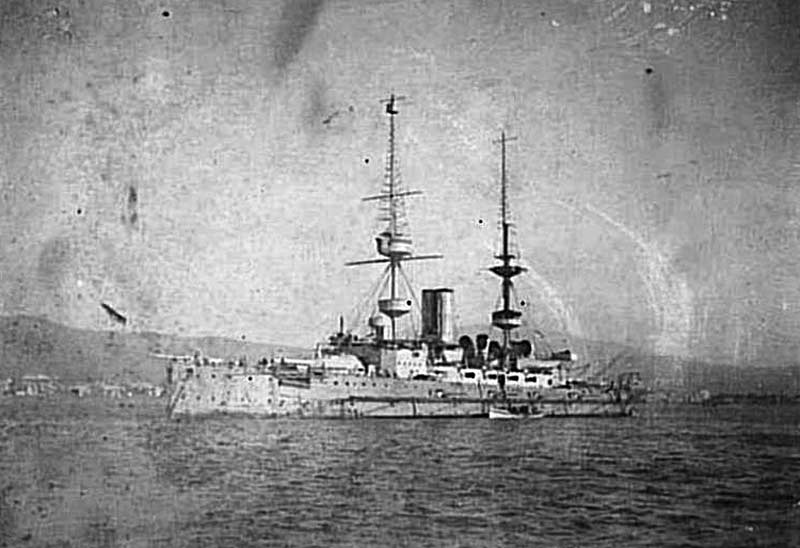
Admiral De Roebeck's Yacht |
October 29th 1915
This morning we laid a cable from Triad to the beach in Kephalo Bay and then put to sea and tested Anzac cable outside. Break in centre of cable. Returned to harbour as it was too late to start cable work. We all had a walk ashore again up to the R.E Signals. This evening we are informed that the Suvla cable is also down. Our Monitors have been throwing their weight about today of the Gallipoli Coast.
October 30th 1915
Left Kephalo at day-break and repaired Anzac cable about 6 ½ miles off Anzac and tested two other cables from the ship. By the time Anzac cable was through about 5.00 p.m. it was too late to go to Suvla or Anzac so ship proceeded to Tenedos for the night. Our sailors were thus able to replenish their food supply. Arrived about 7.30 p.m. and anchored off Tenedos town. Had a good view of our ‘Blister’ ships today bombarding the Turkish positions on shore. Through glasses we could see the shells burst right in the enemy trenches.
October 31st 1915
Left Tenedos after breakfast and set course for Suvla, arriving there after lunch. Boat went into the under-run cable but found sea to heavy to continue. Left Suvla and anchored under lee of Imbros for shelter. Heavy mist over Suvla today evidently prevented the Turks shelling the harbour as is their custom. Battleships ‘PRINCE GEORGE’ and ‘GLORY’ anchored in the bay did little firing, otherwise everything appeared peaceful. At any rate we were left unmolested while our work was going on.
-:-:-:-:-:-:-:-:-:-:-:-:-:-:-:-:-:-:-:-:-
NOTES: OCTOBER
The dirigible mentioned on 1st was an ingenious adaptation of an aeroplane body to a cigar-shaped balloon. She was christened ‘SILVER QUEEN’ and became a familiar sight to us afterwards. After having various homes in Imbros she finally settled down in a comfortable wooden mansion near Egyptian Pier in Mudros from which house she could sally morning or evening as weather permitted for her daily task of looking for submarines in the vicinity of Lemnos and Strati.
Black arrived on 13th relieving Jordon as Chief Officer and completed what turned out to be as happy a mess as can be imagined on board ship.
-:-:-:-:-:-:-:-:-:-:-:-:-:-:-:-:-:-:-:-:-
November 1st 1915
At Imbros. Early this morning ship put to sea again but finding weather too bad for work returned to Kephalo. Received a small mail from H.M.S. ‘CORNWALLIS’. During the afternoon we coaled from collier. Captain and Black went ashore and brought back the news telegrams. News not over bright, especially from the Balkans and this quarter. Ship remained alongside collier all night as coaling party is unobtainable till morning.
November 2nd 1915
At Imbros. Weather still too bad for cable work. Finished our coaling by 1.00 p.m. and then obtained water from ‘MERCEDES DE LARINGA’. Remaining in harbour for the night.
November 3rd 1915
Weather having improved we proceeded to Suvla and by one o’clock had repaired Suvla G.H.Q. cable. Turks continually shelling ships in the harbour so we did not feel at all comfortable during our stay. We saw H.M.S. ‘PRINCE GEORGE’ struck twice on her quarter deck. She was making a semaphore signal to us at the time, when the Turks started shelling her. At the sound of her ‘Take cover’ bugle the signalman bobbed down and disappeared for half-an-hour. Just before we left, the Turks commenced on the Merchant Ships in the outer anchorage hitting one right abaft her funnel. We had luckily finished our repair and were glad to be free to clear out of the harbour. The harbour at this time was rather a funny sight. Each ship as the fire concentrated on it, hove up anchor and shifted. The Turks then began on another vessel. She would follow the example of the first ship and soon all the ships were under way steaming round and round until the shelling ceased. If the Turks had a sense of humour he was amused today. After leaving Suvla we set on for Helles where the Tenedos cable was giving trouble. Arrived at Helles at dusk and found repair was necessary on beach. This was very soon done. Major Newell and Lieut. Sanderson of the R.E. came off and stayed to dinner after which we talked round the saloon table till 10.00 p.m. Our visitors told us that the Turks had only fired 6 or 8 shells today from Asia but not one of them burst, though a mule was killed by one.
We are remaining anchored off W. Beach till daylight. A mail was brought off to us this evening much to our surprise as they don’t often send our letters after us.

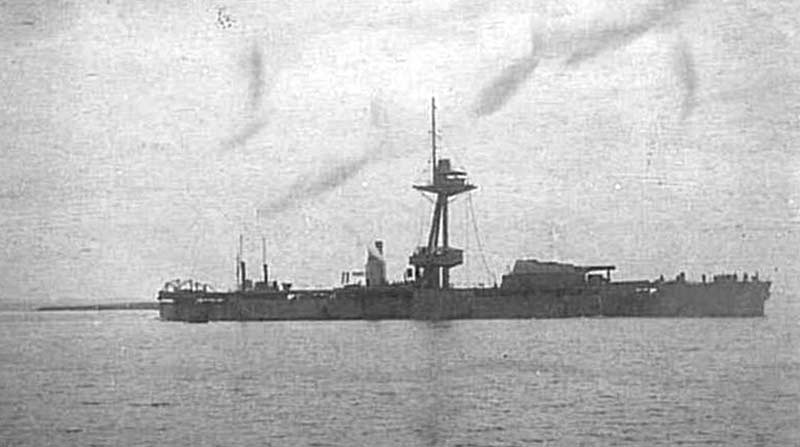
HMS Prince George at Salonica |
November 4th 1915
Shifted at 6.30 a.m. to safer anchorage as Turks have a nasty habit of shelling ships of Helles now in day time. Worked at cable ends at C. Tekeh until breakfast. Turks shelled the beach as usual and we noticed one explode in the place where our cables used to land and we felt distinctly pleased that we had diverted our ends to a safer place. After breakfast ship steamed down to Tenedos and the sea was too high for work at Suvla or Anzac.
A remarkable and almost incredible story was told us yesterday by one who should be a reliable authority. With the General’s approval a magic lantern and the necessary screen and gear were being got ready with the intention of working them in the trenches for the benefit of the Turks opposite them. Presumably propaganda slides would have been shown. However, now the new General has come out, this brilliant scheme is indefinitely postponed. Evidently the new General prefers fighting the Turks. We would not have believed this tale had it not been told us by the man whose work was to arrange this lantern part of the business.
We are remaining at Tenedos tonight.
November 5th 1915
Set on for Suvla this morning to effect a repair in Anzac-Suvla cable. On the way we met H.M.S. ‘SWIFTSURE’ with three Destroyers. She took up position off Anzac right flank and commenced her bombardment. Half a dozen Trawlers patrolled around her as protection against submarines. Afterwards she was at Suvla with us. We finished our repair at Suvla without much trouble and then set on for Anzac getting there at dark. Ship anchored and boats put ashore. Bullets were flying plentiful. One struck the car buoy in our boat and we were thankful to reach the shore. There we at once paid a visit to Capt. Dodd R.E. and Black was introduced (this being his first visit to Anzac). Under-running the cable the break was found fairly close in. Bullets from over the ridge were continually falling around the boat making the work more than unpleasant. Luckily there was no mishap and the work finished by 4.30 a.m. when the ship moved out to anchor at a safe distance from the shore. We have still another repair to do off this beach but cannot commence it until darkness fall again.
November 6th 1915
As we did not get to bed till 5.00 a.m. this morning we slept on till nine. Being anchored about a mile from the beach we could see all the firing on shore from a fairly safe distance and as we had to wait till nightfall before beginning our work we had the whole day to spectate. One of our aeroplanes was brought down by the Turks. the pilot however managed to bring the machine down softly into the water. A Pinnace from the Hospital Ship was soon on the scene and took off the two men. Another Navel picquet boat then arrived and tried to save the machine and the Turks opened fire on them and the shells were soon splashing all around them. The men had to rush ashore for cover. The aeroplane was pretty well wrecked though the parts were salved later. The Picquet boat got ashore in her efforts to salve the machine.
This evening at dusk we got underway and steamed in and anchored again off Anzac beach and the boats pushed off and soon finished the work on the cables. Rifle bullets as usual but luckily no accidents. After the work the ship anchored outside the range of bullets.
November 7th 1915
Worked all this morning on the Suvla-Anzac cable which was still broken further out. This being at a more or less safe distance we dared the attempt in daylight. Found anchor damage on cable for at least ¾ mile necessitating complete renewal. We decided to renew all from Anzac beach to save grappling for that end in the dark. After sunset we therefore steamed in and put the new end ashore and paid out and buoyed the cable at a safe distance by 9.30 p.m. We then came to anchor and are here for the night. Can hear much rifle and machine gun fire in Anzac direction. The R.E.’s there told us our men are to take the trench tonight. Black suggested to Capt. Dodd that he meant an attempt was to be made, whereupon Dodd explained that our men can take trenches whenever they want to. It takes a Military experts to explain why, if such is the case, an advance cannot be made.
November 8th 1915
Resumed work this morning on the Suvla-Anzac cable diverting it clear of all anchorages. This means a large expenditure of cable but seems to us the only way to ensure communication. We laid in some six miles of cable but found there were still two faults in the line, one at each end. Our work today was carried on in full view of the enemy but at a pretty safe distance. There has been a good deal of shell fire during the day. The Turks sprinkled the beaches and rest camps liberally. A Monitor stationed close to us replied with her 9.2 inch guns making a deafening roar. We are anchored off the beach for the night and going to Suvla in morning.
November 9th 1915
Steamed into Suvla Bay early this morning and repaired Anzac cable, diverting the end to a better position. While we had the lead on to cable, talking to Anzac on the ’phone, the Turks dropped a shell close to our stern. Apparently it did not explode but shook the whole ship and gave us such a shock that we made preparations to shift further out. We then anchored nearer the nets which is apparently only just in range of the Turkish guns. The latter made another attempt to hit us but the shell fell short and we told each other we were safe here. Personally I was glad when darkness came on to further ensure our safety and I fancy the others were too. We are remaining here for the night.
November 10th 1915
This morning we finished off the work at Suvla, diverting both cables. We then set off and picked up a good length of the old Anzac abandoned piece, being careful not to get to close to Anzac before dusk. At nightfall the ship anchored off Anzac beach and the boats went in to examine the cable ends further South. Birkbeck followed in the Cutter. We intended to coast up to the cable ends when we arrived near the shore where we expected less rifle fire. But we got too far North and for some time were in almost a hail of bullets which were coming down from the gullies. We had some distance to row to get out of this and were never so glad as when we landed at the pier. It seems to me a miracle that no one was hit in either of the boats. Anywhere off this beach there can be heard the constant ‘plomp’ of bullets in the water but tonight it was as if a machine gun was constantly trained on the boats.
We unanimously decided never again to try ‘short cuts’ to the beach. When we landed we made straight for the R.E. Signal tent and from there were conducted to Capt. Dodd whom we found in his dug-out in the act of catching a flea. We worked until after mid-night cutting in and examining cable after the fault but later proved to be outside in deeper water.
November 11th 1915
While the others were putting the line through again I came back to the ship in one of the boats. So black was the night that for half an hour I was unable to find the ship although she was lying less than half a mile off.
At 4.00 a.m. wind and sea rose suddenly and from the ship we signalled the boats to come off. They only just got back in time. The sea by now was very high and the boats’ crews were drenched. Even at this anxious time Black found time to purloin two cases of biscuits from the beach, our stores being very low at present. The Cutter couldn’t make the ship and the Life Boat arrived alongside towing the Cutter. Ship then hove up and set on for Tenedos where we arrived after breakfast. We slept most of the day. I have had rather a bad ‘tummy’ and have not eaten anything all day
November 12th 1915
Ship remained in Tenedos all day. I saw a French Doctor on shore who has treated me for dysentery. Weather coming on worse we left anchorage further South but eventually returned here to the town, the anchorage being more comfortable.
November 13th 1915
Weather improved. Left Tenedos about 10.00 a.m. for C. Tekeh to test the Anzac-Tekeh cable which had just been broken, arriving at Tekeh at 11.30 and anchoring. Testing lead was paid out from the ship but with difficulty owing to the rough weather. During the delay the Turks opened fire on us from the Asiatic side of Dardanelles. The first shell exploded ahead of the ship and splinters struck the bulwarks. No one was hurt though one of the Greek firemen fishing over the side nearly had his arm taken off. Capt. at once hove up anchor. Most of the ship’s crew being away in the boats every one eagerly assisted. A second shell came along and fell short in the water. By this time we were under way. The boats were soon picked up and hoisted and ship set off for Kephalo. Although the weather was bad and would have prevented further work we mentally decided that C. Tekeh and vicinity is safer at night time. A telegram from Cottrell arrived after we had dropped anchor in Kephale Bay informing us that the two Anzac cables were down. Of this we were quite aware seeing that we had just been almost blown to pieces in our endeavours to repair one of them. The Skipper acknowledged the telegram and if the tone of the reply was somewhat curt it must be remembered that we have been at cable work for eighteen days continuously save for short rests during bad weather and this without any one being aware of the amount of work done by us or the trying and frequently dangerous conditions under which it has been accomplished.
This afternoon I went on board ‘SWIFTSURE’ with the Skipper to see the Fleet Surgeon who pronounced my trouble to be dysentery and treated me accordingly. He told us that 50,000 men had already been sent away from here with that complaint.
November 14th 1915
At Kephalo. Wind and sea too bad for cable work. Capt. Evans, R.E. came off to lunch. A nice fellow with a good sense of humour. He gave us the news of the day. Russians appear to be almost in their old form. Serbia is in a bad way. Kitchener is out here and was today at Anzac. It is to be hoped he will set things right out here if it is possible after the bungle we hear it really has been.
November 15th 1915
Still at Kephale, weather still being bad. I am feeling no better and not sorry we are weather bound. Black has kindly lent me his cabin while mine is turned out. Two dead rats were found under a piece of floor boarding in my cabin so it could not have been a very healthy place since they pegged out.
November 16th 1915
Wind dropped and sea became smoother this afternoon. During the morning I paid another visit to the Doctor who gave me various delicacies while the Skipper obtained provisions from the paymaster for our mess. At noon we left for Anzac and arriving too early we stood off till dusk. Saw the Turks heavily bombarding our positions at Anzac and Suvla. The shrapnel clouds at first dotted over the rest camps soon became one thick pall of white smoke. Am afraid the trenches must be preferable to these so called rest camps which are constantly under fire from the enemy. The Turks are evidently beginning to get well stocked with ammunition. They now use it much more extravagantly. A few weeks ago we could usually be quite sure of a lull of several hours after the seventh shot from any one battery. Today the firing ceased at sunset and we began work having only the usual shower of rifle bullets. Working half a mile off Anzac we finished by mid-night. While heaving up anchor the bos’n got his hand caught in the cogs of the windlass and badly squashed his fingers. Captain at once steamed the ship alongside the Hospital ship ‘GALEEKA’ while first aid was administered by Henderson. Black and Henderson then took the bos’n off in the Cutter and had him attended to on the ‘GALEEKA’ where he was left. We fear he will lose at least one finger. After this ‘LEVANT’ anchored further out until daylight.
November 17th 1915
This morning brought strong wind and heavy sea so we left for shelter at Imbros arriving there about 9.30. Sea increased during the day. Several ships came in for shelter. By now it is blowing a full gale. Close to the shore inside Kephalo Bay we now notice the Dummy Dreadnought which had caused so much comment and speculation in Mudros, has been sunk to form a small harbour and shelter from Northerly winds for small craft. We hear it was one of these dummies which kept a large German Liner in New York Harbour until proper patrol arrived.
The firing mentioned yesterday at Suvla and Anzac was apparently on account of a move on the part of the British as we hear today the latter have progressed and captured a commanding height. We hope the news is true but this campaign is inclined to make one pessimistic and sceptical as regards good news.
November 18th 1915
Received wire today saying two Tenedos and the Mudros cable down. Breakage due to sunken Lighter at Cape Helles. Ship left Imbros at 3.30p.m. and crept in to Helles at six having waited for darkness lest we should get a reception like that of the 13th inst. Birkbeck and Black went away in boats to underrun. Finished work at 2.30 a.m. and anchored near C. Tekeh. Tekeh-Anzac line still down. We are now knocking off work till morning. This anchorage is healthier than that under C. Helles. To be caught off the beach is risking being sunk by gunfire.
November 19th 1915
Intended to repair Anzac-Tekeh cable today but early this morning we were awakened by a hail from a Destroyer. We hastened on deck and found she had a message instructing us to proceed at once to Salonica to repair Lemnos-Salonica Section. Levant was soon on its way towards Lemnos where we had to test in Castro Bay on Western side of the island. Arrived there at 3.00 p.m. Tests placed break 9 or 10 miles from Salonica. Men brought food ashore and soon after 9,00 p.m. we set course for Salonica where we hope to arrive tomorrow morning. It is a relief to be away from gunfire and submarine dangers seem small in comparison.
November 20th 1915
Entered Gulf of Salonica early this morning. The weather finer but colder.
Passed Mt Olympus covered with snow. Arrived at position for cable work about 3.30 p.m. Roughly ten miles from Salonica and two miles outside the net defence. And here we met the first sign of warfare—several Trawlers, some Destroyers and Monitors. Soon hooked Lemnos and buoyed it. Picked up towards broken end and found it crossed. This was close to the anti-submarine nets which the allies have laid across the entrance of the stretch of water leading up to Salonica. Tomorrow we will have to grapple for Salonica end of the cable. Anchored for the night about 5.00p.m. close to the Guard Ship at the net entrance—a small Monitor. Had good news in H.O. letter yesterday. We have all got 1/- a day rise in Mess allowance and consider it very handsome of the Company.
November 21st 1915
Finished cable repair by 6.45 p.m. today after working all day and have anchored for the night in the same place as yesterday, alongside the Monitor. We wonder what Monitors with 9.2 inch guns are wanted for up here. Tomorrow we are to proceed to Salonica and take coal and water.
November 22nd 1915
Ship proceeded through the nets into Salonica Port early this morning and tied up stern to quay. McTaggart and Nahum of the E.T.C. shore Staff came on board to breakfast. Afterwards I went ashore with Captain and had a look round the town, visiting Boffa the Supt. at E.T.C Office. We then tried for a motor car to drive us round the place but none were available so we returned on board to lunch and found Boffa and McTaggart who stayed for the meal. After lunch we all went ashore, hired carriages and drove out to Steins Café on the outskirts of the town. Here we had tea and then returned, separated from McTaggart and came on board. Found cook ill or pretending to be and no dinner so opened a tin of crab and had nice cold supper. Today has been the coldest day we have had so far. 39° F on the bridge this morning.
We had been told the feeling of the Greeks in Salonica is not at all favourable to the British. Personally my impressions were quite the reverse though the Supt. and others tell us the Greeks here are very Germanophil.
The harbour has several Men-of-War, British and French, including a large Monitor with 14 inch guns. The town also seemed very full of British and French Army Officers, also many Greek soldiers. Apparently the centre of importance in the Near East has shifted from Gallipoli to Salonica or rather Servia.
November 23rd 1915
Having obtained coal from British Collier (Prices on shore exorbitant) we left Salonica for C. Helles. We have all made various purchases on shore. At 2.80 franca a pair I bought socks which would have be valued in Malta at 1/-. We also all bought quilts stuffed with cotton and waste. These are called ‘paplamas’ and are very gorgeous in appearance. They will be cosy now the cold weather is coming on. The Skipper put his over his shoulders like a priest’s vestment and chanting ‘Let us proceed in peace’ solemnly walked around the quarter deck much to the awe and amazement of the Greek boatmen and to the amusement of neighbouring steamers and all of us.
November 24th 1915
Arrived at Helles at 9.00 a.m. but weather being too bad, proceeded to Imbros and anchored under lee of the Island.
November 25th 1915
Finer weather. Steamed over to C. Tekeh and tested finding both breaks seaward. The testing this time was unmolested by the Turks which was perhaps due to the clever way in which the Skipper approached the land unobserved from Asia. All the same I for one quite expected to hear the horrid scream of a shell any moment and hurried the testing as much as I could.
We commenced work on the Imbros-Tekeh I line at a distance of three miles from Tekeh. Cut in and to our disgust it was the wrong cable. The fault was not ours and we put through again as quickly as possible and weather became too bad to continue, so proceeded to Imbros for shelter and anchored in Kephalo Bay.
November 26th 1915
Wind changed during the night and morning found breezes from the North straight into harbour and hourly increasing. Outside the heavy sea was still from the Southward but the Northerly wind was now beginning to drive the swell into the Harbour. The Skippers of the various tramps were anxiously pacing their bridges and looking seaward but they could not leave the harbour for better shelter or put to sea without a signal from the S.N.O. Our ship was not so tied down to Naval Authority. We however hung on till 2.00 p.m. when the Skipper could wait no longer and decided to leave. We had spent a most anxious morning watching the hourly increasing swell, by the time the ship was out of Kephalo Bay we all saw the wisdom of his decision. Black had got drenched with seas even while heaving up the anchor forward and now the seas outside were tremendous and the gale was getting more and more fierce every minute. We set on for Tenedos and with such a gale behind us we flew along and glad we were that we had not to go in the opposite direction. The temperature also fell rapidly and the atmosphere was so thick that it was impossible to see very far in any direction. It was six o’clock and quite dark by the time we arrived in our present anchorage of the south side of Tenedos. How glad we were to drop anchor and how we now sympathised with the poor fellows who are still in Kephalo. Before leaving Kephalo we sent a signal to Cottrell in Mudros to have our letters sent to Tenedos. We have been practically five weeks without any. We are snugly at anchor. The saloon is very cosy on such a cold and tempestuous night. We have been wondering how our poor soldiers in the Gallipoli trenches are faring.
November 27th 1915
Gale increased. Temperature has still fallen. The tops of the waves are flying off in spray so that it looks as though it is snowing.
Remained at anchor all day.
November 28th 1915
Still at anchor. Weather still bad. Have written several letters today.
November 29th 1915
Colder still today. 31.5° F this morning on the bridge though it must have been a good deal below that figure in the night. How soon we have found the value of the ‘paplomas’ which we bought the other day in Salonica. The wind is less fierce and the weather generally seems to be improving. Snow fell today and the top of Mt. Elias (the highest part of Tenedos) has a snow cap. Had a cosy evening in the saloon with the stove going.
November 30th 1915
Being finer weather we left anchorage this morning at 7.30 and steamed round to the town where we posted our letters and several new men for crew were signed on. Our crew have demanded a stove forward so the ship is delayed until one can be made on shore. The crew’s demand is quite justified, considering the sudden spell of such cold weather. I put a max. and min. thermometer on the bridge last night and the ‘low’ scale this morning showed 27° F. This afternoon Wightman, Black, Birkbeck and self climbed Mt Elias and paid a visit to the French Signal Station there. Ship is leaving tomorrow morning for Imbros-Tekeh II repair.
-:-:-:-:-:-:-:-:-:-:-:-:-:-:-:-:-:-:-:-:-
NOTES: NOVEMBER
The gale mentioned on the 26th is now the historic tempest described in all histories of the Gallipoli Campaign. On the Peninsula both British and enemy troops suffered terribly especially at Anzac and Suvla.
-:-:-:-:-:-:-:-:-:-:-:-:-:-:-:-:-:-:-:-:-
December 1st 1915
Left Tenedos this morning at 5.00 a.m. and cut in Imbros-Tekeh II cable about three miles from shore and found that the fault was really quite close to Tekeh beach. So we proceeded there and got repair finished before dark. We then tested Anzac cable from there and fault appeared to be near Anzac. It was by now too late to get to Anzac tonight so we have arranged to begin there tomorrow. Major Newell came off this afternoon to see us. We learnt from him of many wrecks and casualties suffered in Kephalo Bay the night we left there in the storm. Several small ships were driven ashore. We should doubtless be among them if we had stayed. Major Newell tells us that the Anzac trenches now get shelled with 12 inch high explosives from a Turkish gun situated somewhere near Achi Baba. Shells from this gun they say often bury their victims in their trenches so that must be the effect of our 14 inch ‘Monitor’ guns in spite of what Ashmead Bartlett says in the Telegraph. No confirmation of the rumour we heard in Tenedos yesterday about 20,000 Turkish losses but our men took a trench on the Helles front about ten days ago while the Turks attempted to retake some days later. Our guns however hardly allowed the Turks to leave their trenches before they mowed then down. They say the Greeks have partially mobilized. We had no annoyance off C. Tekeh while at work this afternoon, though we quite expected it. Finished at 10.00 p.m. we have anchored for the night close under C. Tekeh.
December 2nd 1915
Left C. Tekeh at 7.20 a.m. for Imbros to test the Imbros-Suvla cable which was reported broken last night. It is of course unsafe to work off Anzac during the day (Anzac-Tekeh cable). Arrived off Cape Kephalo about 9.00 a.m., had breakfast and sent lead ashore for testing. Break is halfway across to Suvla. After lunch we set off for Anzac so as to get that repair done before morning. Arriving near Anzac too early ship stood by till dark. Saw a good deal of artillery firing on both sides, the Turks dropping some ugly black shells on Anzac beach and towards Suvla. After dark we began grappling with the ship about half a mile off the cable end, our position being dangerously near Gaba Tepe (the point in possession of Turks). Continued grappling amongst the bullets till 10.30 p.m. It then became too dark. Lost our bearings so proceeded seaward and anchored. While grappling we did utmost to conceal our lights. The slightest beam of light anywhere brought a volley of bullets from the shore. We must have been less than a quarter of a mile from the Turks on Gaba Tepe. A Destroyer is usually at night time just off this point to fire at the Turks on the Australian right flank. Perhaps the enemy tonight took the ‘LEVANT’ for the Destroyer and were sniping.
We are now at anchor for the night out of range of those bullets.
December 3rd 1915
We were disturbed early this morning about 2.30 a.m. by the rising wind and sea and compelled to heave up and clear out. Stood by till daylight and then as weather had improved, proceeded on repair of Imbros-Suvla cable, position being 3 - 4 miles from Suvla. This repair was comfortably finished by six o’clock and the anchored with ‘mushroom’ and rope near Imbros.
December 4th 1915
After breakfast we shifted over towards Anzac and anchored again to wait for dusk before trying the Anzac-Tekeh repair again. There was intermittent shelling all along our front both at Suvla and Anzac and we saw some big water columns rise in Suvla Bay showing that the enemy are harassing the ships there with even larger guns than before. About 2.00p.m. suddenly from the Southern end of the peninsula came the noise of heavy firing such as we’ve not heard since the landing on 25th April. It continued for an hour and we have been wondering what important move is now taking place there. ‘Blister’ ships and Monitors could be seen this afternoon firing hard towards Achi Baba. After grappling some time in the dark we eventually hooked our cable off Gaba Tepe where the Destroyer was busy shelling Turkish trenches. We were very careful again to show no light but the glare from the Destroyer’s guns must have revealed our ship from time to time and Black especially had a most uncomfortable time sitting on the grappling rope forward unprotected from the bullets which from time to time whizzed by. We repaired the cable after some difficulty owing to the darkness and then anchored for the night out of bullet range. Major Newell told us, when we spoke on the Cable to Helles, that nothing very unusual had occurred there in spite of the bombardment this afternoon.
December 5th 1915
Remained at anchor all day waiting for darkness to enable us again to approach Anzac and do some more grappling. Began work after dusk, hooked cable about ¾ mile out and boat underran towards shore. Break found on beach and repaired but through misinformation from Suvla that cable was still faulty we out again further seaward with the ship and had to put through again. This delayed us for some hours longer. Finished at 3.0 a.m. and set on towards Tenedos. The boats with Black and Birkbeck had an exciting time on shore at Anzac this evening. The crew were arrested as spies during Black’s absence and their inability to speak English (they were all Greek) only aggravated matters. In fact they only just escaped being shot, by the timely arrival of Black, Birkbeck and Capt Dodd R.E. Even then, so obsessed was a certain Staff Officer with the idea that they were spies, that Capt. Dodd’s vouching for them was not sufficient for the ‘Red Tab’. It was only by phoning to the General himself that Capt. Dodd had them released. During the argument and explanations by Black, the Staff Officer showed absurd temper and crass ignorance with regard to the ‘lines of communication’. Black is very annoyed and heated over this matter but, as he told the man it is not for our own pleasure or of our own choosing that we land at Anzac and it is quite enough to have to risk enemy bullets. We have landed at Anzac dozens of times at night without question. Apparently there is a spy mania abroad just now. During the evening while our men were working on shore two or three shell explode on the beach. Up to now the Turks have not shelled the beach at night time here but from henceforth the night will be as dangerous as the day at Anzac. News today from Russia was good but it cannot be relied upon. Report says that they are entering Bulgaria from the North.
December 6th 1915
Arrived at Tenedos early this morning and after a stay of two hours proceeded to Mudros and arrived at 3.30 p.m. ‘C.S. ELECTRA’ is up this way doing some cable laying and is expected in Mudros in a day or two. We shall probable have to take cable from her. It is quite a treat for us to be here in Mudros again after having been away on work for nearly six weeks. During that time we have been continuously at work except during the bad weather. Received welcome letters from home today but many are missing.
December 7th 1915
At Mudros. Renewed S.S. ‘ARRAGAN’s’ cable. This might have been done six weeks ago but for ‘arrogance’ on the part of Officer on Watch, who delayed the work by sending Black away from Starboard gangway.
Another peaceful night in harbour. How homelike Mudros is after an absence of six weeks.
December 8th 1915
At Mudros. We are expecting ‘ELECTRA’ in here any day. News from Greece still unsatisfactory. It is feared Greece is going against the Allies. However our troops are at Salonica and our big Monitors ready there. Personally I believe the whole of the German move in the Balkans has been really directed against Salonica and not to open the way to Constantinople except as a secondary thing.
December 9th 1915
Still at Mudros. Fine weather. Better news about Greece. Heard today that one of our submarines had sunk a Turkish Destroyer in Sea of Marmora.
December 10th 1015
At Mudros. Laid a cable to S.S. ‘MINNETONKA’ from shore today. This work was represented to us as very important and urgently required. Yet when the line was laid the Officers on board who were used to the line appeared to know nothing about it and it was left for the Chief Officer of the ship to give us the necessary information. These incidents do annoy us and similar ones often occur.
December 11th 1915
At Mudros. Nothing of note today except a round of visits the Skipper, Black and Birkbeck and I made in the dinghy this afternoon. We called on S.S. ‘DAGO’ and bought potatoes and some doubtful butter. Then rowed over to S.S. ‘ERMINE’ one of the small fast troopers that have done such splendid work up here. The ‘ERMINE’ is constantly running troops and stores to C. Helles and landing them often in heavy fire from the Asiatic Batteries. Capt. Boggan, ‘ERMINE’s’ captain, told us some delightful yarns of his dealings with authorities Naval and Military here. After calling at S.S. ‘DAVENTREE’ on our way we returned to our ship. Later M. Frappa and three other French Officers called on board and partook of an ‘ouzo’ with us.
December 12th 1915
At Mudros. This is the first quiet Sunday we have had for a very long time. It has been decided to evacuate Gallipoli. This is a tremendous decision. So much has been spent and so many lives have been lost. Some say we are losing as many as 10,000 men a week up here.
December 13th 1915
At Mudros. Uneventful day. Saw many empty Transports enter the harbour today. I connect this with report about evacuation of the Peninsula.
December 14th 1915
At Mudros. Laid another cable today to H.M.S. ‘EUROPA’. This evening M. de Corbierre and M. Frappa, two French officers, came on board and stayed to dinner. I provided my Xmas pudding which had just arrived from home. Corbierre is a Submarine Officer and spoke a little English otherwise entertaining was done by Black and Birkbeck.
December 15th 1915
Cottrell came aboard this morning and said we were required at Kephalo to be nearer the cables at the time of the evacuation. It seems that only Anzac and Suvla are to be evacuated and the troops at Helles remain. The whole thing is being kept very secret. Later in the morning news came that the Helles-Tenedos cables were down. And now this evening we hear that ‘ELECTRA’ has had a collision at Salonica while working on the new cable there and that she is proceeding to Mudros under escort. We are now to hasten to Salonica and finish her work. At present our boilers are being scaled.
Evacuation at Anzac and Suvla is apparently proceeding quietly.
December 16th 1915
At Mudros. Leaving tomorrow for Salonica.
December 17th 1915
Got up steam and left Mudros at 4.00 p.m. fine and calm. ‘ELECTRA’ we hear is to go to Malta for repairs. She has a V shaped hole in her side 9ft deep.
December 18th 1915
Weather much colder as we approached Salonica. Arrived here at noon and anchored close to ‘ELECTRA’. Lunched on board ‘ELECTRA’ and obtained particulars of her work which we are to finish. Position of repair about 20 miles away. ‘ELECTRA’ had been run into by a French ship while paying out through the nets. We sailed at 3.00 p.m. and Gooch, 3rd officer of ‘ELECTRA’ was allowed by Capt. Greey to come with us, much to his delight. A Torpedo Boat has been detailed to escort us.
Anchored near cable ground about 5.00 p.m. and after dinner had a few songs and choruses in the saloon to cheer us up. Gooch assisted us greatly in music and singing.
December 19th 1915
Left anchorage before daybreak and arrived on cable ground at sunrise. Hooked the cable about 11.00 a.m. and spliced on to Lemnos end. Picked up 1.9 nauts to ‘ELECTRA’s’ lost end and sunken buoy. Her buoy had evidently been mistaken for a submarine and sunk with gunfire. There were several shot holes in it. Put cable thro’ by 6.00p.m and went to anchor for the night. Our Torpedo boat escort has been with us all day, steaming round the ship. Had another pleasant evening at anchor. Gooch is apparently delighted by the change of ship and thinks we are a happy crowd.
December 20th 1915
Steamed back to Salonica first thing this morning and tied up alongside ‘ELECTRA’. During the day we shipped 6 miles of cable. Williams, Izard, Albrecht and Colley came to lunch with us. In the evening Capt. Greey asked us all to dinner on the ‘ELECTRA’. Had a most pleasant evening. Most of us ‘LEVANT’ men were yarning of our war experiences. From remarks of ‘ELECTRA’ men I fancy they think rather highly of us for the work we have done up here and say we well deserve our 30%. But I believe the ‘ELECTRA’ herself has done wonderfully good and risky work in the North Sea before she came up here. We left for our own ship soon after eleven and the ship remained alongside for the night.
December 21st 1915
After breakfast we cast off from ‘ELECTRA’ and anchored further up the harbour. Cottrell was apparently getting anxious for our return to the fighting zone. But we can’t do the impossible even if we’re dying to get back. No coal is obtainable before Thursday and the boiler has a defect which must be attended to. The annoying part is that the tone of the telegram to this ship give us the idea that we are considered to be shirking. After lunch I walk ashore with the Skipper and Birkbeck. Made some purchases and returned on board for tea. The town seemed full of British and French uniforms. It appears that our defensive lines outside Salonica are getting stronger every day
December 22nd 1915
At Salonica. Obtained water for the ship. Coal to be had tomorrow. ‘ELECTRA’ still in port. Expect to finish her temporary repairs by the end of the week when she will probably leave for Malta.
December 23rd 1915
Went alongside Collier this morning at 8-0 o’clock and took coal. We went on board ‘ELECTRA’ after breakfast to say good-bye. Ship left at 3.15 p.m. Our intention is to proceed to Helles direct if possible but engine room defect has again developed and it looks as if we shall have to put in to Mudros.
December 24th 1915
Engine room fault having given further trouble during the night, Captain decided to put into Mudros. Arrived at Mudros at 1.30 p.m. Cottrell came on board after dinner and told us of the successful evacuation of Anzac and Suvla. This was effected without the loss of a single man. It is wonderful and almost incredible. The Turks, they say, were quite hoodwinked. The evidently knew something unusual was about to take place. Our men were taken off in two nights without being observed. All the evacuation of stores was also done at night and had been going on for some nights before the final evacuation. A large number of Hospital Ships had been assembled ready in Mudros and Imbros. The Cunard Liner ‘AQUITANIA’ was one of the Hospital Ships. 25,000 beds had been prepared and not one of them was required.
6 guns only were left behind and these were blown up before our men left. All material was taken away except a few stores. Several ingenious devices were arranged in the trenches, one of which was the setting up of loaded rifles in such a position that by the arrangement of water tins they went off at intervals after our troops left. This led the Turks to think that the trenches were still occupied. The enemy was so completely deceived that on the following morning he carried out his usual bombardment of our deserted beaches. Later on when they discovered how they had been tricked they came down the beaches in swarms and two Cruisers who were ready, steamed up and killed many with shell fire and also destroyed any stray stores which had been left behind. The whole place is supposed to have been mined also
E11 has just come back into Mudros harbour after having done very good work in the Marmora. The last thing she did was to blow up a 5000 ton German steamer. E11 was hardly expected to return as the channel had been extra well blocked with chain booms.
Tonight we are full of the wonderful evacuation. From our talk round the dinner table tonight one would think it was a great victory instead of a retreat. I think the general feeling on board this ship is one of pleasure and relief that we shall no more be required to be off Anzac beach among the bullets and shells. No more anxious hours shall we spend inside those Suvla nets.
December 25th 1915 (Xmas Day)
At Mudros. Skipper hoisted our house flag today. He likes to have occasion to fly that, to show the independence of the only ‘non-Government’ ship in the harbour. During the morning Black, who had been paying Xmas visits, brought Ward the paymaster of S.S. ‘ORTELAN’ on board for a drink. While we engaged thus we heard a sudden bang and the aeroplane alarm flag was hoisted on the Flagship.
A German plane was flying over us at great height. Several bombs were dropped on shore. The ships were soon firing at him but he got safely away. Cottrell then came off to lunch bringing with him a Xmas pudding. The Captain’s wine was broached. (Oporto wine which he had procured some months ago in the ‘ELECTRA’ but could never get it home). Weather fine and warm. So much so that we had lunch on deck.
A snooze in the afternoon. In the morning we sent over to tug ‘RESCUE’ and asked the Captain and second man to dinner. The Captain, a man named Laloe, was a most interesting man and had served in the Australian Forces at Anzac until wounded. He told us some fine yarns of the fighting. During dinner a sound bump against the ship’s side sent Black and Wightman on deck to investigate. They returned with an R.N.R. midshipman Clarke, whose broken down Lighter had run into us. We think he chose the ‘LEVANT II’ to stop the way of his Lighter on purpose, feeling sure of a welcome on Xmas night. His Lighter tied up astern and he spent the evening with us . Had a very pleasant evening and broke up about mid-night.
December 26th 1915
Still at Mudros. Repairs in engine room not yet finished. Clarke remained with us all day. The German report of the evacuation makes out the British losses to be enormous. This we know to be quit untrue. Clarke was engaged bringing off troops till near the end. One killed and two wounded is the highest figure reported here
I obtained a rifle from Clarke which he brought off from Anzac. This will save me from applying for one officially.
December 27th 1915
At Mudros. This afternoon Captain, Black, Henderson and I took the Cutter and set off to find S.S. ‘BARON ARDROSSAN’ Discovered her after a long pull round and went on board, saw her Captain and retrieved a parcel of goods for us from Malta. On our return journey the German aeroplane was again overhead dropping bombs. No damage was done though one fell near the French camp on shore. The aeroplane got away un-hit by the many guns from the Fleet and Shore Batteries.
Lieut. Bell of the Water Boat ‘PROVIDER’ paid us a visit late in the afternoon and stayed to dinner. He has also been at Anzac for the evacuation and said that although the last man was taken off at 4.00 a.m. (19th) ‘Beachy Bill’ was still strafing the beach as usual at 10.a.m. which seems to show that the Turks were still ignorant or not sure then that the place was empty.
December 28th 1915
After a fruitless attempt to get our letters the ship left at 8.00 a.m. for Tenedos to test. Arrived at Tenedos about 2.30 and tested, finding breaks in both cables close to Helles. As the weather was not good enough for boat work the Captain decided to stay the night at Tenedos. Lieut. Graeme (late Chief officer of ‘OLYMPIC’ now R.N.R. Lieut. superintending nets and trawlers at Tenedos) came off to sea and spent the evening.
December 29th 1915
Weather still bad. remained here at Tenedos. In the evening Graeme brought off Lieut. Commander Turl to dinner. Turl is in command of all the drifters up here. Captain Wightman and I had been on shore to fetch them off and had visited Turl’s ship which is about half the size of ours. Have heard heavy bombardment up North all day today and yesterday.
December 30th 1915
Left Tenedos for Helles after breakfast and arrived there about mid-day. Stood by near Cape Tekeh. The beach was being continuously shelled from Asia and Achi Baba so our boats could not be sent in. Even C. Tekeh which is generally sheltered, was today having a good share of the shelling. After watching events from the ship for some time the shells began to fall in the water near us, so we steamed out a little and stood by nearly a mile off and had lunch. In the afternoon our ships, Monitors and Blister ships were bombarding the Turks from different points. One large Monitor with her 14 inch guns was making a deafening noise and must have been placing her shells right inland and we could not see them land. About 2.30 p.m. the Turks from the Asiatic side replied vigorously shelling the small cargo ships which were loading from Lighters some distance from the shore. When the shells began to fall near us we shifted out still further seaward to avoid them. Helles is evidently very much more lively than it used to be. The enemy are probably able to concentrate more on this end of the peninsula now that Anzac and Suvla no longer keep them busy.
The small cargo boats and trawlers are now unable to anchor anywhere near the shore in daytime but have to do their business of loading and unloading about a mile out, while drifting. It is hopeless for us to attempt work before dark. After dark we steamed in and anchored off the beach. The shelling had practically ceased with nightfall. after fruitless efforts to repair cable with boats we tried to grapple with the ship further out. The position was right in the current of the Dardanelles and no easy job. We however paid out the grapnel and commenced but soon found ourselves suddenly in full view of the Turkish searchlights which command the entrance to the Straits. The sudden glare surprised us all and sent our hearts in our mouth. Black thought he had hooked the cable. We sincerely hoped this was not so for we should have been a fixed target for the Turkish guns while moored to the bottom with cable. We quickly hove up the grapnel and felt relieved that it was clear. All this time the search light was swinging round and continually fixing on our ship. We decided afterwards on talking it over, that we were really too far off to be plainly visible but at the time I think our chief thought was that the only object of the Turks was to knock out the ‘LEVANT’ when they spotted her. We eventually hooked cable further out where we were practically out of range of the search light.
Diverted the cable in towards C. Tekeh where it should be less liable to breakages and also (no small consideration), safer for us to repair. Finished for the night at
4.00 a.m. and steamed down to Tenedos and anchored near the island.
December 31st 1915
Knowing it was useless to try and work off Helles in daytime, we remained at anchor till 4.00 p.m. and spent the time mostly in sleep, making up arrears. The other Helles-Tenedos cable required repairing near Helles and we decided to divert that also but meanwhile last nights repair was still unfinished. Arrived at C. Tekeh about 8.00 p.m. and landed a new shore end with the help of a Picquet Boat and began paying cut to where cable was buoyed last night or rather early this morning. Major Newell came off to see us while we were preparing to land the new shore end. Apparently Helles is to be evacuated. Many obvious signs have been noticed by us during the last two days. We hope it will be as successful as the first evacuation but we fear the Turks will be more prepared for this one.
-:-:-:-:-:-:-:-:-:-:-:-:-:-:-:-:-:-:-:-:-
NOTES: DECEMBER
Black’s account in his diary, concerning the spy incident on December 5th, is far more detailed and interesting than mine. His verbatim report of the conversation between himself and the Staff Officer is splendid and well worth reading in this place.*
It was during this month that we had more night work than ever, that we experienced and overcame so many difficulties entailed by doing cable work in complete darkness. I am sure many Cable Ship Officers would be surprised when I say that our night had to be carried on, cable picked out or picked up without a glimmer of a light on deck. The latter was littered with grappling rope, buoys etc., which on so small a ship cannot be stowed away during work.
-:-:-:-:-:-:-:-:-:-:-:-:-:-:-:-:-:-:-:-:-
* One wonders if this Diary has survived somehow and is being kept safe. -Ed
1916
January 1st 1916
Working all night, we finished repair this morning about 9.00 or 10.00 making final splice about two or three miles from land where there was little or no danger of the enemy’s gunfire. We have still another cable here to repair and expect great difficulty with it as it runs so close to Kum Kale and the Asiatic Coast and in full view of the Turkish searchlight across the Straits. After finishing off the first repair this morning the weather became threatening so we steamed down to Tenedos and anchored. During the afternoon the sea increased considerably and we had to shift. Anchored about five o’clock as the weather has made it now impossible to work. Had a cosy evening in the saloon tonight.
January 2nd 1916
Weather still bad. Remained at anchor. We hope we shall be able to get all cables working in a day or so as they are likely to be very important very shortly.
January 3rd 1916
Weather improved. Hove up anchor before breakfast and went round to Tenedos town only to find weather again becoming bad. Left town anchorage at noon and returned here (Southern end of Island)
January 4th 1916
Weather good this morning so we proceeded early round point to Tenedos town where we were informed by wire that the Rabbit Island cable was down. This is an important line connecting up the Monitors at the Island with their spotting station. A Destroyer also came along and passed us a message from the Admiral instructing us to put through as soon as possible. This meant that the other repair to the Tenedos cable must wait and we set off at 10.00 a.m. for Rabbit Island to test. There we found a small Monitor busy strafing the Turks on the Asiatic Coast with her 9.2 gun. Break being near Helles we left and cut in about 6.00 p.m., spliced on and began paying out towards Helles. It was our intension to divert the cable in to C. Tekeh if possible but after paying out a mile the weather suddenly became so bad that we had to cut hurriedly and buoy. By the time this was done in the pitch dark the wind and sea had risen tremendously. We therefore set on for shelter of Tenedos where we came to anchor about one a.m.
While grappling in the Straits we suddenly had the Turkish searchlight switched on us but were comforted to see several Destroyers also in the beam of light further up the Straits.
January 5th 1916
Remained at anchor all day as weather continued stormy. There are signs of moderation towards nightfall so the Captain has decided to leave at midnight if favourable.
January 6th 1916
Left shelter of Tenedos last night at midnight and after two hours steaming began grappling in the Straits for the Rabbit Island cable. At the moment we hooked and begun to pick up, the Turkish searchlight suddenly swept the horizon and stopped fixed on us. Though we must have been pretty well at the extreme range of the light we felt that we were the one bright spec in all the darkness and I for one almost expected to hear the read sound of approaching shell. Except for fixing us occasionally with his light, the Turks however did us no harm. In fact we ought to have appreciated the light he gave us to work by. It certainly assisted us in walking about the deck where not a light may be shown. We cut, spliced on and began paying out towards C. Tekeh, where we landed a new end. Finished work by nine a.m.
(No diary or notes kept, about the remainder of this day but so far as my memory serves me, I recall that when darkness again fell we steamed in to the Dardanelles entrance, hooked Tenedos cable, spliced on and diverted to C. Tekeh treating cable in the same way as other repairs here, realising that it was hopeless to expect cables to remain unhurt off Helles where so many ships were anchoring every night during the few days preceding the evacuation. I remember this last repair took all our stock of cable and we finished the job by splicing on and using up our armoured testing lead knowing that communication through line was required only for a day or two longer)
January 7th 1916
Ship went into Kephalo Bay this morning for coal. We had all been up working for two nights running and rather felt the want of sleep. In the afternoon during coaling operations while some of us were having a well earned sleep, Lieut. Somerville came on board with instructions about another job which the Admiral wanted done as soon as possible. We were required to buoy Imbros-Tekeh cable on the bight putting in a certain amount of slack, about ¾ mile off C. Tekeh. This, so that on the final night of the evacuation (which he told us was coming off soon) the Flagship would be able to pick up the buoyed cable and be in communication with both Gallipoli and G.H.Q. Seeing the importance of the matter we promised to do this work as soon as possible and left harbour in the evening after coaling. Steamed over to C. Tekeh and got the work finished by 3.00 a.m. and anchored again near Imbros. The crew of ours have shown themselves splendid fellows. When Captain told them they were required to do another nights cable work, work which was very important indeed, they all set to without a grumble although the majority of them had had no rest for 36 hours. And these fellows are Greeks too.
January 8th 1916
Remained at anchor till noon, storing up a little sleep. Ship left and we started picking up operations. By 6.30 p.m. we had picked up nearly eight miles of the Suvla cable and cut when about four miles off Anzac. We could see several lights flickering and moving about in the Anzac dug-outs. The Turks must still be ferreting about there for treasures left behind by our troops. Anchored for the night near Kephalo.
January 9th 1916
This morning, southerly wind and sea had sprung up. Remained at anchor all day. During the morning the Skipper called us to bring our rifles on deck. We all dashed up and had some good rifle practice at what we first thought might be a mine. We soon proved it to be no mine. If we others didn’t hit it, the Skipper did. A wooden buoy apparently. This evening we could see fires on C. Tekeh. it looks as if the evacuation is pretty well accomplished. During the day two Battleships full of troops could be seen in Kephalo Bay.
January 10th 1916
Went to Tenedos via Rabbit Island. Stopped at latter place to pick up our telephones which we lent some days ago. While passing Helles we gazed anxiously shorewards and it was very evident that the evacuation had taken place. There were no ships anywhere near the place except a Destroyer who was busy firing at what had been a British camp. Tugs were busy towing lighters from Imbros to Mudros. Having had no communication with ship or shore for 48 hours we had had no news. A little we heard at Rabbit Island from the ‘SIR T.PICTON’ the Monitor stationed there. They told us that the evacuation took place on the night 8th/9th and was quite as successful as the Suvla Anzac affair. Three men only slightly injured and that by boat accident. On shore at Rabbit Island we met Bell of the ‘PROVIDER’. He had been told off to round up mules which had gone astray there. Afterwards we proceeded to Tenedos and anchored for the night. We think it strange that Cottrell has sent us no wire.

HMS Sir Thomas Picton at Rabbit Island
in position for firing into Asia Minor |
The last we had from him was one three days ago asking us to repair the Mudros-Helles cable. This we could not do owing to the Admiral requiring the buoying of the Imbros cable. But we are not yet officially aware of the evacuation and Cottrell’s wire of three days ago has not been cancelled. In fact we might easily have steamed in to Helles as usual by night and found only Turks ashore. Luckily we had seen enough with our eyes to assure us that the Mudros cable no longer required repairing.
January 11th 1916
About 9.00 a.m. this morning while anchored off Tenedos town, H.M. Destroyer ‘USK’ came alongside and her commander called out that he had been told off to protect us. This struck us as being distinctly humorous. We have been eight months up in these waters and no one seems to have thought we required special protection. Now that the campaign is over a Destroyer is told off to look after us.
Capt. Wightman went over to see ‘USK’s’ commander who told him that on the night of the evacuation the Battleship ‘PRINCE GEORGE’ was struck by a torpedo while she was at Helles full of troops. A submarine came down the Straits from Chanak. Her torpedo struck the Battleship but failed to explode and the submarine fled back. So there was very nearly a disaster that night. The ‘PRINCE GEORGE’ probable had two thousand men packed inside her. Few could have been saved that night.
How really inferior Germans are to British in submarine warfare. Imagine if you can, a British Submarine being told off to sink ships off Helles and returning with nothing done except firing a dud torpedo. We left Tenedos at 10.00 a.m. and went to Kephalo where we hooked the old Imbros-Anzac cable and began picking up. Left off at sunset having recovered 8 miles of the cable. ‘USK’ left us at dark and we set on for Mudros.
January 12th 1916
Arrived in Mudros about 9.30 a.m. after a rough passage. A small batch of letters were brought off to us but we were informed that our latest letters had been sent to Rabbit Island. While working off Gallipoli for the last eight months our mails have only once been delivered to us there. Now on our return to Mudros after a fortnights absence we hear that our mails have gone to Rabbit Island—a place where there is not even a human being now. We laughed at the idea but feel very much annoyed. Midshipman Clarke paid us a visit and stayed the day.
January 13th 1916
Have another job to do close to Helles, putting the Imbros-Helles cable through to Helles-Tenedos. Arranged to leave Mudros as soon as necessary engine-room repair done. German Aeroplane over us today, dropped bombs harmlessly, though one fell close to ‘OLYMPIC’.
January 14th 1916
At Mudros. Nothing unusual to report.
January 15th 1916
Engine-room repair now finished but weather this morning was stormy so did not leave port. Lucky indeed, as wind and sea has increased during the day and at present looks rather blizzard like. Salonica cable reported faulty. It seems that even though Gallipoli is evacuated, there is to be quite enough work for the ‘LEVANT II’ still.
January 16th 1916
Weather still bad. Remained at Mudros.
January 17th 1916
Calmer weather. Left Mudros this morning at 7.00 a.m. for work off Helles but sea increased again and became too bad to work. Came into Aliki Bay (S. side of Imbros) for shelter. Arrived here at 2.00 p.m.. Capt. and I went ashore, landing on the beach, walked across to Kephalo, chiefly to exercise. Although the distance is only about three miles, it took us a full hour and a half walking there, round sandy beach and a small lake. Saw N.T.O. at Kephalo and Skipper obtained some springs for steering gear, much longed for by him along with other improvements to the ship which he intends to effect in time. Kephalo Bay was full of old wrecks dating from the storm of last November when our ship escaped the harbour.
January 18th 1916
Left Aliki Bay at 7.00 a.m. for cable work. Intended to secure direct communication between Imbros and Tenedos by cutting into the two Helles cables and joining through. The sea was beautifully calm and the air warm and clear. We hooked Tenedos cable about 10.00 a.m. about two miles from Cape Helles and cut and buoyed the Tenedos end. Then grappled and hooked Imbros cable and began joint to Imbros side. All the morning we had been anxiously and curiously looking shoreward and could see quite a number of Turks walking about the cliffs. With the aid of glasses and telescopes we could see them busily coming to and fro from our erstwhile dug-outs picking up articles here and there and examining them like a party of tourist. Looking for valuable fossils. Also we had had some excitement due to a German aeroplane passing over us towards the peninsula. He had been over Kephalo Camp and the guns there had been firing at him. A Destroyer some two miles away from us also had a few rounds at him from a machine gun. We were glad that we were left unmolested, helpless as we were with the cable at the bow. There was no ship in sight other than this Destroyer who appeared to be keeping at least five miles off Helles. At 11.45 a.m. we had just commenced making the joint to Imbros cable when a sudden loud report followed by the usual scream of approaching shell made us all start. It was evidently fired from Helles vicinity and fell short of us. Another one came a few seconds later and fell closer. We had now hurriedly begun to pick up seaward when a third shell whizzed by and passed over the ship but fell much closer. The enemy were evidently aiming a target of us and it was clear that if we did not get away at greater speed than we were, the Turks would soon score a hit. The Captain gave the order to cut the cable and Black nipped up on the forecastle head with an axe which he had learnt by experience to always have ready. One stroke severed the cable if I am not mistaken and the Skipper rang ‘Full Ahead’ from the bridge. but our full ahead speed was very slow owing to the steam being down ( as is customary when joint and splice being made). The Turks continued firing, four shells dropping within 50 yards of the ship, pieces even striking the ships side. Skipper altered course after each shell fell, turning to Starboard when a projectile fell to port and vice-versa. This ruse do doubt put the Turks off their aim considerably. They did not cease firing till 12.15 p.m. when we must have been 4½ miles from them. The last one or two shells fell astern of us. There were evidently at least two guns and one a large one judging by the sound. Altogether there were 14 shells fired at the ship and good shooting it was considering the moving target we were. Birkbeck took his camera aft but failed to get a photo. In my opinion such a time is not an occasion for taking photos. It is unnecessary to say that we were all mighty glad when we were at last out of range. It must have been quite amusing and an interesting spectacle to an onlooker and perhaps in days to come it will also amuse Wightman, Black and me to recall how the three of us, all trying to keep calm were advising each other on the best method of avoiding shell by a zigzag course while the firemen down below were stoking like demons under the encouraging shouts of Alec their Chief. After getting out of range we had lunch and talked the matter over, deciding that it was hardly possible now to do this piece of cable work. So we left for Salonica where repair awaits us and we feel we have had an eventful morning. The Skipper sent a signal to the Admiral in Kephalo asking him to sink our buoy in the way. As Capt. Wightman wittily puts it, ‘The Troops have evacuated Gallipoli and it is time the ‘LEVANT II’ did’.
-:-:-:-:-:-:-:-:-:-:-:-:-:-:-:-:-:-:-:-:-
NOTES: JANUARY
These extracts end on January 18th after which date the diary no longer seems sufficiently interesting to reproduce. Because although we still had many exciting adventures after this, such as our repairs to cables close to the Turkish coast and our eventful trip to the Adriatic, these episodes are separated by intervals of daily routine and would make the diary tedious to read.
I appeal to Messrs Black and Birkbeck to write out accounts from their diaries dealing with these and other events they may think interesting
-:-:-:-:-:-:-:-:-:-:-:-:-:-:-:-:-:-:-:-:-
Notes:
The text of the diary and the photograph of A.L. Spalding are courtesy of and copyright © 2007 by Peter Spalding.
Thanks to the Porthcurno Telegraph Museum, Cable & Wireless Archive, for the copies of A.L. Spalding's staff records (see images below).
Dardanelles map courtesy of Gordon Smith, www.naval-history.net.
Appendices:
A.L. Spalding's staff records
from
the Eastern Telegraph Company |
 |
 |
A.L. Spalding's commendations
from the Admiralty |
 |
 |
A.L. Spalding's obituary,
March 1933 |
|
DEATH OF
MR. A. L. SPALDING.
---------------
A MUCH-TRAVELLED GARDEN CITIZEN.
------------------
Mr Alfred Lawrence Spalding, of 2, Guessens road, Welwyn Garden City, who died on Friday, was a descendant of John Knox. Mr Spalding, who came to live at Welwyn Garden City four years ago, was on the staff of the Imperial and International Communications, Ltd. He had recently become attached to the London office of that firm after previously spending all his working life abroad.
He was educated at Christ’s Hospital and joined the Eastern Telegraph Company thirty-one years ago. He was stationed successively at Gibraltar, Zanzibar, Malta, Carcavellos, Bombay, Cape Town, Ascension Island, Alexandria and Port Sudan. Mr Spalding while at Malta was transferred to the cable ship Levant II, employed in the Mediterranean and took part in the Gallipoli Campaign. The ship accompanied the transports and within an hour or two of the landing had a cable ashore. Mr Spalding was mentioned in Despatches as a result of this and other work done by the Levant II under heavy shell fire.
The funeral took place at Golder’s Green Crematorium on Tuesday, and was attended by representatives of Imperial and International Communications Ltd. The chief mourners included: Mrs. Spalding, (widow), Mr Cyril Spalding (son), Miss Dorothy Spalding (daughter) Mr. W. Spalding and Mr. H. Spalding (brothers), Miss Spalding (sister), Mr A. Spalding (uncle), Mrs Barnes, Mr and Mrs J.G. Hartley, Mr. A.C. Barnes , Mrs. W. Smith and Mr. T Owen. |
|


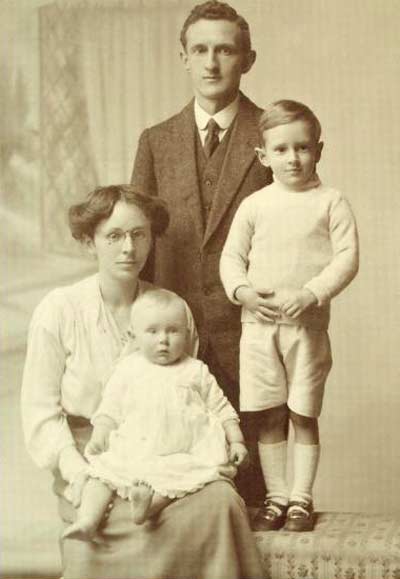

-on-Levant-II-1916.jpg)