|
The Direct United States Cable Company was set up
in 1873 by Siemens Brothers to link the UK and the USA direct. However, it was
found that with the core available at the time the working speed of the
cable would be too slow, and the idea was abandoned. The new route chosen was
Ballinskelligs, Ireland - Tor Bay, Nova Scotia and Tor Bay - Rye Beach,
USA.
The Tor Bay - Rye Beach section of the cable, 536 nm, was laid in 1874 by CS Faraday (1) on her maiden voyage; Faraday also laid the 2565 nm main cable
from Tor Bay to Ballinskelligs the following year, and the cable opened for service in September 1875. The Siemens History website has a story on the laying of this cable.
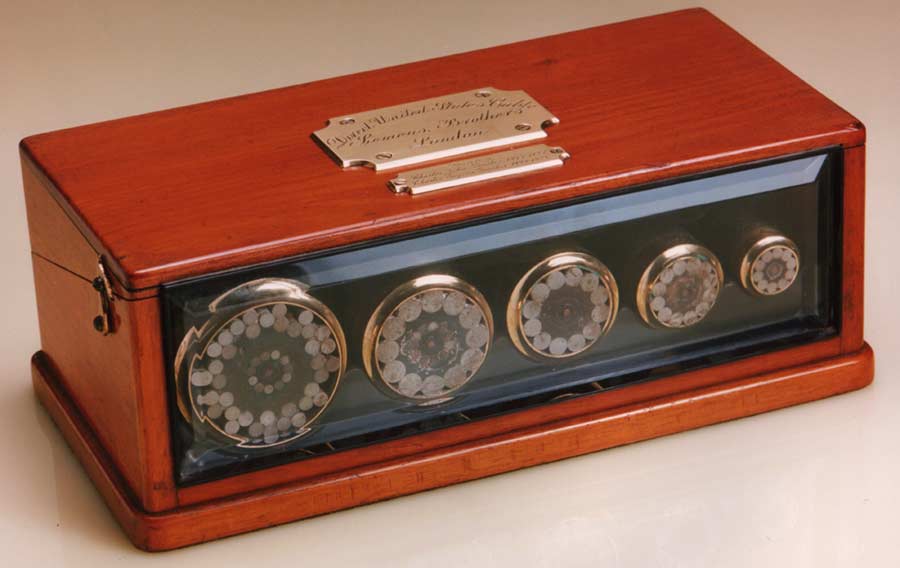
This was the first cable to use Siemens’ new design of a larger central conductor surrounded by multiple smaller wires This arrangement packed more copper into the same volume, thus improving the signalling speed.
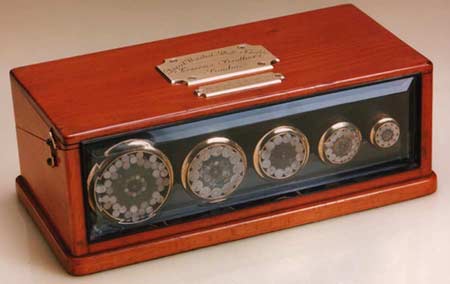
Cable sample case
1874 Direct United States Cable
Ballinskelligs, Ireland - Tor Bay, Nova Scotia - Rye Beach,
USA
Presentation plaques read:
Direct United States Cable
Siemens Brothers,
London
Charles John Gunther 1877 - 1884
Charles Eugene Gunther 1884 - 1888
Image courtesy of Charles Gunther |
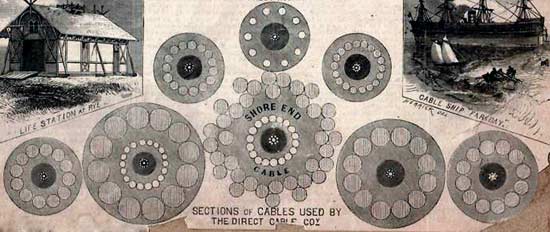
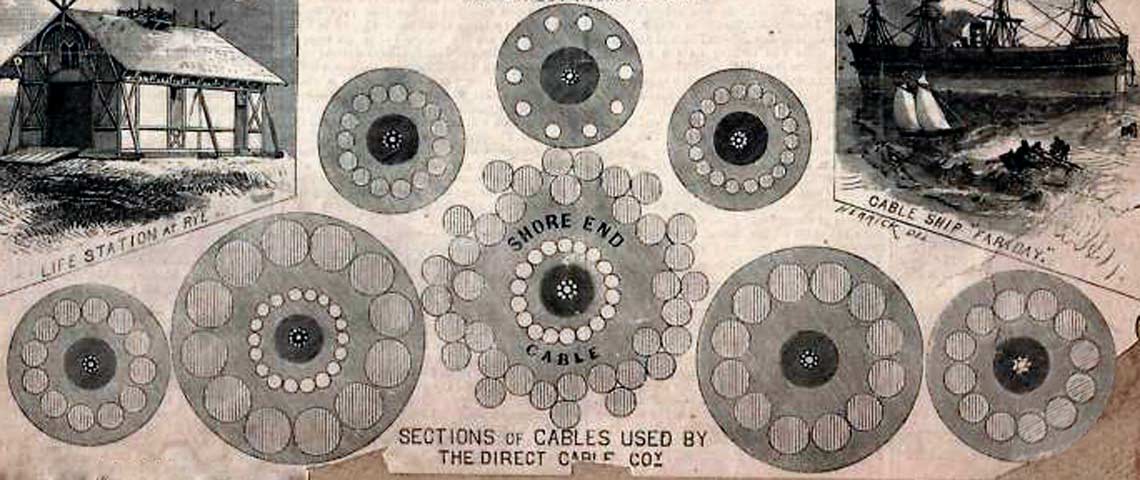
Sections of Cables used by the Direct Cable Coy.
Harper’s Weekly |
The Direct United States Cable Company came under
the control of Anglo American in 1877, though it continued to operate
under its own name. In 1920 it was purchased by the GPO.
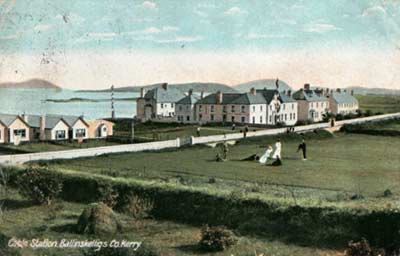
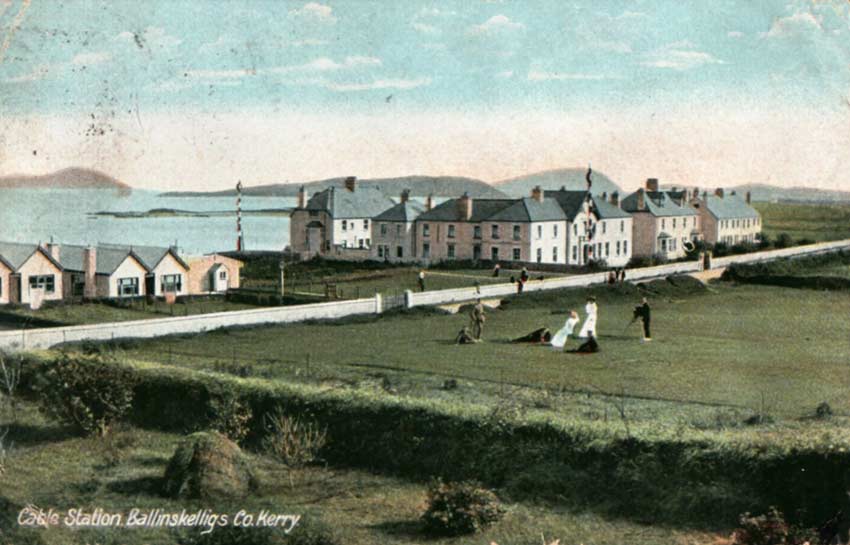
Cable Station Ballinskelligs, Co. Kerry |
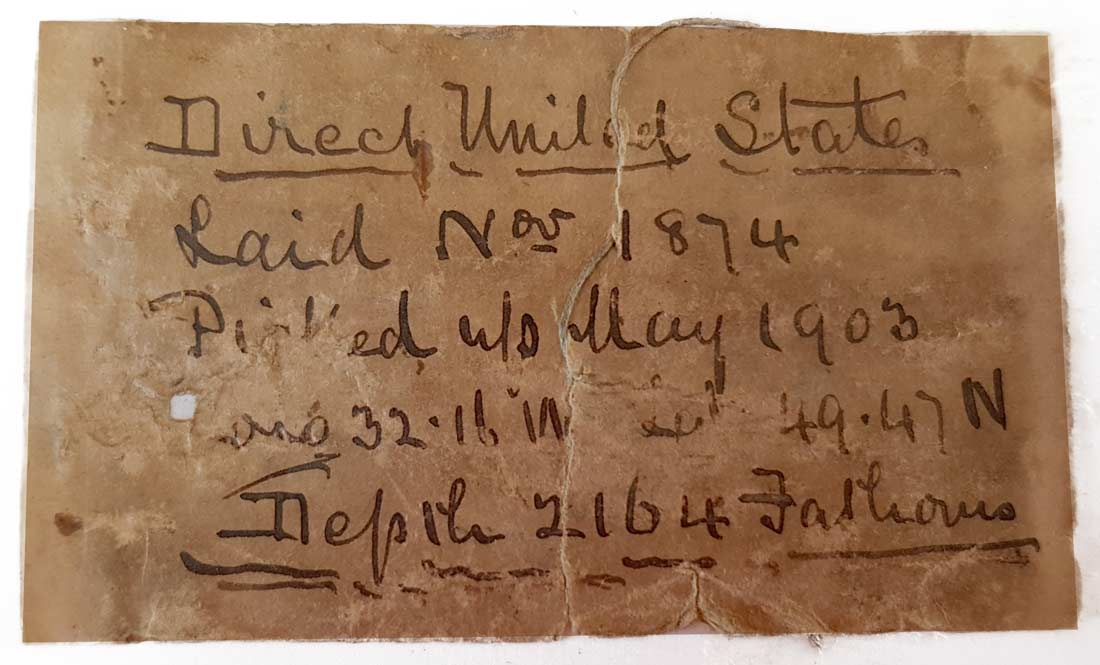
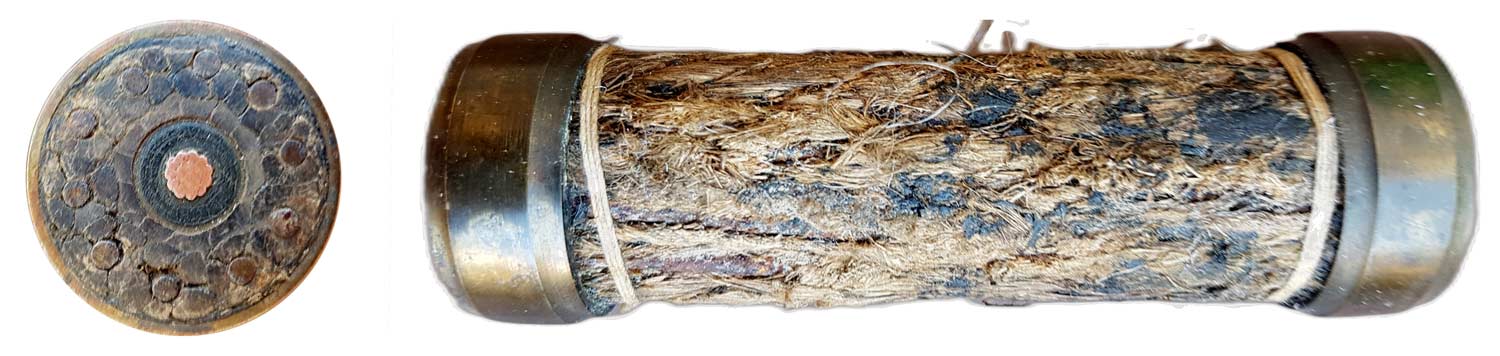
In May 1903 the cable between Ireland and Nova Scotia was repaired in mid-Atlantic by CS Faraday (1). Site visitor Frank Pearce has a section of the deep-sea cable recovered during the repair, mounted in the style of Siemens Brothers factory samples, with this tag:
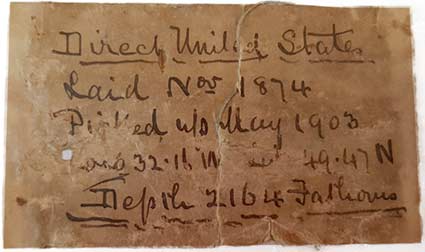 |
Direct United States
Laid Nov 1874
Picked up May 1903
32.16W 49.47N
Depth 2164 Fathoms |
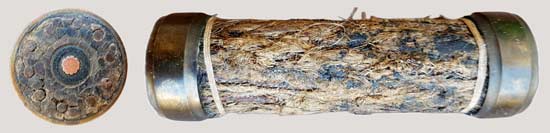
Cable recovered in May 1903. Compare with the deep-sea section
at the top center of the Harper’s Weekly graphic above
Images courtesy of and copyright © 2022 Frank Pearce |
Frank adds this note: “My great-uncle was married to the daughter of a German engineer, Herr May, an employee of Siemens in South Africa. He received a number of cable sections from his father-in-law, of which this is one.”
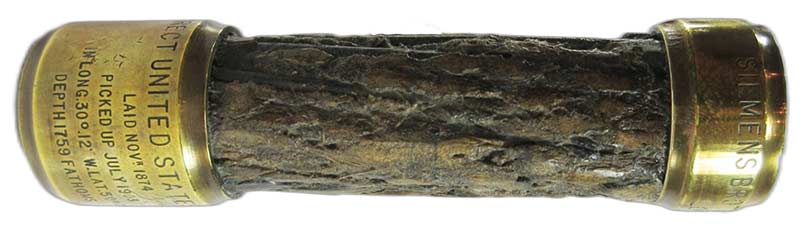
In July 1903, a further repair to the cable was performed about 97 miles to the east of the previous one, and a section of cable recovered during that operation was (much later) made into the handle of a walking stick.
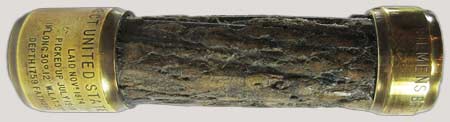
Cable recovered in July 1903 from a depth of 1759 fathoms |
This map shows the two repair locations; the blue marker for the site of the May 1903 recovery, and the red marker for July 1903.
The green markers show the route of the cable: Ballinskelligs, Ireland - Tor Bay, Nova Scotia - Rye Beach,
USA.
In 1904, after the end of Anglo American’s monopoly
in Newfoundland, the cable was moved from Halifax to Harbour Grace, having
previously been moved from Tor Bay to Halifax. The company set up its
office at Ridley Hall, the former home of Thomas Ridley.
When the cable interests of the Eastern and its associated
companies merged with those of the Marconi company this cable was transferred
to the new company, Imperial & International Communications Ltd.,
which became Cable & Wireless Ltd., in 1934.
In 1943 the cable failed and attempts were made to
repair it but they were unsuccessful, and it wasn’t until 1952 that Cable & Wireless, using HMTS Monarch (4), was able to get the cable back into working order.
This included laying 800 nm of cable between Porthcurno and Harbour Grace
and a further 400 nm between Harbour Grace and Halifax. The cable to Harbour
Grace was reopened for service on the 6th August 1952 and the Harbour
Grace Halifax section opened on the 21st August. In 1953 HMTS Monarch
(4) diverted the cable from Harbour Grace to Middle Cove, around seven
miles from St John’s, whence a landline connected it to the St John’s
office.
The Direct cable’s use of Ridley Hall in 1904 was
not the first connection of this building to the cable industry. In 1866,
following the successful laying of the Atlantic cable, Daniel Gooch wrote
in his diary:
"Everything
was now done to prepare to go and make the attempt to recover our lost
cable. We had coal ships at Heart’s Content ready for us, and this had
to be taken in. This occupied us until the 9th August. During this time
our ship was a kind of open hotel; dozens of people came from various
parts of Newfoundland and brought their bag[s] with them, quite looking
upon us as a place where they might live at free quarters. Amongst them,
however, were many very nice people from St John’s, and also from Harbour
Grace; a Doctor [ ? McKee] and his daughter were friends of the Captain’s,
and we saw a good deal of them. They sent the Capt a present of a young
Newfoundland dog, 9 months old, born in Novr 1865. The Capt gave it to
me and I was very pleased to have him. He is a beautiful pure blood Newfoundland,
without a white hair upon him, and born of the same parents as the dog
that was presented to the Prince of Wales. The breed is called the O’sullivan
breed. He & I soon became very fast friends and remain so. His name
was given to him before I got him, it is Norval.
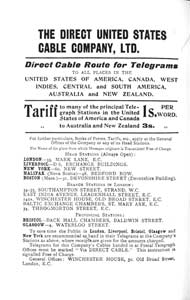
1932 advertisement |
"Mr Ridley
of Harbour Grace gave us a grand ball at his home. He put up a large timber
ball room and did the thing exceedingly well. I dined and slept at his
house. The road to reach this place from Heart’s Content was an awful
one, the distance about 16 miles and time about 4 hours. He sent his carriage
for us, or as many as it would hold. I fancied I never saw so many good-looking
women in a room together before. A family at New Perlican, about 4 miles
from Heart’s Content, were also very kind to us, of the name of Howley.
I am sorry to hear he is since dead; he considered himself a large farmer,
having about 25 acres of land under cultivation. Land here may be bought
at 1s/- per acre, yet it is not cultivated; the fishermen never seem even
to cultivate a garden round their cottages, altho’ they often have a great
deal of time on their hands to spare.
"While we were
at Heart’s Content the weather was very variable; when bright it was very
hot, but the fogs and rain were cold. I scrambled about on the hills surrounding
the harbour, but the thick scrub wood made it a very difficult task; but
on the whole I very much enjoyed my stay there."
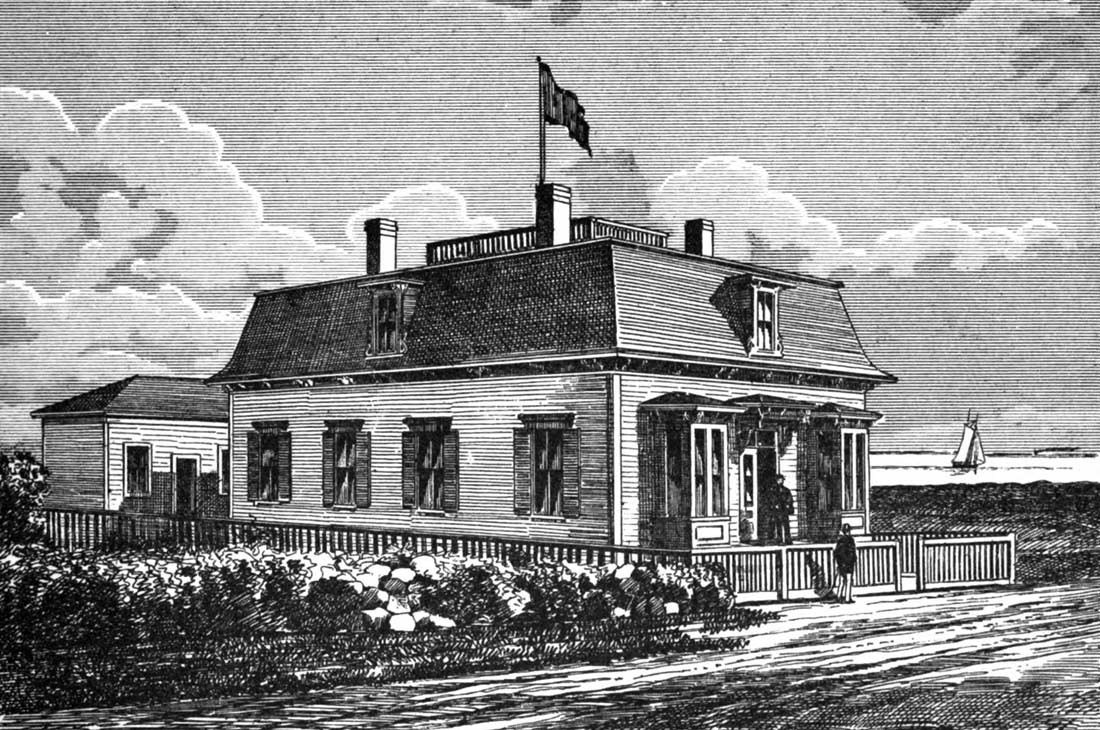
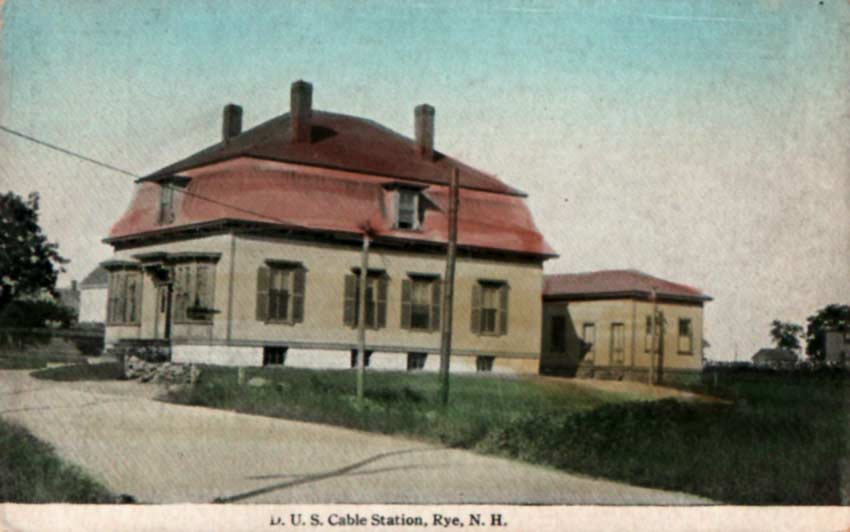
The cable station at Rye Beach closed in 1921 and the building
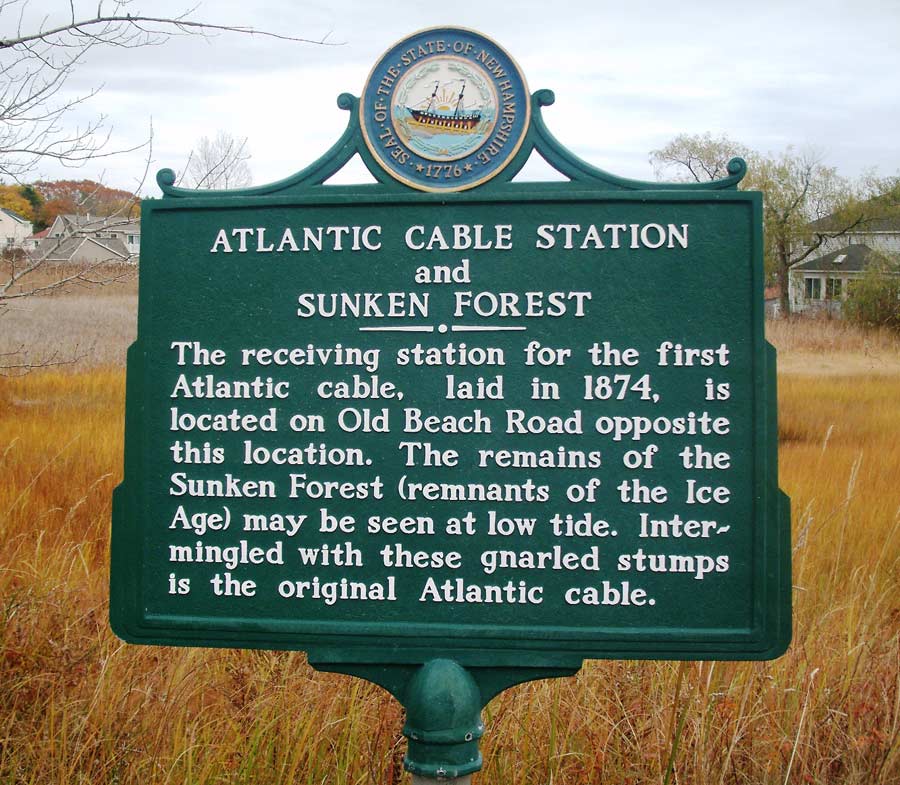
was converted to a private residence. Today, a historical marker shows the location of the Sunken Forest and the cable station.
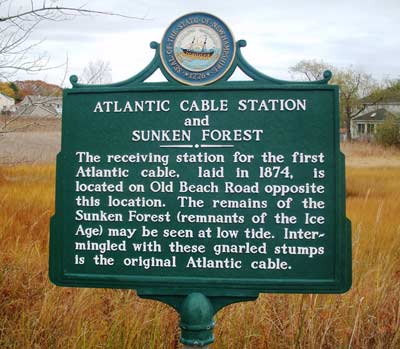
Image courtesy of Bob Stanton |
A November 9th, 1889 article in The Electrical World described and illustrated the cable landing:
The Cable Station and Landing at Rye Bench.
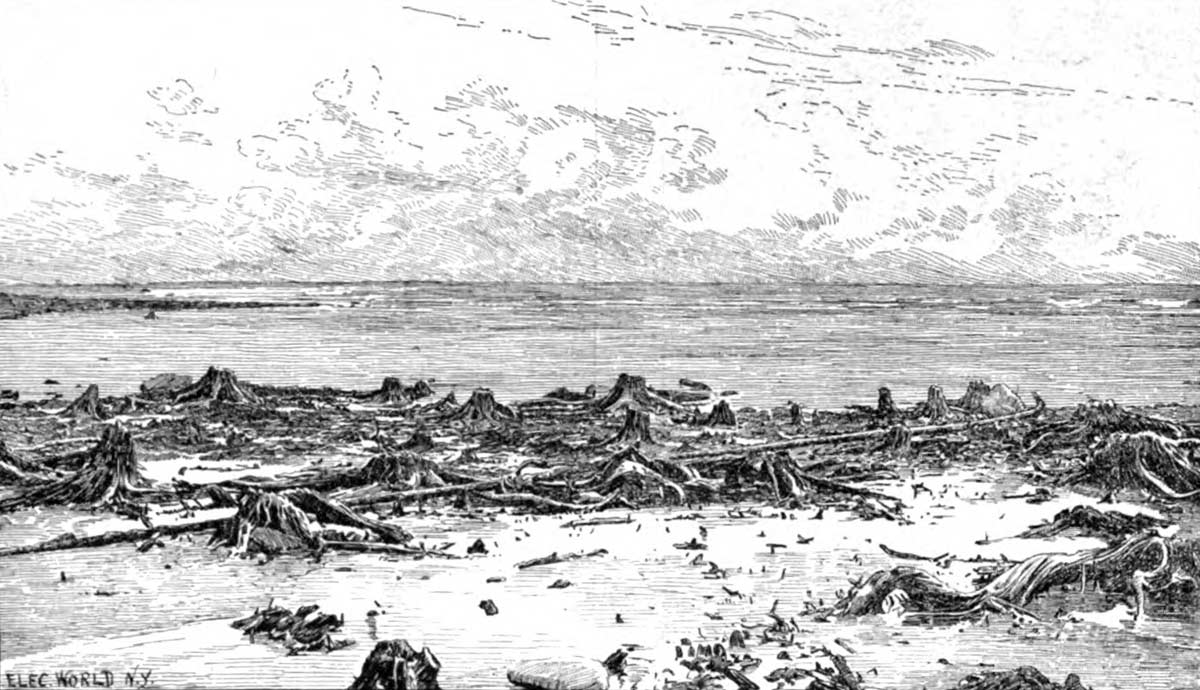
We illustrate on this page the cable station at Rye Beach and the cable landing there made. The cable is that of the Direct United States Company, and was laid in 1874. Last spring the tides had worn and worked all the sand and gravel away, leaving the cable bare, and revealing the submerged forest, Fig. 1.
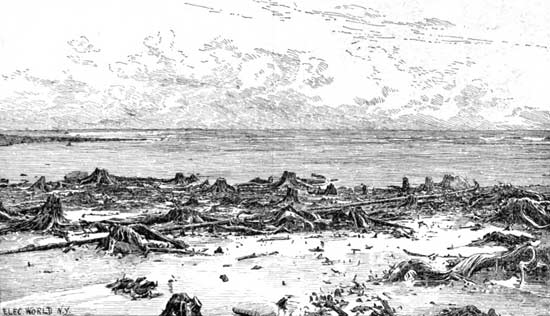
Landing of the Direct United States Cable at Rye Beach |
Usually cables are buried in trenches three or four feet deep, but in this case the cable lies fully in view as it runs up to the cable station, Fig. 2. The cable shown is the ordinary single conductor shore end. The iron sheathing is entirely intact, and bears no sign of decay. Here and there a few barnacles may be seen clinging to the outside iron armor wires. The cable is only visible during the low spring tide, at all other times being covered with sand. The cable goes from Rye Beach to Halifax, N. S., and is there connected to the cable from Halifax to Ballinskelligs Bay, on the coast of Ireland, a distance of 2,400 miles.
Direct United States Cable Station, Rye Beach |
The stumps among which the cable lies are very large, measuring 8 or 10 feet in circumference. They are mostly of cedar and are of a rare quality not known, it is said, to exist in forests of the present age. The forest extends out a considerable distance.
In 1895 an article in The Granite Monthly gave an illustrated view of life at Rye Beach:
Extracted from “Gems of the New Hampshire Shore” by L.K.H. Lane.
The Granite Monthly, Vol. XIX No. 1, July 1895.
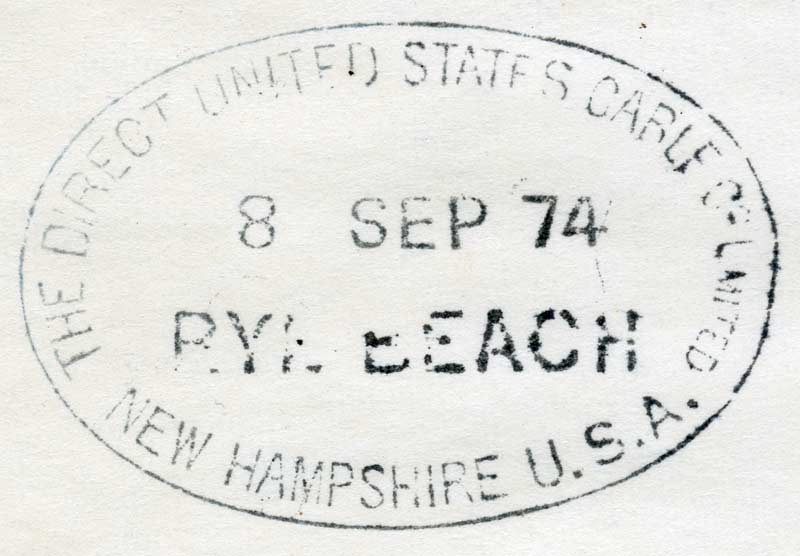
One of the most interesting points at Rye beach is the cable station of the Direct United States Cable Company, Limited, which is situated near Straw’s point. Here is the American end of one of the Atlantic telegraph cables, which stretches under the ocean 3,100 nautical miles, from the shores of the Granite state to Ballinskelligs bay, Ireland, touching on the way at Halifax, Nova Scotia. The cable was laid by the famous steamship, Faraday, assisted by the Ambassador, and the shore end landed at Rye beach on July 15, 1874.
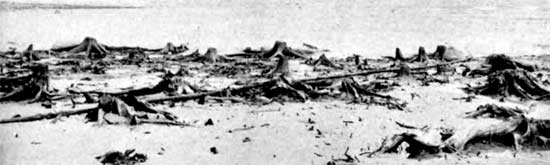
Landing Place of the Cable |
A view of the landing place is given here, showing the huge, snake-like rope lying over the stumps and fallen logs of a submerged forest. These stumps, which are rarely visible, have been the subject of much scientific interest, and some scientists claim that they substantiate the theory that the Isles of Shoals were once part of the mainland.
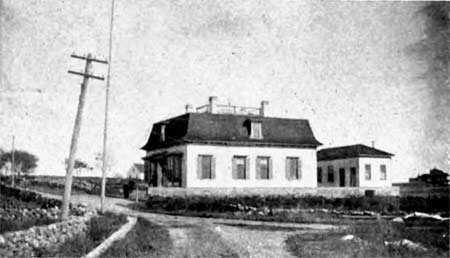
The Cable Office |
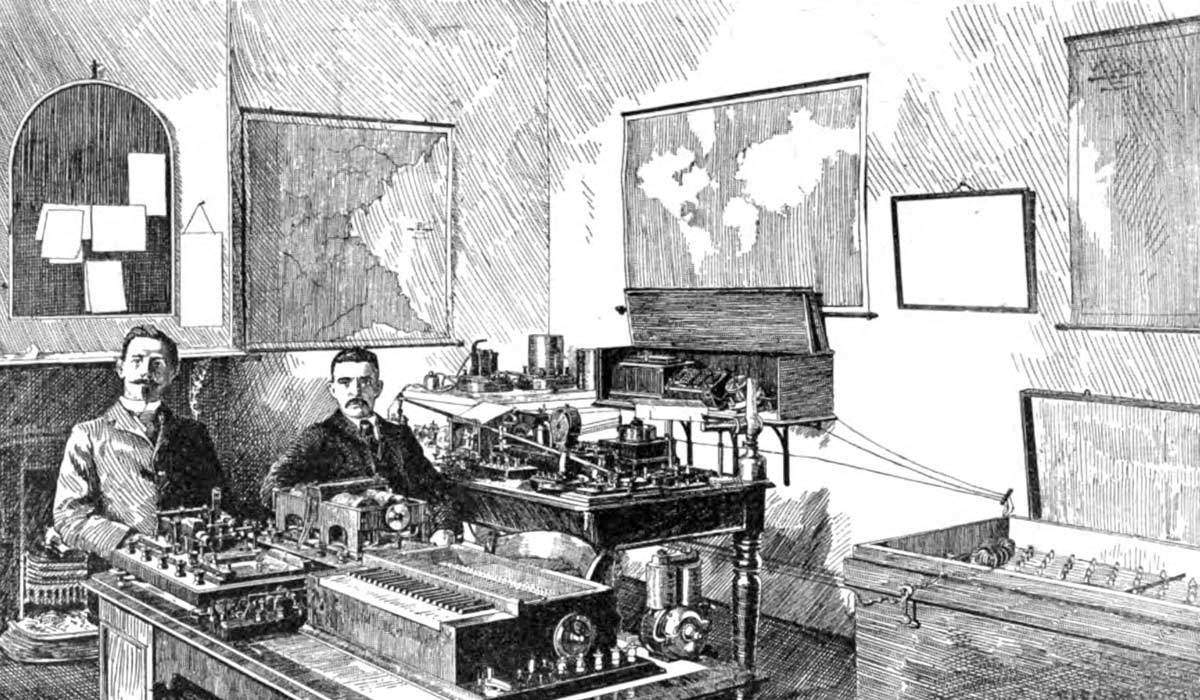
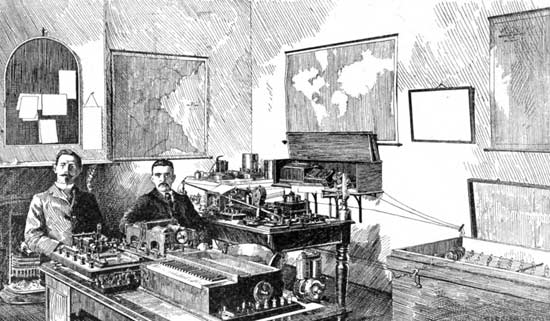
When a magazine published an article twenty years ago describing the mode of working on the Rye Beach cable, the mirror system of signalling, by which messages were read from a moving spot of light on a scale, was used from Rye beach to Nova Scotia, and from Nova Scotia to Ireland; but now, even on the longest cables, the mirror has been abandoned, and the instrument used between Nova Scotia and Ireland is the syphon recorder, which traces on a strip of paper the telegraphic impulses received through the cable. At Rye beach messages are transmitted automatically through a specially devised set of translating relays, which repeat Morse signals from the cable into the New York land line, and vice versa from the land line into the cable. By the use of the duplex system, also, messages can be simultaneously sent and received between New York and Nova Scotia and Nova Scotia and Ireland.
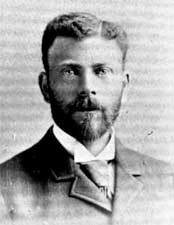
John Fraser |
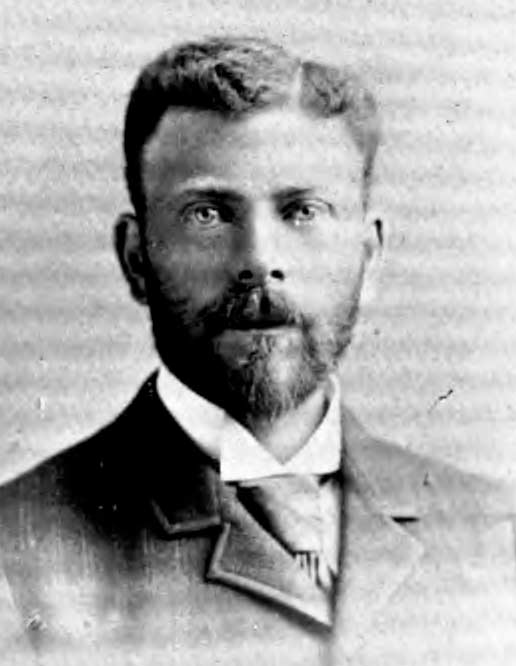
On the “Direct” cable, as it is familiarly known among cablers, there are only two transmissions between New York or Boston and London or Liverpool, and almost incredible records for speed have been made on this route, which was the first to inaugurate fast working on Atlantic cables. Previous to the opening of the Direct cable, thirty or forty minutes was considered remarkable time in which to get a reply to a cablegram, but now New York and Boston merchants and bankers in the ordinary course of business obtain replies from their European correspondents in ten minutes. The New York Sun of March 23, 1893, states that the result of the Oxford and Cambridge boat race was telegraphed to the United Press, via Direct cable, within thirteen seconds of the finish of the race. Mr. William J. Fraser is superintendent of the Rye beach station, and also of the Boston offices of the company in the Old State-house, and post-office building. Mr. John F. Fraser, assistant superintendent, and Mr. Thomas Gothorpe, mechanician, have been stationed with Mr. Fraser since the opening of the line in 1874. Other members of the staff are P.W. Rieb, John Squire, Joseph Watt, and Archibald Finlayson, operators, and Anders Swenson, batteryman. Most of the cable staff are married, and have built cottages along the Cable road, adding much to the attractiveness of this part of the beach.
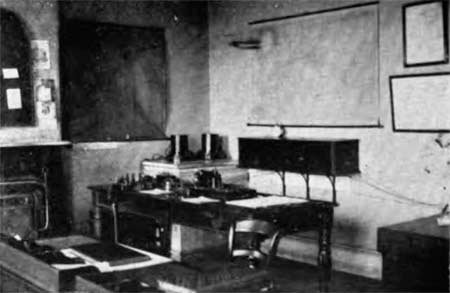
The Instruments |
This account of the laying of the cable was published in History of the Town of Rye, New Hampshire, from its Discovery and Settlement to December 31, 1903 by Langdon B. Parsons. Concord N.H., Rumford Printing Company, 1905
THE CABLE STATION.
On the southerly side of Locke’s neck, quite near the Rye beach life-saving station, is the receiving station of the cable of the Direct United States Cable company, a neat but neither large nor pretentious building. This company’s cable, at the time it was completed in 1874, was the only ocean telegraph cable having one end in Europe and the other on the shore of the United States, and it was from this circumstance that the company took its name of “Direct” cable company. Previously-laid cables had all made their land connections on the westerly side of the Atlantic in the British provinces, all messages being sent from there to their destinations in the United States by overland wires. Even the Direct cable does not come direct to the United States, it touching first at Halifax, Nova Scotia, from which place a cable 540 nautical miles in length extends to Rye beach, the company’s main cable, from Halifax to Ballinskelligs bay, Ireland, being 2,564 miles long, making the total length of cable between the Irish coast and Rye beach 3,104 miles.
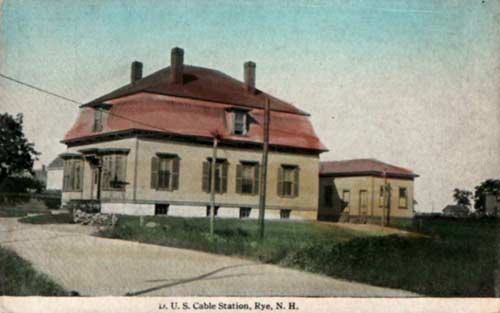
Direct United States Cable Company Cable Station,
Rye Beach, New Hampshire
The station closed in 1921 and the building
was converted to a private residence |
The Direct cable was laid by the steamer Faraday, which was built expressly for the purpose, and subsequently laid at least six other Atlantic cables. In laying the Direct cable the Faraday was assisted by the steamers Ambassador and Dacia. The short cable, as the sections between Rye beach and Halifax is called, was the first laid, and the shore end at Rye beach was landed on Wednesday, July 15, 1874, and connection made with the end of the cable that had been buoyed off the Isles of Shoals a week or more earlier. The landing of the shore end had been announced to take place several days before it did, and on that day many thousands of expectant watchers gathered along the shore, but only to be disappointed, dense fogs to the eastward preventing the arrival on time of the steamer Ambassador, which was to land the shore end and make the connection with the cable already laid by the Faraday.
Notwithstanding this delay and disappointment, the interest aroused by the arrival in Portsmouth lower harbor on Sunday, July 12, of the Ambassador, was intense, and when the vessel steamed out to a position about 1,500 yards off Locke’s neck on Tuesday afternoon, and came to anchor there, a throng of people numbering many thousands, on foot, on horseback, and in carriages, was waiting along the shore to assist in the exercises as spectators, and a party of enthusiasts who had brought two small cannon from Kittery to fire a salute of one hundred guns as soon as the shore end was landed were all ready to begin their share of the celebration at any moment. But there was a vast amount of work yet to be done before the cable could be sent ashore, and as night came on the crowd gradually thinned out until by midnight very little of it remained.
On Wednesday morning the shore section of the cable, weighing about fifteen tons, was loaded from the steamer upon a platform laid upon two steam launches, and at about three o’clock in the afternoon the shore end of it was successfully landed, amid the booming of cannon and the enthusiastic cheers of the faithful few who had remained to see the work completed. It took about an hour to place the cable in the trench that had been dug to receive it, quite a number of ladies taking hold of the rope attached to the cable and assisting to drag it to high water mark ; and the work of splicing took about two hours more. Then the Ambassador’s guns replied to the ones on shore, rockets were sent up from the ship and blue lights burned, and there was hearty cheering by the crowd that had again been attracted to the beach. The sea was as smooth as a mill pond all through the day, which greatly favored the work, and no mishaps of any kind occurred. And thus was completed the landing of the first Atlantic cable to be landed on United States soil.
After finishing her work in shore the Ambassador weighed anchor at about half-past nine o’clock that evening, proceeded to the Shoals and picked up the cable there, and made the splice. The entire line was completed and opened for business early in September following, and has been doing its fair share of international telegraphing ever since.
Now there are many cables that land in the United States, including the French cable, which lands at Duxbury, Mass., and the Mackay-Bennett cable, which lands at Rockport, Mass. Cable laying attracts no larger share of public notice than other large business transactions, and the starting of a cable squadron at laying down a new line gets only a paragraph or two in the general news columns of the daily papers; and even the completion, not long ago, of the commercial cable from San Francisco to the Hawaiian and Philippine islands, the only ocean cable that has both its terminals on United States territory and that is wholly under American control, did not receive from the press of the country such extended and detailed reports as were given thirty years ago to the landing of the shore end of the Direct United States cable at Rye beach.

Cable Station, Ballinskelligs, Co. Kerry, early 1900s |
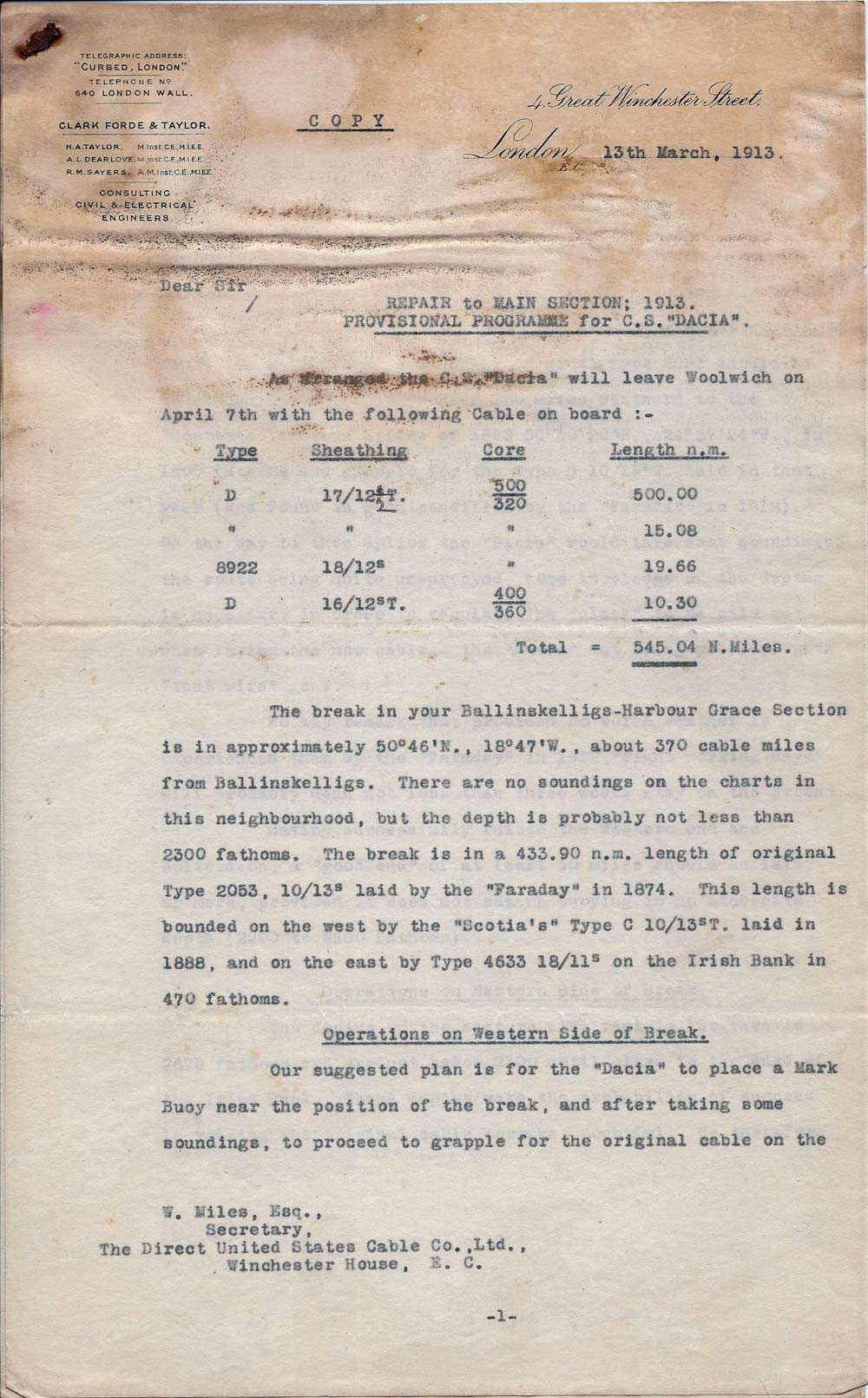
In early 1913 the company’s cable suffered a break in deep water off Ballinskelligs on the Irish Coast. The consulting firm of Clark, Forde & Taylor made this proposal for repairs to the Direct United States Company. The document is reproduced here courtesy of Jon Clark, whose grandfather Nelson J. Perryman worked for the consultants at the time.
CLARK FORDE & TAYLOR
Consulting Civil & Electrical Engineers
4 Great Winchester Street,
London, E.C.
13th March, 1913
Dear Sir/
REPAIR TO MAIN SECTION; 1913.
PROVISIONAL PROGRAMME for C.S. “DACIA”
As arranged the C.S. “Dacia” will leave Woolwich on April 7th with the following Cable on board:-
| Type |
Sheathing |
Core |
Length n.m. |
|
| D |
17/12½T. |
500/320 |
500.00 |
|
| " |
" |
" |
15.08 |
|
| 8922 |
18/12s |
" |
19.66 |
|
| D |
16/12sT. |
400/360 |
10.30 |
|
| |
|
|
--------- |
|
| |
|
Total = |
545.04 |
N.Miles |
The break in your Ballinskelligs-Harbour Grace Section is in approximately 50°46'N., 18°47'W., about 370 cable miles from Ballinskelligs. There are no soundings on the charts in this neighbourhood, but the depth is probably not less than 2300 fathoms. The break is in a 433.90 n.m. length of original Type 2053, 10/13s laid by the “Faraday” in 1874. This length is bounded on the west by the “Scotia’s” Type C 10/13sT, laid in 1888, and on the east by Type 4633 18/11s on the Irish Bank in 470 fathoms.
Operations on Western Side of Break.
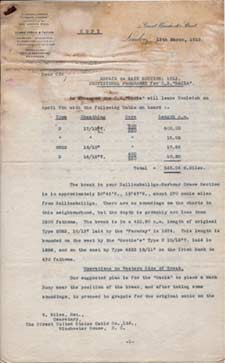
First page of the proposal |
Our suggested plan is for the “Dacia” to place a Mark Buoy near the position of the break, and after taking some soundings, to proceed to grapple for the original cable on the Western side.
It is the Company’s desire to effect the Repair, if possible, without large expenditure of cable, but should it become evident from condition of the cable (now 39 years old) that the old cable is not likely to be successfully raised in these depths, we suggest that after extending eight working days, the attempt to pick up the original Type 2053 should be abandoned and the ship proceed 220 miles westward to the “Scotia’s” eastern Splice of 1888 50°30'20"N., 24°27'24"W., in 1800 fathoms and grapple for the Type C 10/135sT. laid in that year (and found in good condition by the “Faraday” in 1912). On the way to this Splice the “Dacia” would take some soundings; the route being quite unsurveyed, some knowledge of the depths is necessary in order to regulate the “slack” to be paid out when laying the new cable - the “Dacia” not being provided with “taut wire” gear.
We may remark that provided no worse weather is experienced than by the “Faraday” in 1912, “eight working days” will probably mean not less than three weeks stay on the ground.
Having successfully raised the Western end and spliced-on, a “good end” of at least 50 miles should be laid, or more, provided it does not entail buoying in an excessive depth (2200 to 2600 fathoms).
Operations on Eastern Side of Break.
The depths on the eastern side rapidly increase to 2675 fathoms and are not below 2300 until close to the edge of the Irish Bank. These depths make the probability of success in raising the original cable somewhat doubtful. We therefore submit for the Company’s decision two alternatives:-
(A) No attempt to be made to grapple on the 180 miles of original type 2053 on the eastern side of the break, but the “Dacia” shall at once grapple for the type 4633 18/11s which lies, in 470 fathoms and should be raised without great difficulty. The ship would then splice-on and pay out towards the buoyed western end. By this procedure the type 2053, which now runs up over the edge of the bank into less than 500 fathoms, would be cut out of circuit. This old and light type in shallow water is a weak link in the Cable and its renewal would, in our opinion, avoid the risk of future interruption on this ground. The 19.66 n.m. of type 8922 with the heavier sheathing 18/12s would be laid out in the shallower water near the edge of the bank.
(B) Before proceeding to grapple for the type 4633 18/11s, four workings days should be spent in endeavouring to raise the original type 2053 near the break.
We should be glad to hear whether the above provisional programme of operations meets with your approval, and which of the alternatives A or B for working on the eastern side of the break the Company wishes to be adopted.
We are, Dear Sir,
Yours faithfully
(Signed) CLARK, FORDE & TAYLOR
W. Miles, Esq.,
Secretary,
The Direct United States Cable Co., Ltd.,
Winchester House, E.C.
A note in the Telcon magazine (Issue 21, Autumn 1953) reports that the entire length of this cable was currently being replaced by CS Monarch (4). The core of the 1525nm of replacement cable was insulated with Telcothene, making it “the first transatlantic cable to be entirely insulated with that plastic material”. As part of this work, the cable was also diverted from Harbour Grace into St. John's in 1953. |